REVIEW · DUNDEE
Made in Dundee: A Self-Guided Audio Tour
Book on Viator →Operated by VoiceMap Audio Tours · Bookable on Viator
A statue starts the story in Dundee. This self-guided audio walk uses VoiceMap to connect landmarks to real people, from Desperate Dan to Dundee’s publishing powerhouse and pop-culture echoes. I especially like the way it gives you context while you walk, and how the tour is designed for offline audio and maps.
My only real caution: the app can feel a bit “ahead” if you’re in the wrong playback mode, and one account mentioned audio stopping when using a camera. If you’re comfortable tapping the screen to get things back on track, it should be an enjoyable hour-plus.
In This Review
- Key highlights in plain terms
- What this Made in Dundee audio tour is really like
- Starting at Desperate Dan on High Street
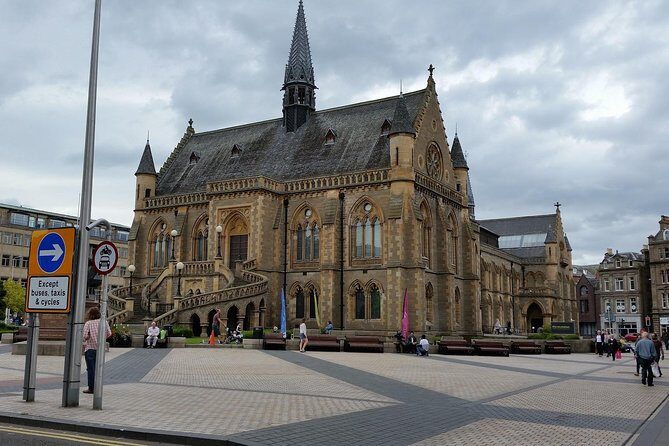
- McManus Museum: history and art in a free stop
- The fountain carvings: earth, fire, air, water
- James Caird and the kind of philanthropy you can spot in the city
- Slessor Gardens and Mary Slessor’s trail through Scotland
- DMA Design’s Lemmings statues: Dundee’s tech and pop culture side
- VoiceMap app tips: avoid the “ahead of me” feeling
- Price and value: $7.99 for a focused hour of stories
- Who should book this Made in Dundee audio tour?
- Should you book Made in Dundee?
Key highlights in plain terms
- Offline-ready VoiceMap audio, maps, and geodata
- One hour 10 minutes for a self-guided loop you can do at your pace
- Desperate Dan to Lemmings: Dundee’s best-known symbols, tied to stories
- McManus Museum stop that’s free to visit
- Fountain carvings linking earth, fire, air, water to local poetry
- Local legends in the route: Mary Slessor and James Caird, plus DC Thomson
What this Made in Dundee audio tour is really like

This isn’t a guided “stand here and listen” experience. It’s a self-guided walking tour built around an audio track that tells you what you’re looking at as you pass each stop. If you like wandering with purpose—without waiting for a group pace—you’ll probably click with this.
The route takes about 1 hour 10 minutes and works best when you let yourself move slowly enough to read what you can and pause when something catches your attention. You can also replay it later because you get lifetime access to the tour.
Practical note: you’ll need your own smartphone. Also, the tour doesn’t include food or transport, so plan this as a tidy “sightseeing block” you can pair with a meal nearby.
You can also read our reviews of more tours and experiences in Dundee.



Starting at Desperate Dan on High Street
The tour begins at the Desperate Dan statue on High Street (High St, Dundee DD1 1SG). It’s a perfect opener because Desperate Dan is instantly recognizable and very Dundee. The audio connects the statue to the wider story of Dundee’s comic fame and also points you toward why this city loves its own symbols.
Why I like this start: it gets you oriented fast. Even if you don’t know Dundee’s publishing side yet, you’ll quickly understand that these aren’t random monuments. They’re anchors for a story about who made things here—and what those things became.
A small tip: when you start, give the app a moment to lock onto your location. Then start walking normally. If you rush off immediately, you might feel like the audio is impatient with you.
McManus Museum: history and art in a free stop
Next up is the McManus Museum, where the audio highlights Dundee’s history and also notes it’s an art gallery. The best part for your budget: it’s free to visit.
Even if you only skim a few rooms, this stop helps the audio tour make sense. The rest of the walk is full of names—publishers, philanthropists, poets, and cultural figures—and the museum gives you a place to anchor those references in real Dundee storylines.
If you want to stretch the experience without blowing the timing, do this:
- Step into the museum for a short look.
- Spend your time on the areas that connect to what the audio is covering (Dundee’s civic story and cultural identity).
Because the audio tour is only about an hour and ten minutes, keep your museum break short unless you’re happy to run a little long.
The fountain carvings: earth, fire, air, water
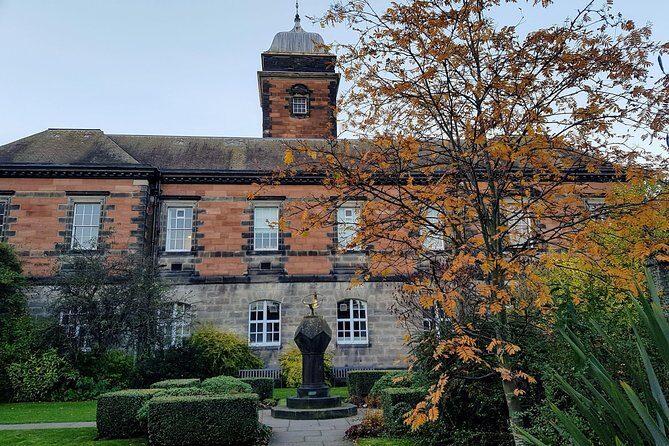
A fun mid-tour moment comes at the fountains, where there are four carvings. Each one corresponds to an element: earth, fire, air, water. Better yet, each carving includes a quote from a local poet or author.
The audio tour doesn’t just tell you what you’re seeing—it tells you who wrote the words and ties the “water” element to an extract from Lunan Bay by Mary Brooksbank.
This is the kind of stop where you can slow down. Take a second to locate each carving and look for how the text feels like part of the design, not an afterthought. It’s also a good moment to reset your pace and let the walking loop feel intentional.
James Caird and the kind of philanthropy you can spot in the city
One of the more “local and specific” stories in the route is about James Caird. When he died, the audio explains that he left his younger sister a considerable fortune. She then continued his philanthropic projects, including funding the furnishing of Caird Hall and building a smaller hall next to it.
This is where an audio tour earns its $7.99. You could walk right past these civic buildings and just see architecture. Here, you get the motivation behind it: money turned into community space, not just monuments.
For you, the payoff is simple. When you recognize that kind of story, your photo stops become more meaningful. You’re not just capturing a façade—you’re capturing a decision the city made.
Slessor Gardens and Mary Slessor’s trail through Scotland
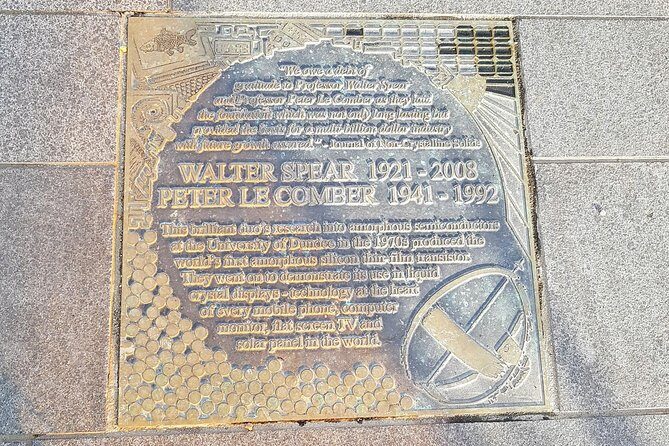
The audio then points you to Slessor Gardens, named after Mary Slessor. The guide ties her to a major milestone: in 1997, she became the first woman on a Scottish banknote—specifically the Clydesdale £10 note, which was in circulation until recently.
It also covers her role as the first female magistrate in the British Empire.
This stop matters because it turns a “park name” into something you can understand at a glance. You’ll likely find yourself looking at the garden with new context: the name isn’t just commemorative, it’s a marker of a person who broke barriers.
Timing-wise, this is a nice pause point. You’re past the most name-heavy parts, and the route tends to feel calmer here. Take a breath, let the audio finish, and then continue.
DMA Design’s Lemmings statues: Dundee’s tech and pop culture side
The final chapter lands at the Lemmings statues on Perth Road (80-84 Perth Rd, Dundee DD1 4HQ). These statues connect Dundee to game development via DMA Design, creators of the 1991 video game Lemmings.
The audio notes the game was a major success, selling more than 15 million copies.
If you grew up with video games—or you just like when cities show off modern creativity—this is a satisfying ending. It gives Dundee a lane beyond publishing and civic works. It also helps explain why Dundee is often remembered for turning ideas into products that travel far beyond the city.
Practical note: since this is the end point, you’ll want your phone charged enough to wrap up any final steps in the app.
VoiceMap app tips: avoid the “ahead of me” feeling
Here’s the deal. This tour depends on the VoiceMap application, and the experience can go smoothly—or get annoying—depending on how you use playback.
One common problem reported was audio feeling like it was already ten steps ahead, with GPS playback behaving like it was skipping from location to location. The fix, per the provider’s guidance, is to use the proper playback behavior for walking. In other words:
- Try to use Resume rather than a continuous mode meant for listening at home.
- If you stop for photos, the audio should keep going unless you accidentally switch into a different camera mode on your phone.
- If audio does pause or misbehave, don’t panic. Tap back to the tour and use Resume so the track catches up.
Also, because you get offline access to audio, maps, and geodata, you’re not stuck hunting for signal at every corner. Still, if you have shaky GPS outdoors, stand still for a few seconds before you start the next stretch.
My advice for a stress-free walk:
- Start the tour and walk at a normal city pace.
- If the audio feels off, pause, check the screen, and correct it before you move on.
- Use your camera after you’ve let the audio hit a key line, so you don’t feel like you’re cutting the story short.
Price and value: $7.99 for a focused hour of stories
At $7.99 per person, this is priced like a small splurge that’s also kind of smart. You’re not paying for a vehicle, a guide’s labor on a schedule, or a museum ticket. You’re paying for the storytelling layer that makes walking more than aimless drifting.
Where the value really shows:
- You get offline tour content (audio and maps), so it’s not “dead” the second signal drops.
- You get lifetime access, meaning you can do the loop again later without buying a second ticket.
- You hit multiple well-known Dundee anchors (Desperate Dan, McManus, Caird Hall area, Mary Slessor, Lemmings) in a compact time window.
If you like to plan, you can also build a better day around it. McManus is free, so you can add a short museum visit without doubling your costs.
Who should book this Made in Dundee audio tour?
This works best if you:
- Like self-guided walking and hate waiting for a group to regroup.
- Want an easy way to learn Dundee beyond “I saw a building.”
- Appreciate stories that connect people (Mary Slessor, James Caird) to places you can actually stand in front of.
- Like Dundee’s mix of publishing and pop culture, not just one theme.
It’s less ideal if you:
- Want a live person to adapt to questions on the spot.
- Get frustrated easily with phone-based navigation and screen controls.
The good news is that the app’s biggest reported annoyance is usually fixable with playback mode and a quick “resume” habit.
Should you book Made in Dundee?
If you want a low-cost, low-commitment way to understand Dundee in about an hour and ten minutes, I think it’s a solid yes. The route gives you a balanced blend: civic figures, cultural references, and pop-culture landmarks, with offline VoiceMap support that keeps it practical.
Just go in with one mindset: this is a phone-assisted walk. If you’re willing to interact with the screen a bit—especially early on—this is an easy way to turn “I walked around” into “I learned something while I walked around.”