REVIEW · AVIEMORE
Private Guided Winter Mountaineering Experience in the Cairngorms
Book on Viator →Operated by EverydayClimbing · Bookable on Viator
Cold air, warm confidence, big views in 1 day.
This is a private guided winter mountaineering day in the Cairngorms, starting in Aviemore and building you up from gear basics to real rope technique on frozen terrain. I like that the day is structured around safety and skills, not just getting outside. You meet a fully qualified winter mountaineering guide, talk through what to expect, and get kitted up with the stuff you need to move efficiently in winter conditions.
Two things I really like: first, the way crampons and an ice axe are taught and then used as part of the route, not as an afterthought. Second, the coaching quality—especially the constant risk checking that makes winter feel calmer instead of scary. One drawback to plan for: you’ll need to bring the right winter clothing and winter mountain boots, and you’ll also need to supply your own lunch.
In This Review
- Key highlights you’ll feel on the day
- Why the Cairngorms Work So Well for Winter Mountaineering
- Aviemore Start Time: Gear Talk, Safety Mindset, and Quick Prep
- The Approach Walk: When You Learn to Move on Snow
- From Below the Climb to Rope Belays: How the Technical Part Works
- Teaching That Goes Beyond the Basics (and Why It Feels Fast)
- What to Bring: Clothing, Boots, and Lunch You’ll Need
- Equipment Included vs. What You Supply
- Private Day Value: What $238.66 Really Buys
- Who This Experience Fits Best (and Who Might Be Happier Elsewhere)
- Should You Book a Private Winter Mountaineering Day in the Cairngorms?
- FAQ
- Where does the experience start, and what time does it begin?
- Is pickup available?
- What winter climbing gear is included?
- What do I need to bring myself?
- Do I need winter mountain boots?
- What happens if weather is poor?
Key highlights you’ll feel on the day
- Private guide, just your group, with coaching tailored to your goals and comfort level
- Crampons and ice axes handled properly, including safe use instructions
- Harness, helmet, and rope system when you’re ready to climb
- Guides lead from ahead and secure the rope above you for safer, smoother progress
- Photos included, so you’ll have proof without having to juggle your camera
Why the Cairngorms Work So Well for Winter Mountaineering
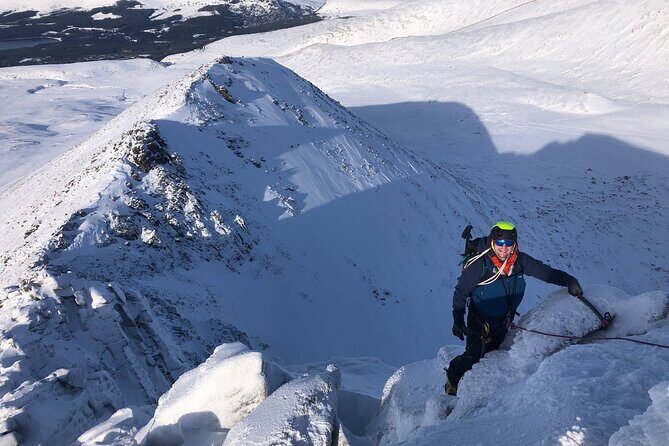
The Cairngorms are one of Scotland’s best places to learn winter travel because the terrain forces you to take winter seriously, fast. Snow, ice, and steep ground stack the lessons on top of each other, so you learn what matters: footwork, balance, pace, and how to think about danger before it shows up.
What makes this day especially appealing is that it’s built like a real mountaineering coaching session. You’re not stuck wandering. You start with a talk about expectations, then you move into technique and controlled climbing. The result is a day that feels purposeful even when conditions are changeable.
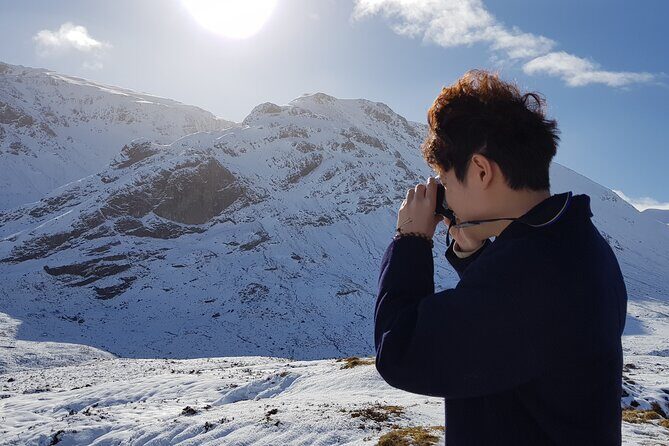
And because this is in Cairngorms National Park, you also get that strong sense of being in the middle of real winter terrain—where climbers move on frozen cliffs nearby, and the views stretch out past the snow line.
You can also read our reviews of more guided tours in Aviemore
Aviemore Start Time: Gear Talk, Safety Mindset, and Quick Prep
The day kicks off at 8:30 am at Tiso Aviemore Outdoor Experience in Aviemore. Meeting there is handy because it’s easy to find, and the activity is marked as near public transportation. If you’re coming as part of a small group, pickup for small groups can be arranged for free, and for larger groups you can get help organizing transport.
Once you meet your guide, you’ll start with a discussion. This is not fluff. It’s where you cover what to expect and what you’ll need to do during the day. I like this part because winter days go smoother when you know the plan and the pace.
Then comes the kit. You’ll get helmet and harness, plus climbing equipment such as ice axes and crampons. An emergency shelter and first aid kit are included, which matters because winter conditions can shift quickly. You also get photos of your day, so you can focus on moving instead of taking pictures every five minutes.
If you’ve read climbing stories, one name that pops up for EverydayClimbing is Sam. In winter coaching conversations, he’s known for calm instruction and continuous risk assessment, including avalanche thinking. You might not get the exact same guide, but that teaching style is clearly part of the guiding approach.
The Approach Walk: When You Learn to Move on Snow
After a short drive, you head into the Cairngorms on foot. This approach walk is usually about an hour, and it’s a smart way to settle into winter movement before you start climbing.
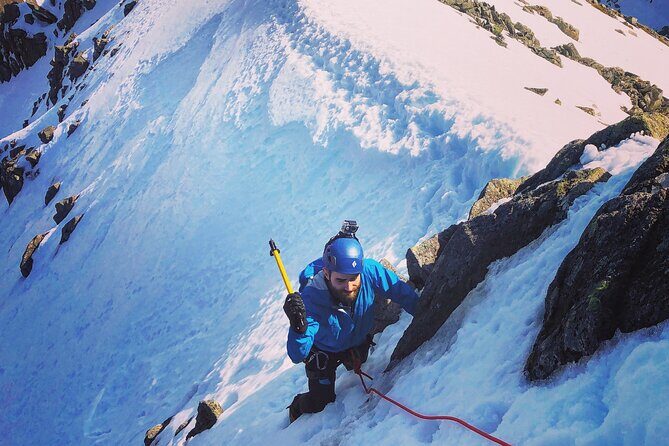
Sometimes crampons and an ice axe are required for the approach. That’s not just for show. It means the guide can check how you place your feet, how you handle the tools, and how confidently you can handle traction and balance on uneven snow.
As you walk, you’ll see more than just hills. You’ll spot climbers on frozen cliffs in the area and get a sense of the winter mountain environment around you. That “you’re not alone up here” feeling can be surprisingly reassuring, especially on your first winter day.
One practical tip: pay attention to how your guide tells you to hold your arms, where your weight goes, and how to slow down before you slip. Winter mountaineering success is mostly small adjustments repeated well.
From Below the Climb to Rope Belays: How the Technical Part Works
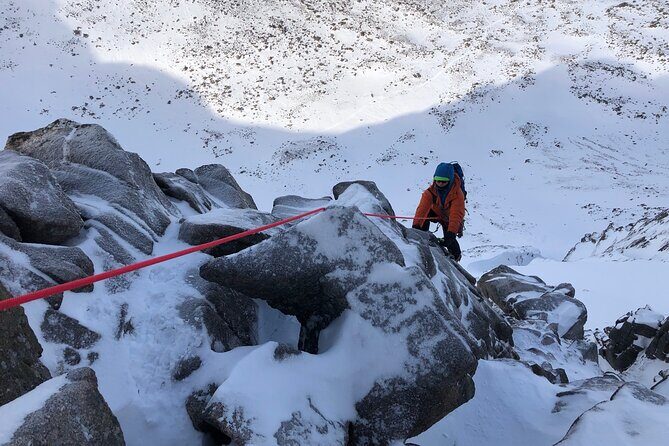
Once you arrive below your climb, the day steps into proper winter climbing mechanics. You’ll be fitted with a harness and helmet, then attached to your guide by climbing rope. This is the moment where the experience turns from walking skills into climbing skills.
Crampons are on, ice axes are ready, and the climb begins with the guide leading ahead. The guide places and secures rope above you as they go, so you can focus on your technique and safety instructions instead of figuring out the whole system while also trying to move uphill.
Your guide will be doing more than holding a rope. They’ll improve your technique, offer encouragement, and keep a steady eye on conditions. In winter climbing, conditions can shift fast—temperature swings, wind, and the way ice forms all change how stable the route feels.
The best part of this setup is that you get structured exposure. You’re not left guessing. The guide is in front, but you’re also learning how to move, how to manage your stance, and how to follow direction on a real route.
Teaching That Goes Beyond the Basics (and Why It Feels Fast)
If you’ve ever tried to learn winter climbing from random YouTube clips, you already know the problem: you see steps, but you don’t get feedback on your body. Here, you get live coaching.
This is where I really respect the guiding style connected to EverydayClimbing. In training experiences shared by climbers, Sam has a reputation for tailoring the day to the group’s objectives. He’s also described as being exceptionally strong at teaching technique in a way that leads to quick progress—everything from seconding (following the rope) to leading techniques, when appropriate.
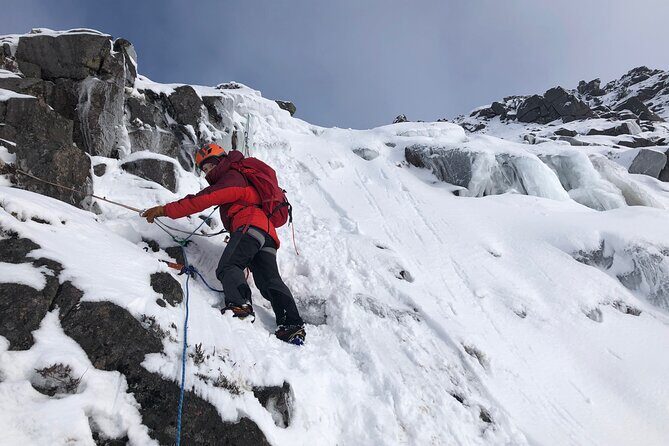
Even if you don’t come in as an advanced climber, you should expect your guide to watch your movement closely. That could mean correcting how your crampon points engage, helping you control your ice axe for balance, or adjusting how you manage energy over steeper sections.
There’s also a safety brain in the background. Winter mountaineering requires constant risk checks, and that includes avalanche thinking. In winter guidance stories, avalanche assessment shows up as part of the way the day is run. That doesn’t mean you’re doing a classroom exam. It means your guide is thinking like a mountain professional while also keeping things understandable for you.
You can also read our reviews of more private tours in Aviemore

What to Bring: Clothing, Boots, and Lunch You’ll Need
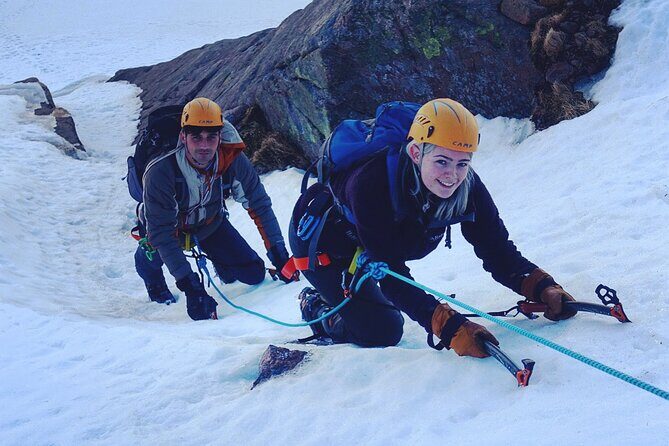
This day is set up with the gear you need, but winter clothing is on you. You’ll want warm layers that you can move in without restricting your range of motion. Expect to need:
- A hat and gloves
- Warm layers and waterproof outer layers
- Winter mountain boots (this is required)
Winter mountain boots matter because they’re built for winter traction and stability. The good news: you can get help hiring boots locally. If you don’t already own proper winter footwear, plan some extra time before your day so you’re not scrambling.
Also plan lunch. Lunch isn’t included, so you’ll need to bring your own. This is a small detail that can make a big difference. In cold weather, a missed meal feels harsher, and having a plan helps keep everyone moving confidently.
Equipment Included vs. What You Supply
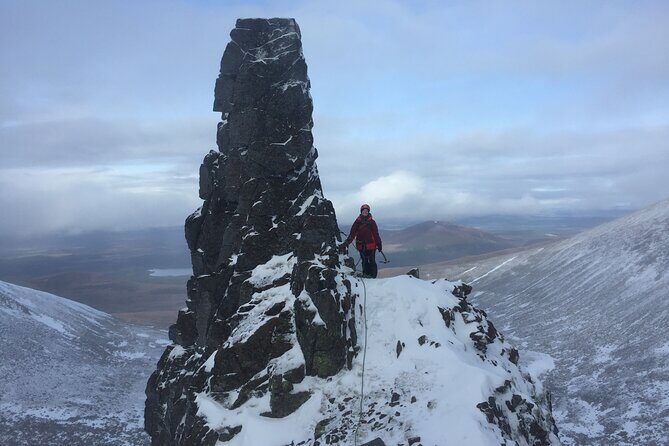
Here’s how the kit breaks down in a way that’s actually useful for planning.
Included with the experience:
- Qualified winter mountaineering instructor
- Ice axes and crampons
- Helmet and harness
- Climbing equipment
- Emergency shelter and first aid kit
- Private transportation
- Photos of your day
You provide:
- Warm clothing, hat, gloves
- Waterproof layers
- Lunch
- Winter mountain boots (with local hiring support if needed)
This mix is good value because the expensive, specialized items are covered. You’re mostly paying for skilled instruction, the safety systems, and a guided route in real winter terrain.
Private Day Value: What $238.66 Really Buys
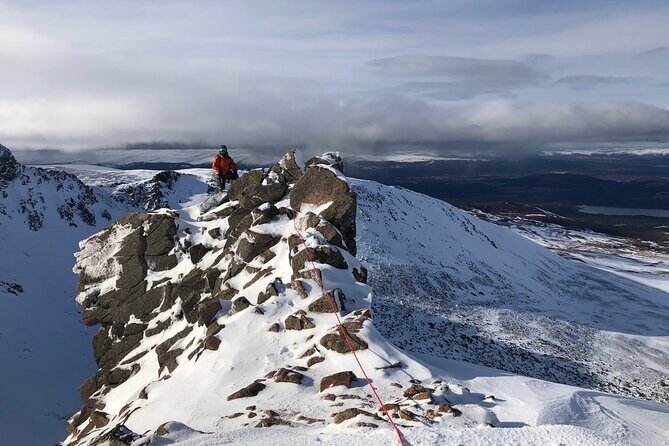
At $238.66 per person for about a one-day experience, the “value” comes from three things working together:
- Private guiding means your time is focused on your group, your skill level, and your objectives.
- The gear is provided, including crampons, ice axes, helmet, and harness—so you’re not paying extra for rentals you might not be ready to buy.
- Photos are included, which saves you from turning your day into a juggling act with camera gear while you’re learning.
This isn’t a casual stroll. It’s a full winter climbing day with real safety gear, real rope work when you climb, and a guide who teaches while managing risk.
So if you’re the kind of traveler who wants a skill you can take home—safer winter movement, better technique, a clearer plan for future climbing—this price starts to make sense.
If you just want the views and a light walk, it may feel intense. But if you want to learn winter mountaineering in the Cairngorms, this is the right kind of structured.
Who This Experience Fits Best (and Who Might Be Happier Elsewhere)
This trip is listed as needing moderate physical fitness. That usually points to: you should be comfortable with cold walking, steady uphill movement, and paying attention to technique while tired.
It also helps if you’re okay with a day that mixes instruction and movement. You’ll likely spend parts of the day putting on gear, learning tool use, approaching on snow, and then doing rope-based climbing when conditions and route allow.
This is especially good for:
- First-timers who want safety-first guidance
- Intermediate climbers who want sharper winter technique
- Anyone traveling with a small group who wants a custom pace
It might not be ideal if:
- You’re not ready to wear proper winter layers and boots
- You’re expecting a short, easy hike with no technical climbing component
Should You Book a Private Winter Mountaineering Day in the Cairngorms?
If you want a winter day that teaches you real skills, I’d book it. The structure is solid: morning briefing, an approach where tools get used correctly, then harness-and-rope climbing where the guide leads and coaches. Add in included safety gear, emergency systems, and photos, and you’re paying for a professional, learning-focused experience.
Book it soon if you’re serious about winter climbing, because conditions and weather matter. You’ll also get more from the day if you arrive prepared with warm layers and the right boots (or at least plan for local hiring).
If you’re on the fence, ask yourself one question: do I want to learn winter mountaineering in a controlled, guided way? If the answer is yes, this is a strong choice for Aviemore and the Cairngorms.
FAQ
Where does the experience start, and what time does it begin?
It starts at Tiso Aviemore Outdoor Experience, Unit 1, Retail Park, Santa Claus Drive, Aviemore PH22 1AF, UK. The start time is 8:30 am, and the activity ends back at the meeting point.
Is pickup available?
Pickup is offered. Small groups can be picked up for free, and for larger groups the team can help you organize transport.
What winter climbing gear is included?
You get a qualified winter mountaineering instructor, ice axes and crampons, a helmet and harness, climbing equipment, and safety items like an emergency shelter and first aid kit.
What do I need to bring myself?
Bring warm clothing, a hat, gloves, and waterproof layers. You’ll also need to bring lunch for the day.
Do I need winter mountain boots?
Yes. Winter mountain boots are required, and the experience can help you arrange local hiring if you don’t already have them.
What happens if weather is poor?
This experience requires good weather. If it’s canceled due to poor weather, you’ll be offered a different date or a full refund.