A night walk on the Royal Mile is different. In about two hours, you cover a stack of Edinburgh’s Old Town landmarks with a guide who explains what you’re looking at, not just what’s there. I like the small-group feel (max 12), and I also like that this tour focuses on story-driven stops instead of long museum-style pauses.
One thing to keep in mind: it’s a moving, walking-first experience. If you want a slow wander with lots of sitting down, plan for that on your own time—this tour doesn’t include refreshments, and the route covers many sights in a short window.
The Royal Mile after dark also makes the whole area feel more human. You’ll hear how places like the Tolbooth square, old closes, and the city’s walls connect to real events tied to major Scottish figures like John Knox and Mary Queen of Scots. It’s a smart way to learn the Old Town without losing your day to planning and queues.
In This Review
- Key highlights before you go
- Why a Royal Mile night walk changes everything
- The route: Abbey Strand start and a finish outside Edinburgh Castle
- Stop by stop: what you’ll actually get out of each landmark
- The King’s official residence in Scotland: opening with power
- A quieter corridor of the Old Town: the lane you’d miss on your own
- The separate Burgh and Tolbooths story: religion and control
- Backhouse Close to the 1500s: stepping into a darker reputation
- Old City Wall plus an Outlander film location: history you can spot
- Goldsmiths House (late 1400s): connections to John Knox and Mary Queen of Scots
- The Cathedral frontage and the Edinburgh Tolbooth site: the square where it mattered
- City Chambers built on earlier closes: city power on top of older streets
- Quiet stretches dating to the 1580s, then Lady Stair’s House (1620s)
- Finishing with one of the oldest Old Town buildings
- Price and value: what $47.73 buys you
- Group size, guide performance, and what to watch for
- Who should book this Royal Mile walking tour—and who might not
- Should you book this tour?
- FAQ
- How long is the Royal Mile Walking Tour?
- What’s the price per person?
- What language is the tour offered in?
- How many people are in the group?
- Where does the tour start?
- Where does the tour end?
- What’s included in the ticket price?
- Are refreshments included?
- Is there free cancellation?
- Are service animals allowed?
Key highlights before you go
- Two-hour Royal Mile overview that helps you understand the Old Town fast
- Nighttime timing that shows Edinburgh with a calmer, more atmospheric vibe
- Max 12 people means you can actually follow the guide’s explanations
- Outlander filming location you’ll spot without playing detective
- Tolbooth-focused storytelling around proclamations and punishments
- Classic closes and centuries-in-one-street stops, from the late 1400s onward
Why a Royal Mile night walk changes everything
Daytime Royal Mile tours can feel like a conveyor belt. This one is different because you’re walking in the evening light, when you can actually notice details in stonework, doorways, and tight little passages. The Old Town is still the Old Town—but at night, you get more contrast, and the stories land harder.
The best part is that it’s not just “here’s a landmark.” The guide connects each stop to what happened nearby—church matters, civic power, and the day-to-day reality of living in crowded old streets. That’s especially useful if this is your first visit. You’ll get your bearings fast, then you can choose what to revisit later in daylight.
Also, since the tour ends outside Edinburgh Castle, it naturally funnels you into the most famous part of the Old Town without feeling like you’re racing across the city.
You can also read our reviews of more walking tours in Edinburgh



The route: Abbey Strand start and a finish outside Edinburgh Castle
Your tour begins at Abbey Strand in central Edinburgh (EH8 8DU). You’ll then walk the Royal Mile area until the end point outside Edinburgh Castle on Castlehill (end listed as 537 Royal Mile, EH1 2ND).
This end location matters for value. Instead of ending somewhere random, you finish right where most people want photos and views anyway. If you’re planning dinner or a post-tour stroll, this layout is handy. It’s also a practical reason to book this as your first serious Old Town learning block—then the rest of your trip feels less like guesswork.
The tour is offered in English and runs for about two hours. That timing is ideal for a “learn a lot, keep moving” itinerary. You won’t end up spending half your day doing one activity, which leaves room for Holyrood-area time, museums, or a more relaxed evening plan afterward.
Stop by stop: what you’ll actually get out of each landmark
The King’s official residence in Scotland: opening with power
The first stop is the King’s official residence in Scotland. Starting here sets the tone: you’re not just sightseeing old buildings—you’re stepping into a part of Edinburgh tied to authority. Even if you don’t go inside any palace rooms, you’ll get context for why this area mattered historically and how the Royal Mile functioned as a real route for civic life.
Early in the walk, pay attention to how the streets funnel people toward the castle area. That “pathway effect” is one of Edinburgh’s biggest traits, and it helps the rest of the tour make sense.
A quieter corridor of the Old Town: the lane you’d miss on your own
Next you’ll hit one of Edinburgh’s lesser-known corners. The point here isn’t luxury or spectacle. It’s contrast. You’ll see how the Royal Mile isn’t only about the main drag—it’s also about tight spaces and smaller pockets that shaped everyday movement and local identity.
This sort of stop is valuable because it gives you something to remember beyond the headline sites. It also helps you understand why Edinburgh’s Old Town can feel maze-like: the city grew in layers, and the street network reflects that.


The separate Burgh and Tolbooths story: religion and control
After that, you’ll hear about the period when the area was a separate Burgh, with connections to church and Tolbooths history. This is where the tour leans into the “why things were built” angle.
Tolbooths weren’t just buildings. They were instruments of governance—places tied to civic authority and public life. When you understand that, you start noticing how Edinburgh’s major institutions relate to smaller streets and squares.
If you like historical cause-and-effect—how one building category leads to another—this portion is the kind of explanation you’ll carry with you when you wander later.
Backhouse Close to the 1500s: stepping into a darker reputation
One stop takes you back to the 1500s at Backhouse Close, described as once home to ill repute. That’s a heavy theme, but it also makes the tour more honest. Old cities weren’t only churches and kings. People worked, struggled, and lived in messy reality.
Backhouse Close works as a mental time machine because a close like this feels physically close to the past. Even from the outside, you can picture how cramped life must have been and how social reputation could rise and fall in the same tight streets.
Old City Wall plus an Outlander film location: history you can spot
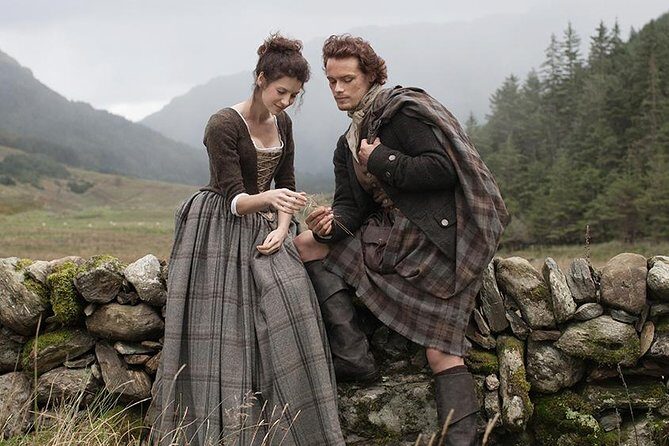
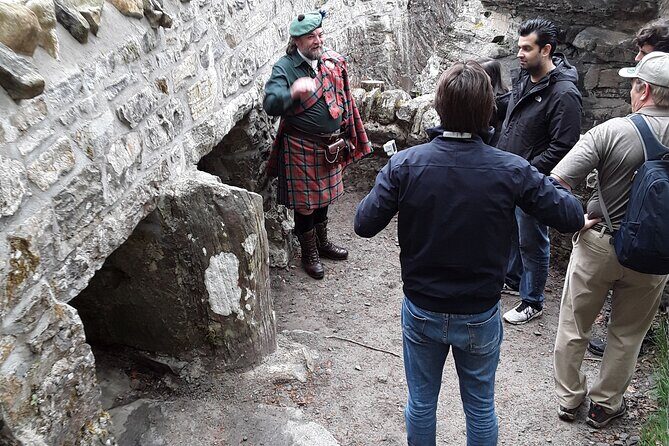
Then you’ll see parts of the Old City Wall and also an Outlander film location. This is a smart combo stop. The wall gives you defensive and urban context. The Outlander reference gives you a modern reason to look closely, especially if you’re familiar with the show.
You’ll likely get more out of this if you keep your eyes up for where the filming location sits in relation to the wall and the street line. It’s not about fan service—it’s about teaching you how to read the street grid.
Goldsmiths House (late 1400s): connections to John Knox and Mary Queen of Scots
Another key stop focuses on a building dating to the late 1400s, once the Goldsmiths House, with connections to John Knox and Mary Queen of Scots. This is the “major names, grounded in place” moment.
Goldsmiths were part of the economic and social fabric—skilled craft, money, and status. When you connect that to figures like John Knox and Mary Queen of Scots, the Royal Mile stops being a random string of stops and becomes a map of who mattered and why.
If you’ve ever wondered how the big Scottish story connected to ordinary city life, this is one of the points where the dots get easier to connect.
The Cathedral frontage and the Edinburgh Tolbooth site: the square where it mattered
Right in front of the cathedral area, the tour points out the site of the infamous Edinburgh Tolbooth. That’s tied to proclamations and punishments, and it’s one of the most memorable themes on the walk.
Why it’s memorable: proclamations and punishments were public. People didn’t only hear announcements. They witnessed them. That means the space wasn’t just symbolic—it was practical and powerful.
After this stop, you’ll likely start noticing how public squares in Old Town cities function like stages. The tour gives you the missing narrative that turns stone and open space into something you can imagine.
City Chambers built on earlier closes: city power on top of older streets
Next comes the City Chambers, built on the site of several closes (streets). This part is all about layers—how newer civic buildings sit atop older street life.
You’ll get a sense that Edinburgh’s center didn’t stay still. Closes changed. Traffic and purpose shifted. Buildings replaced older ones. The city kept rewriting its own layout while still using the same general geography.
If you like urban history—how cities evolve without moving far—this stop rewards your attention.
Quiet stretches dating to the 1580s, then Lady Stair’s House (1620s)
The tour also includes stops at quieter areas dating to the 1580s and then Lady Stair’s House dating to the 1620s.
These sections help you feel the timeline rather than just recite it. You’re not jumping randomly between centuries. The walk rhythm builds an awareness of how long Edinburgh’s Old Town story has been going on.
Lady Stair’s House is a good example of why architecture matters in Edinburgh. Buildings here often last because they were useful, durable, and centrally located. When you’re told the date, it changes how you look at every doorway and corner.
Finishing with one of the oldest Old Town buildings
Near the end, the tour highlights one of the oldest buildings in Edinburgh’s Old Town. This is a fitting close. You start with major authority, move through governance and public punishment spaces, then end at the oldest remaining anchors of the area.
Finishing near Edinburgh Castle also means you’ll be able to connect your final stop back to the wider city view and the castle presence above everything else.
Price and value: what $47.73 buys you
At $47.73 per person for about two hours, you’re paying for a guide’s interpretation and pacing, not just for walking distance. For a place like Edinburgh, that matters. You could walk the Royal Mile on your own and still see plenty, but you’d miss the connections: Tolbooth sites, close histories, and how prominent figures tie into specific locations.
What also boosts value is the small group size—max 12. With that cap, it’s easier for the guide to keep conversations clear and for you to hear the details that make each stop meaningful.
The one cost-related drawback is that refreshment isn’t included. If you’re doing this on a cooler evening, plan a water bottle or plan to grab something afterward. You’ll still likely find the tour worthwhile, because you’re buying time-efficiency and clarity, not a drink stop.
Group size, guide performance, and what to watch for
The overall rating is 4.3 with 8 reviews, which tells me the experience is generally landing well—but it isn’t perfect.
Here’s the practical takeaway: small-group tours can be excellent when the guide shows up and when the group stays together. One account highlighted a situation where the guide didn’t appear, and the booking became a self-guided outing instead. That’s rare, but it’s worth knowing.
On the flip side, I’ve also seen evidence that if the group is light, you can end up with more attention and a standout pace. So if you value guided storytelling, this tour can deliver—just make sure you check your start time and meeting point carefully, and be ready to confirm the tour is active when you arrive.
Who should book this Royal Mile walking tour—and who might not
This tour is a great match if:
- you want a guided orientation to Edinburgh’s Old Town in about two hours
- you like history told through street-level places, not only big buildings
- you’re a fan of Outlander or simply want a reason to look closely at film-linked spots
- you want a night option that still leaves your day free for other top Edinburgh attractions
It may not be ideal if:
- you hate walking and prefer longer seated breaks
- you expect a lot of inside-the-building time
- you want refreshments included during the tour
Should you book this tour?
I’d book it if you’re looking for a fast, well-told Old Town primer that ends in a perfect spot for more exploring. The story focus—Tolbooths, proclamations and punishments, and close-by layers of civic history—turns the Royal Mile from a checklist into a meaningful route.
I’d skip it or plan extra flexibility if you know you’ll be frustrated by the walking pace or if you dislike night outings. And if you’re traveling on tight timing, arrive a few minutes early so you don’t lose the start of the walk.
FAQ
How long is the Royal Mile Walking Tour?
It runs for about 2 hours.
What’s the price per person?
The price is $47.73 per person.
What language is the tour offered in?
The tour is offered in English.
How many people are in the group?
The tour is described as small group with a maximum of 12 travelers (and up to 10 is mentioned as an attendee cap).
Where does the tour start?
The meeting point is Abbey Strand, Edinburgh EH8 8DU, UK.
Where does the tour end?
The tour ends outside Edinburgh Castle on Castlehill (537 Royal Mile, Edinburgh EH1 2ND, UK).
What’s included in the ticket price?
The guided walking tour is included.
Are refreshments included?
No, refreshments are not included.
Is there free cancellation?
Yes. You can cancel up to 24 hours in advance for a full refund.
Are service animals allowed?
Yes, service animals are allowed, and the tour is near public transportation with most travelers able to participate.