REVIEW · KIRKWALL
Shore Excursion Kirkwall Small Group Highlights of Orkney
Book on Viator →Operated by Wow A Tour · Bookable on Viator
Orkney history in a tight six hours. This small-group highlights tour from Kirkwall strings together WWII-era stories and major Neolithic sites, with all admissions built in. You get a day that feels like Orkney’s greatest hits, without spending your limited time sorting buses and tickets.
I really like two things here. First, the group stays tiny, capped at 6 travelers, so you’re not getting swallowed by crowds at the biggest stops. Second, the schedule is designed around ticketed sites like the Italian Chapel, the Standing Stones of Stenness, and Skara Brae—so you can focus on seeing instead of hunting down entry.
One thing to plan around: food and drink aren’t included. With multiple stops packed into the day, it’s smart to bring snacks and water so you’re not stuck deciding between a bite and a viewpoint.
In This Review
- Key Highlights You’ll Feel Right Away
- Kirkwall Pier to a 6-Hour Orkney Rhythm
- Italian Chapel: WWII Prisoners of War and a Surprisingly Moving Site
- Churchill Barriers, Scapa Flow Coast, and the Views You Can’t Drive Past
- Ring of Brodgar: A Neolithic Circle Still Feels Open-Air
- Standing Stones of Stenness: One of the Oldest Henges in the British Isles
- Skara Brae: Western Europe’s Best-Preserved Neolithic Settlement
- Skaill House After Skara Brae: From Prehistoric Homes to a 400-Year Manor
- Price, Time, and Value: Is $321.77 Worth It?
- Should You Book This Orkney Small-Group Tour?
- FAQ
- How long is the Kirkwall Small Group Highlights of Orkney tour?
- What time does the tour start?
- Where is the meeting point?
- Where does the tour end?
- What is the group size?
- Is the tour offered in English?
- Are attraction admissions included?
- Is food included in the price?
- What places are included in the itinerary?
- What is the cancellation policy?
Key Highlights You’ll Feel Right Away
- True small-group format (max 6), which usually means easier pacing and fewer queue headaches
- Italian Chapel access and time to understand WWII prisoners of war building something lasting
- Churchill Barriers + Scapa Flow scenery, including causeways and famous coastal views
- Ring of Brodgar as a top Neolithic stop, near Stromness
- Standing Stones of Stenness with admission included at a site considered among the oldest henge areas
- Skara Brae + Skaill House pairing: prehistoric homes, then a 400-year-old mansion
Kirkwall Pier to a 6-Hour Orkney Rhythm
This is a shore excursion built around being practical. It starts at Kirkwall Pier, Harbour St (KW15 1HU) at 9:30 am and finishes back at the meeting point, so you’re not guessing how you’ll get around at the end of a long day.
The total time is about 6 hours, which matters because Orkney’s key sights are spread out. This tour stitches them together into one drive-and-stop day: you’ll spend time at major sites, then move on quickly to the next. If you’re short on time—like many cruise days—you’ll appreciate that the flow is set up to minimize logistics.
The biggest quality-of-life upgrade is the group size. With no more than 6 people, you’ll tend to get quicker handling at entrances, a smoother ride, and time for questions that isn’t drowned out by a coach full of voices.
Also, note the language: the tour is offered in English, which keeps the storytelling and site orientation straightforward rather than rushed or summarized.
You can also read our reviews of more tours and experiences in Kirkwall.
Italian Chapel: WWII Prisoners of War and a Surprisingly Moving Site
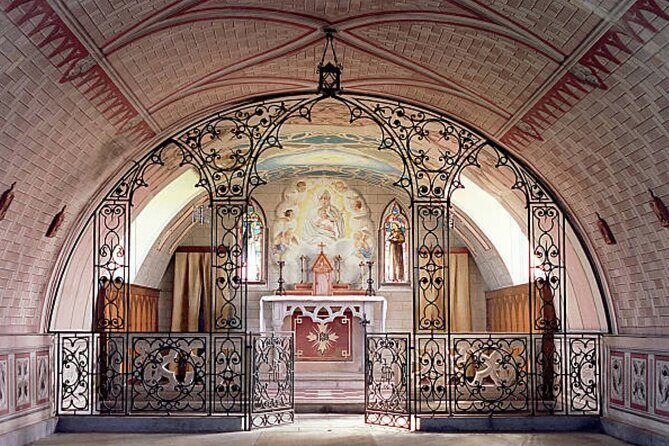
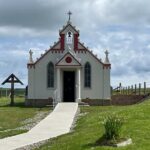
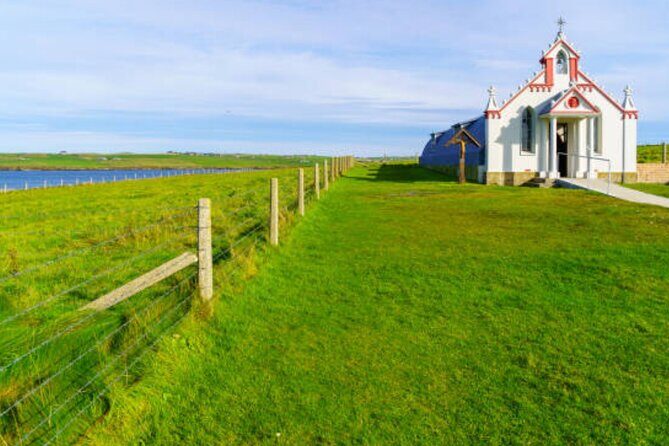
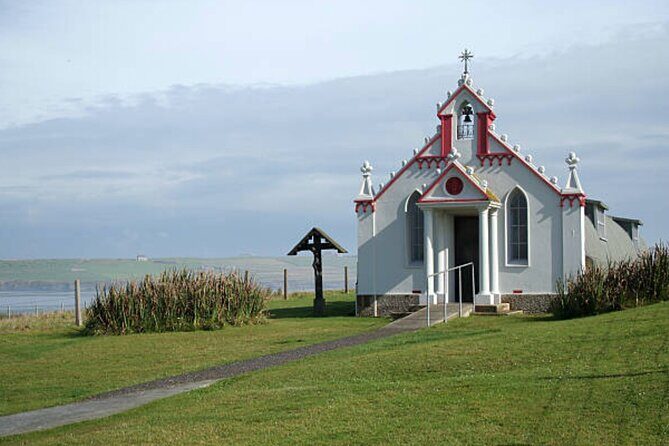
The first major stop is the Italian Chapel, with about 30 minutes and an admission ticket included. This isn’t a chapel built in peacetime for tourists. It’s a poignant reminder of WWII, created by Italian prisoners of war in Orkney.
What makes the Italian Chapel worth your time is how it connects to the rest of your day. The prisoners didn’t just leave behind a chapel; they also played a role in building the Churchill Barriers near Scapa Flow. When you learn that connection, the chapel shifts from being a neat stop to being part of a larger story about forced labor, engineering, and survival—kept alive through stone and memory.
Because the stop is about half an hour, you don’t have time to wander into a dozen side topics. You’ll want to pay attention at the start so you get the background, then use the remaining minutes to soak in the setting and details.
If you’re the kind of person who loves understanding how one landmark leads into another, you’ll enjoy how this opener sets up the day’s big engineering and history themes.
Churchill Barriers, Scapa Flow Coast, and the Views You Can’t Drive Past
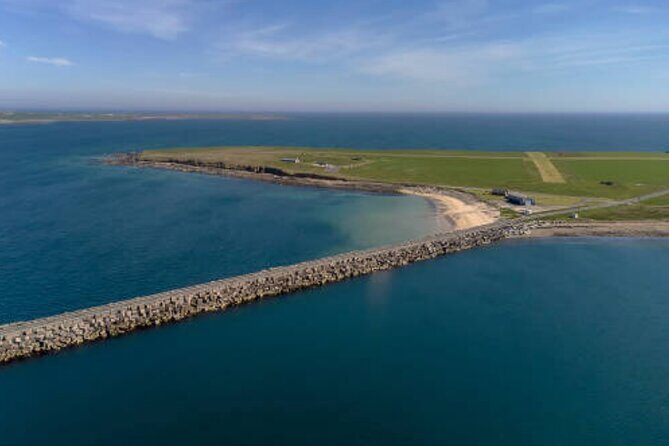
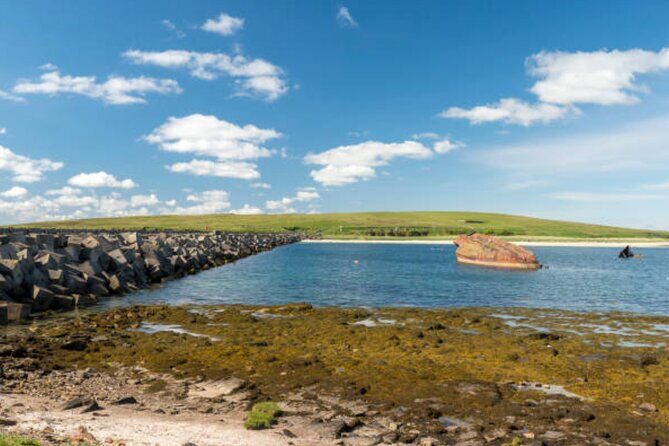
After the chapel, the route leans hard into one of Orkney’s signature engineering-and-sea stories: the Churchill Barriers. You’ll get a view of the system of four causeways, totaling about 2.3 kilometers, linking the Orkney Mainland (north) to South Ronaldsay.
The important part isn’t only the length. It’s what the barriers connect. The causeways run through Burray, Lamb Holm, and Glimps Holm, turning what could be scattered islands into an actual route you can travel. Standing back and watching the water and the lines of the causeways helps you understand why this part of Orkney feels both coastal and industrial at the same time—especially after you’ve just learned about the WWII work behind it.
Next comes the Scapa Flow area, again built around viewpoints and scenery: dramatic coastlines, rugged cliffs, scattered islands, green farmland slopes, and the ever-present silhouette of the Hills of Hoy. The tour also references the heather-clad slopes of the West Mainland hills, which gives you a sense of how the terrain frames the water.
This portion is a strong match for photographers and first-timers. You don’t have to be an expert to appreciate the contrast: working causeways and offshore history set against wide open views.
Ring of Brodgar: A Neolithic Circle Still Feels Open-Air
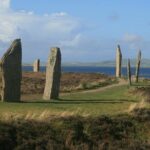
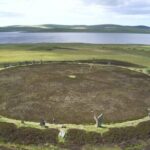
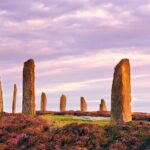
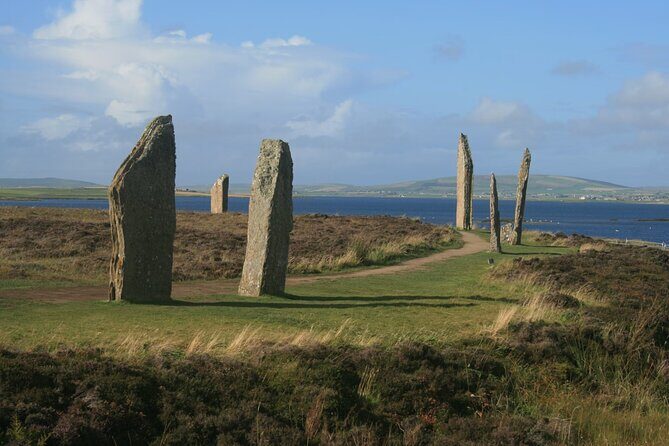
One of the day’s centerpiece stops is the Ring of Brodgar, a Neolithic henge and stone circle located about 6 miles northeast of Stromness on Mainland Orkney.
What I like about this stop is how it sets a tone for the whole rest of the Neolithic arc. After WWII and engineering, you switch time periods entirely. Instead of modern connections, you’re looking at people building a ritual space long before the islands had roads and bridges like we expect today.
You’ll have time to explore and take in the scale of the stone circle in its field setting. And if you’re comparing Orkney to other famous prehistoric sites, this is the kind of stop that helps you feel the difference. One detail I find especially motivating: Ring of Brodgar is often described as being about 500 years older than Stonehenge, so it helps reset what “ancient” means in the UK.
This is also a good moment for your guide’s timing. When the day is paced well, Ring of Brodgar doesn’t feel like a quick checkbox. It becomes the highlight that makes the Neolithic stops feel connected instead of rushed.
Standing Stones of Stenness: One of the Oldest Henges in the British Isles
Not far behind Ring of Brodgar in terms of theme is the Standing Stones of Stenness, about 5 miles northeast of Stromness on Mainland Orkney. Like Skara Brae, it includes an admission ticket and about 30 minutes on site.
This place has a different feeling than the Ring of Brodgar even if they’re both Neolithic stone worlds. Standing Stones of Stenness is widely believed to be one of the oldest henge sites in the British Isles. That wording matters because it places this stop into a longer prehistoric timeline, not just another collection of stones.
If you’re hoping for a place that helps you understand how these communities organized space and meaning, this is the stop where you can slow your brain down. You won’t need a PhD. You just need time to look, then listen to what your guide explains about the site’s role.
Also, this is where the small-group format pays off. With fewer people around, you can actually hear the story without having to constantly step aside for someone moving through.
Skara Brae: Western Europe’s Best-Preserved Neolithic Settlement
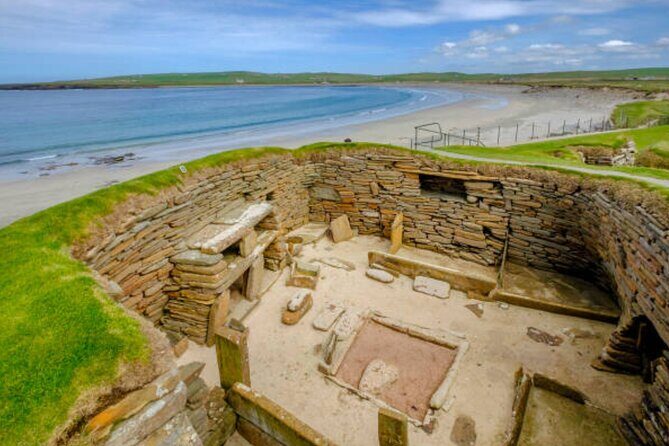
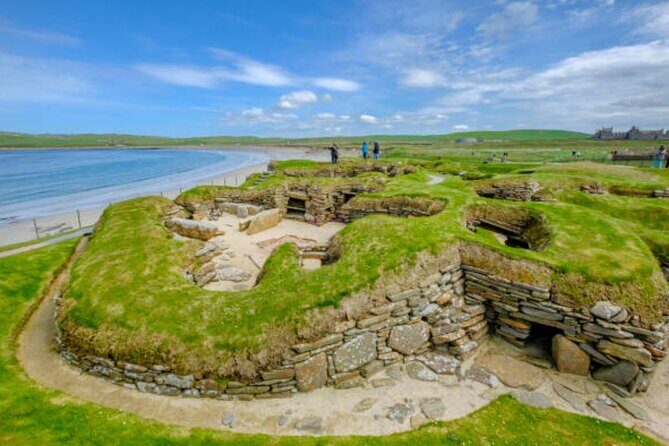
The tour then reaches Skara Brae, widely described as the best-preserved Neolithic settlement in Western Europe. It’s located within the UNESCO Heart of Neolithic Orkney World Heritage Site and includes an admission ticket, again with around 30 minutes.
This is the stop that changes your understanding from seeing stone circles to understanding daily life. Instead of only upright stones, you’re faced with evidence of homes: how people lived, how space was used, and what survival likely looked like on Orkney’s edge.
Because Skara Brae is well preserved, it’s often easier to picture the human side of Neolithic life. The walls and layout do a lot of teaching for you. With only 30 minutes, you’ll want to focus on a few things your guide highlights—think layout, function, and how preservation lets you read the story.
If you care about why UNESCO sites matter, this is the kind of place that answers that question quickly. It’s not a label on a map; it’s something you can look at and understand.
Skaill House After Skara Brae: From Prehistoric Homes to a 400-Year Manor
After Skara Brae, you’ll add a contrast stop at Skaill House, Orkney’s premier mansion overlooking the Bay of Skaill. The tour gives you time to see this 400-year-old landmark and its interiors.
This pairing is a smart end-stage contrast. You finish with a mansion, not another archaeological site, which helps your brain reset and compare different kinds of power and building across time. Skara Brae shows early settlement life. Skaill House shows how wealth and status were expressed later on.
You’ll get a look at the kind of furnishings and artifacts associated with the house, plus the views from the property. Even if you’re not a museum person, the contrast alone makes it feel like a full-day education rather than a string of stone stops.
If timing is tight, this is still a worthwhile add because it gives you a place to shift from archaeology mode into a broader Orkney identity—farm, coast, manor, and heritage all in one.
Price, Time, and Value: Is $321.77 Worth It?
At $321.77 per person for about 6 hours, this isn’t a budget excursion. But it also isn’t an empty ticket to a bus. The price includes all attraction admissions, which is the big cost saver you can’t always count on with other shore tours.
The math gets better when you add the real-world value of small-group service:
- fewer people at stops
- less time tied up managing entrances
- more flexibility in pacing during the day
On days when timing allows, the guide may adjust the order to help avoid larger crowds at key sites. In at least one instance, an extra stop like Magnus Cathedral got added when the group was ahead of schedule, and the day still returned on time to the pier. That kind of flexibility is hard to recreate on large-coach tours.
One practical note: since food and drink aren’t included, your effective cost depends on what you plan to eat on your own. If you’re the type who hates leaving the day hungry, add snacks to your budget, not just your wallet.
Overall, I’d call this good value if you want high-impact Orkney stops in one orderly day, and you’re tired of wasting time on big-group logistics.
Should You Book This Orkney Small-Group Tour?
Book it if you want a day that hits the big emotional notes: WWII memory at the Italian Chapel, engineering and sea views around Churchill Barriers and Scapa Flow, then Neolithic power and daily life at Ring of Brodgar, Stenness, and Skara Brae.
I’d also book it if you’re traveling with limited time and you hate hunting for tickets and timing. This tour’s meeting point puts you at the Kirkwall Pier area, and the day ends back there, which fits shore-day reality well.
Skip it if you’re mainly in Orkney for slow wandering and long museum-style time at one place. The schedule is tight, and each stop is designed to be a highlight, not a full half-day immersion at a single site.
If your ideal day is structured, story-driven, and small-group friendly, this is a strong match for your Orkney first visit.
FAQ
How long is the Kirkwall Small Group Highlights of Orkney tour?
It runs for about 6 hours (approx.).
What time does the tour start?
The start time is 9:30 am.
Where is the meeting point?
You meet at Kirkwall Pier, Harbour St, Kirkwall KW15 1HU, UK.
Where does the tour end?
It ends back at the meeting point.
What is the group size?
The tour has a maximum of 6 travelers.
Is the tour offered in English?
Yes, it is offered in English.
Are attraction admissions included?
Yes. Admission tickets are included for stops such as the Italian Chapel, Standing Stones of Stenness, and Skara Brae.
Is food included in the price?
No. Food and drink are not included.
What places are included in the itinerary?
Key stops include the Italian Chapel, the Churchill Barriers, the Scapa Flow area, the Ring of Brodgar, the Standing Stones of Stenness, Skara Brae, and Skaill House.
What is the cancellation policy?
You can cancel for a full refund up to 24 hours in advance of the experience’s start time.