REVIEW · EDINBURGH
Edinburgh Castle & Old Town Small Group Guided Tour
Book on Viator →Operated by EDI Tours · Bookable on Viator
Edinburgh in three hours sounds fast, but this route is built for it. You get a guided walk that keeps you pointed the right way, plus entry to Edinburgh Castle so you’re not guessing what’s worth your time.
I especially like the small-group size (max 15), which helps the guide slow down when you need it and makes the tour feel more like a focused stroll than a cattle-herding experience. I also like that the itinerary mixes big landmarks with story-driven stops, so the city feels connected instead of like random photo stops.
One drawback to consider: the walking includes some stairs and hills, and the pacing may feel pause-heavy to some people. If you prefer nonstop movement and quick facts, you might want to bring a little patience for the storytelling.
In This Review
- Key points to know before you go
- Why this Edinburgh route is worth it in 3 hours
- Meeting at the David Hume Statue and getting oriented fast
- Religion, crosses, and the heavy backstory behind the streets
- Greyfriars-style graveyard storytelling and the good dog moment
- The Old Town’s darker moments, explained in plain terms
- The most beautiful street in Edinburgh (and what you’ll notice next)
- The ancient approach to Edinburgh Castle: getting the angle right
- Inside Edinburgh Castle with a guide for 50 minutes
- Pacing, pauses, and what to do if you want more momentum
- Small group size: VIP feel without the planning headache
- Photo ops, views, and where to stand for better pictures
- Price and value: what you’re paying for (and what you’re not)
- Ending at Crown Square: your next steps inside the castle
- Who should book this tour
- Should you book Edinburgh Castle & Old Town on a small-group tour?
- FAQ
- How long is the Edinburgh Castle and Old Town guided tour?
- What time does the tour start, and where do I meet?
- Where does the tour end?
- Is admission to Edinburgh Castle included?
- What group size should I expect?
- Is the tour suitable for limited mobility?
Key points to know before you go
- Max 15 people means you get more personal attention than large buses.
- Castle entry included with about 50 minutes inside the fortress.
- You’ll hit Old Town viewpoints and photo spots without getting turned around.
- Harry Potter inspirations show up in the graveyard stop, plus a famous good dog story.
- You end in the royal heart of the castle at Crown Square, ideal for more exploring.
- The tour is English-speaking and best for moderate walking fitness.
Why this Edinburgh route is worth it in 3 hours

Edinburgh is the kind of city where you can look up at one amazing view and then, five minutes later, realize you’re lost in a maze of closes, stairs, and sudden turns. This tour is designed to prevent that problem. Your guide leads the path between the best-known sights and the spots that explain how the Old Town became what it is today.
The second reason I like it: you don’t just look at the city, you learn the logic behind it. Religion, power, street layout, and the castle’s position all connect. By the time you reach Edinburgh Castle, you understand why it sits where it does and why the surrounding streets matter.
You can also read our reviews of more guided tours in Edinburgh



Meeting at the David Hume Statue and getting oriented fast
You start at the David Hume Statue on High Street (379-381 High St, Edinburgh). It’s a good launch point because it puts you right in the flow of central Edinburgh, so you can arrive without a complicated journey across town.
After a short intro, your guide sets expectations for what you’ll see and how the route works. That first organization step matters. When you return later on your own, you’ll have a mental map of where things are and how the Old Town “turns” as you move.
Religion, crosses, and the heavy backstory behind the streets
One of the tour’s most interesting segments focuses on the tumultuous history of religion in Scotland. You’ll hear what shaped daily life, politics, and conflict, not as abstract facts, but as something that left traces in public spaces.
From there, you learn the purpose of the crosses you’ll encounter and what events played out around them through the centuries. This isn’t just “look at this, move on.” It’s the kind of context that helps you read what you’re seeing later, especially if you wander through graveyards, church-adjacent areas, and historic corners on your own.
Greyfriars-style graveyard storytelling and the good dog moment
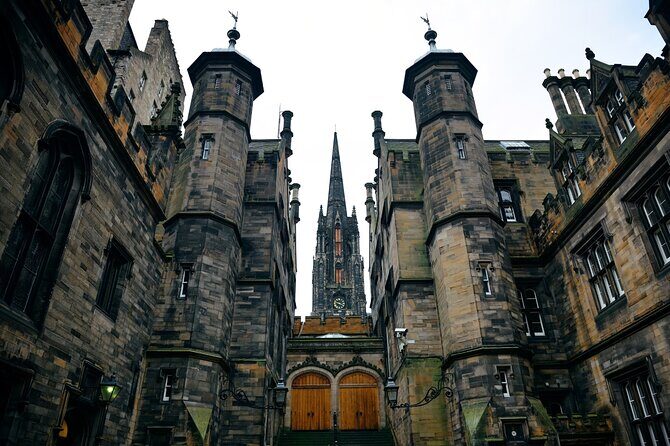
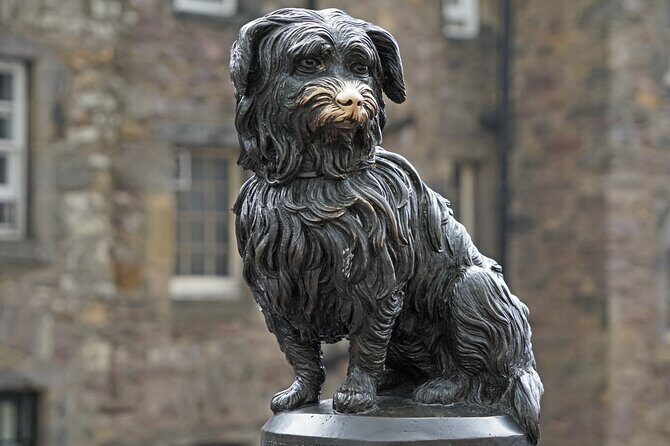
Edinburgh’s haunted reputation has a centerpiece feel, and this stop leans into it: a graveyard considered among Edinburgh’s most haunted, with Harry Potter inspirations tied to what people imagine and remember about the place. You also get the story of a famously good dog, the kind of detail that makes the stop memorable even if you’re not the type to chase ghosts.
This is also a practical stop for photos, because graveyard paths and stone textures give you a different visual flavor than the streets and viewpoints you’ve been walking through. Just remember: it’s still a working, historic space. You’ll enjoy it more if you keep your voice down and look closely at what’s right in front of you.
The Old Town’s darker moments, explained in plain terms
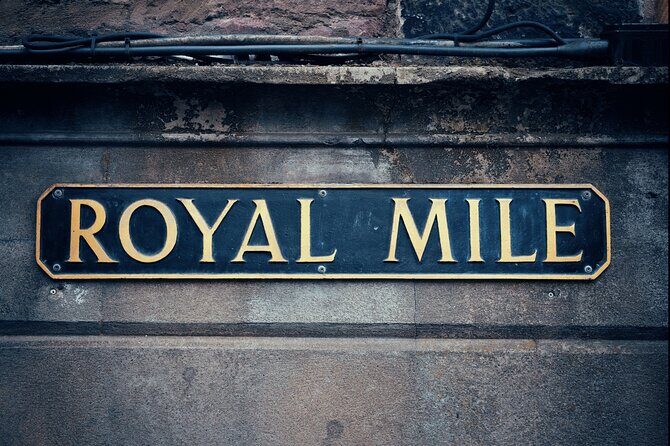
Next comes the Old Town quarter that has seen some of the darkest moments in Edinburgh’s story. The value here is interpretation. Instead of treating historic tragedy like a headline, the guide connects the setting—streets, proximity, and landmarks—with what people lived through.
I like this approach because it changes how you move. You stop rushing past alleyways and closes. You start noticing how the Old Town’s layout makes certain kinds of things easier to understand: where crowds gathered, where movement was constrained, and how power showed itself in the built environment.




The most beautiful street in Edinburgh (and what you’ll notice next)
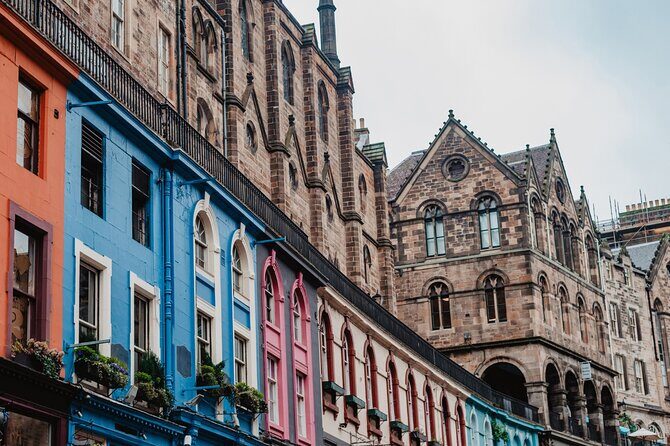
One stop is devoted to what your guide frames as the most beautiful street in Edinburgh—and they back it up with the idea that there’s more going on than the postcard view.
This kind of stop is more useful than it sounds. It trains your eyes. If you’ve only got a couple days, you’ll want that “instruction” because it helps you recognize details you’d otherwise ignore: the way the buildings frame perspective, the way the street slopes, and why people keep coming back for one specific vantage.
Even if you’re not a street-style photographer, this is a good pause for orientation. You’ll leave knowing what that street area is like and where you want to return later.
The ancient approach to Edinburgh Castle: getting the angle right
Before you enter the castle, you’ll walk the ancient approach to Edinburgh Castle. This matters more than people expect. The castle’s position is part of the experience, and seeing it from the approach gives you the “why” behind the views.
From street level, the fortress can feel like a huge wall in the distance. From the approach, you feel the climb and the way the architecture dominates. You also get a moment to line up photos before crowds pick up, which can make your later self-guided exploring more satisfying.
Inside Edinburgh Castle with a guide for 50 minutes

Your tour entry to Edinburgh Castle includes an admission ticket, and you’ll have about 50 minutes inside with your guide. For a short window, that’s a solid use of time. The guide isn’t just moving you through doors; they point out highlights so you don’t waste the best parts of your visit scanning randomly.
A good strategy here is to treat the guided time like the “map portion” of your trip. Listen for what’s worth prioritizing on your own after the tour. Then, when the tour ends, you can return your attention to the areas that match your interests—views, interiors, exhibits, or the stories tied to the rooms and spaces you’re standing in.
Admission included is also where the value really shows. If you’re paying separately for entry, you lose the advantage of a guide-driven plan.
Pacing, pauses, and what to do if you want more momentum
The overall impression is positive: people like the guide energy and the way humor and storytelling make Edinburgh feel alive. That said, one caution shows up in feedback about pacing—long pauses and heavier historical narration can make some guests feel like they’re waiting for the next landmark.
Here’s how to make it work for you:
- If you’re sensitive to long stops, keep your attention on what the guide is connecting, not just the dates.
- Use the pauses to look around and spot details you might miss while walking.
- If you have questions, ask them when you notice you’re getting lost in the story. A good guide can often shorten the path to what you really want to understand.
The biggest advantage is that small-group format gives you the chance to steer the conversation slightly—without derailing the route.
Small group size: VIP feel without the planning headache
This is a small-group tour with a maximum of 15 travelers, and that number changes everything. The guide can handle questions in context, and you’re less likely to be stuck behind a wall of people at every viewpoint.
Some reviews highlight a VIP feel when the group is especially small, which is the kind of difference that’s hard to get with big group tours. Even when it’s fuller, the cap still helps the guide manage timing and keep the experience personal.
You’ll also appreciate the practical navigation. Edinburgh’s Old Town is beautiful, but it’s also easy to wander into the wrong close. Having someone lead the route saves energy and reduces the “screw it, we’ll just take photos” feeling that comes when you can’t find your next stop.
Photo ops, views, and where to stand for better pictures
You’ll get plenty of photo opportunities, especially around the castle approach and the Old Town landmarks. The value isn’t just taking pictures—it’s learning where the best angles are. Once you’ve seen where the guide positions the group, you can recreate those angles later during your independent time.
For the best results:
- Bring a charged phone/camera and plan to shoot in bursts, not long pauses.
- Expect some walking ups and downs; stabilize your stance before taking long shots.
- Keep your eyes open for texture and framing—stonework, street slopes, and the way closes cut through the scene.
Price and value: what you’re paying for (and what you’re not)
At $102.83 per person for about 3 hours, you’re paying for three things that are hard to assemble on your own: a professional guide, a tight route through central Edinburgh, and castle admission included.
If you tried to copy this trip yourself, you’d still spend time figuring out the best route, and you’d likely enter the castle with less context. Here, the guide reduces your decision-making. That can be worth a lot when your schedule is tight and you’re trying to see the highlights without turning every day into a navigation problem.
Is it a budget option? Probably not if you’re only looking for scenery and you don’t care about explanations. But if you want a guided overview that sets you up for smarter follow-up exploring, this price feels fair.
Ending at Crown Square: your next steps inside the castle
The tour finishes in the royal heart of Edinburgh Castle at Crown Square (Castlehill, Edinburgh EH1 2NG). This is a smart finish point because it leaves you right where you want to continue: the castle’s museums and exhibitions are close by, and you’re already inside the action.
If you have extra time after the tour, treat it like a choose-your-own-adventure:
- If you like exhibits, linger where the castle’s interior stories are strongest.
- If you like views, prioritize the spots that give the best angle over the Old Town.
- If you like photos, take one “final sweep” before you leave so you don’t rush later.
Who should book this tour
This one fits best if you’re:
- Visiting Edinburgh for a short time and want a guided overview that prevents wandering
- Interested in how Scotland’s religion and politics left marks in the city
- The type who likes story-driven walks with lots of memorable stops
- Comfortable with moderate walking, including stairs
It may not suit you if you have limited mobility, since the tour is explicitly not recommended for that situation. You should also plan for decent weather, because this is a walking-focused experience.
Should you book Edinburgh Castle & Old Town on a small-group tour?
I’d book it if you want a time-efficient way to understand Edinburgh without turning your trip into map-chasing. The combination of Old Town stops, story context, and castle entry makes it a practical choice for first-timers and for anyone who doesn’t want to spend half a day figuring out where to go next.
I’d think twice only if you’re very sensitive to slower narration and long pauses. If that’s you, go in with realistic expectations: this is a guided story walk, not a sprint between sights.
If you can handle a bit of walking and you like learning along the way, it’s one of the more dependable ways to get your bearings fast and then explore the rest of Edinburgh with confidence.
FAQ
How long is the Edinburgh Castle and Old Town guided tour?
The tour runs for about 3 hours.
What time does the tour start, and where do I meet?
It starts at 10:00 am. You meet at the David Hume Statue, 379-381 High St, Edinburgh EH1 1PW.
Where does the tour end?
The tour ends in Edinburgh Castle at Crown Square (Castlehill, Edinburgh EH1 2NG).
Is admission to Edinburgh Castle included?
Yes. Edinburgh Castle admission is included, and you’ll have about 50 minutes inside with your guide.
What group size should I expect?
The tour has a maximum group size of 15 travelers.
Is the tour suitable for limited mobility?
It’s not recommended for travelers with limited mobility. The tour requires a moderate physical fitness level, and there are stairs as part of Edinburgh walking. Service animals are allowed.