REVIEW · EDINBURGH
Medical and Surgical History of Edinburgh – Private Walking Tour
Book on Viator →Operated by 7 Hills Tours Edinburgh · Bookable on Viator
Medicine has a street address in Edinburgh. This private walking tour strings together the Royal Mile, Surgeons’ Hall, and the former Royal Infirmary into one easy, story-driven route. You’ll hear how ideas about care, training, and hospitals formed right on these corners.
I especially like the physician-guided feel—on tours like this, guides such as Dr. Grigor or Moray bring a medical-care perspective to the history. I also like that the key sights along the way use free admission tickets, so you’re paying for the walk and the guiding, not entry fees.
One consideration: it’s about 2.5 miles total, and the pace assumes moderate fitness. If you have chronic or painful musculoskeletal issues, this may feel like too much.
In This Review
- 6 key things you’ll get on this Edinburgh medical tour
- A physician-led stroll through Edinburgh’s healthcare story
- Walking route, timing, and why 2.5 miles works
- Stop 1 on the Royal Mile: where Edinburgh medicine takes shape
- Stop 2 on the Cowgate: Robertson’s Close and The Little House
- Surgeons’ Hall Museums: your built-in break plus the fight for women in medicine
- University of Edinburgh medical sites: former school buildings and student life reality
- Bristo Place: Darwin’s old lodgings and the 1880s medical-school presence
- Lauriston Place finale: the former Royal Infirmary and its major doctors
- Price and value: what $130.44 buys you
- Who should book this and who might not
- What to expect on the ground: comfort, transport, and smart prep
- Should you book this Edinburgh medical history tour?
- FAQ
- How long is the Edinburgh medical and surgical private walking tour?
- What’s the total walking distance?
- Is this tour private?
- Is the tour offered in English?
- Are museum or site admissions included?
- Is coffee or tea included?
- Where does the tour start and end?
- Will I get confirmation after booking?
- Is the tour suitable if I have mobility or pain issues?
- What happens if the weather is poor?
6 key things you’ll get on this Edinburgh medical tour
- Royal Mile medical origins: trace the beginnings of Edinburgh medicine and surgery along the city’s oldest street
- Cowgate teaching-hospital sites: Robertson’s Close and The Little House, plus the first Royal Infirmary complex
- Surgeons’ Hall Museums break: time to refresh and a clear look at women’s long fight to enter medical education
- University medical school viewpoints: the former medical school home and what student life was really like
- Bristo Place and Darwin’s lodging: pass Charles Darwin’s old medical student lodgings before seeing the imposing medical-school buildings
- Lauriston Place finish at the former Royal Infirmary: end at the grand entrance plaza and hear stories of the institution’s major doctors
A physician-led stroll through Edinburgh’s healthcare story
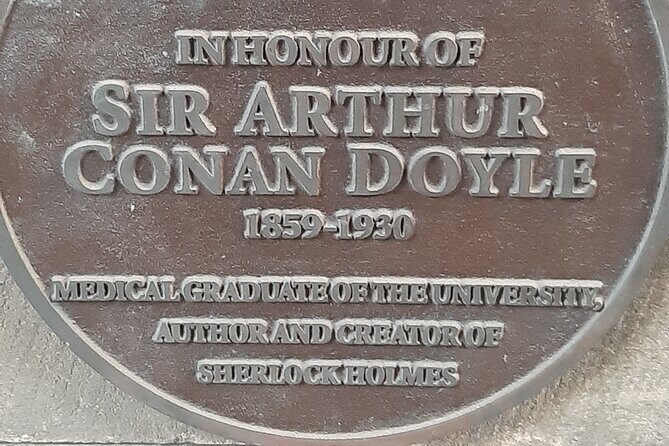
Edinburgh is famous for its old stones, but this tour makes those stones matter. You’re not just looking at buildings—you’re following how medicine organized itself here, from early teaching to real hospital care. The result feels grounded and human, not like a list of dates.
I like that the guiding style is built around lived context. When the guide is a practising physician (you may encounter guides named Dr. Grigor or Moray), the explanations tend to connect history to real-world healthcare choices—training, ethics, access, and how systems change over time.
It’s also a format that fits a visit. Instead of spending your day bouncing between separate museum tickets and transit stops, you get a single walk with built-in moments of pause.
You can also read our reviews of more walking tours in Edinburgh



Walking route, timing, and why 2.5 miles works
This is a private tour for your group only. Typical duration is about 3 to 4 hours, walking roughly 2.5 miles total. That distance matters: you can enjoy the day without feeling like you’ve been chained to cobblestones all afternoon, but you still need comfortable walking legs.
The route is paced with natural stop points, so it doesn’t feel like a nonstop lecture. You get a longer stretch early, then shorter segments as you move toward the big finish. Expect a refreshment break too, but you’ll pay for coffee or tea yourself.
You’ll also want to plan for weather. The experience requires good weather, and if conditions are poor, you’ll be offered another date or a full refund.
Stop 1 on the Royal Mile: where Edinburgh medicine takes shape
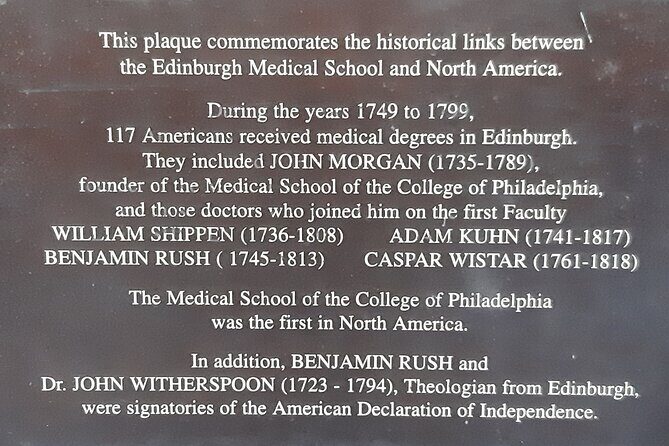
You begin at Hunter Square and head onto the Royal Mile, Edinburgh’s oldest and most story-dense thoroughfare. This first segment sets the tone: it’s about origins. You’ll learn about how Edinburgh Medicine and Surgery emerged, and you’ll see the alleyway connected to the College of Physicians.
The best part of starting here is momentum. The Royal Mile gives you an instant sense of time depth, and the guiding makes the history feel tied to real people organizing training and practice. If you like context—how institutions formed and why—this opening stop gives you that foundation quickly.
Timing tip: plan on about 45 minutes here, which is enough time to absorb the origins without feeling rushed.
Stop 2 on the Cowgate: Robertson’s Close and The Little House
Next you move to the Cowgate area, just off the main flow of tourists but packed with old-city layers. Here, the focus turns to teaching hospitals. You’ll locate Robertson’s Close, where the story of The Little House begins—an early teaching hospital site—and then you’ll explore the successor complex, described as the first Royal Infirmary of Edinburgh.
This is one of the most rewarding sections if you’re curious about how healthcare shifted from theory to organized practice. You’ll get a sense of how hospitals weren’t just places of treatment—they were training grounds and learning systems. The guide’s framing helps you understand why institutions evolved where they did, and why those early steps mattered.
Practical note: this stop runs about an hour, so it’s your longest “deep listening” block early in the tour.
Surgeons’ Hall Museums: your built-in break plus the fight for women in medicine
At Surgeons’ Hall, you get the refreshment break. Coffee and/or tea aren’t included, but you’ll be given a chance to recharge in the middle of the walking day. That timing is smart: it keeps the afternoon from turning into a slog.
This stop also covers a major theme: the years-long battle for women to be admitted to the Medical School. Even if you think you know the headline version, the walk-and-talk format tends to make the issue feel immediate—like you’re standing in the spaces where barriers were challenged and slowly changed.
Why this stop works: it’s not just medical history; it’s medical education history. You leave with a clearer picture of who got access to training, and how that access shaped who became the next generation of clinicians and surgeons.
Timing tip: expect around 45 minutes here.
You can also read our reviews of more private tours in Edinburgh




University of Edinburgh medical sites: former school buildings and student life reality
From Surgeons’ Hall you move toward University of Edinburgh territory, where the medical school’s former home becomes part of your story. You’ll hear how Edinburgh grew into a medical center, and you’ll learn about the drudgery and compensations of medical student life.
This isn’t framed as only theory. The guide’s approach helps you picture what training meant day-to-day—time, effort, and the tradeoffs students made. If you’ve ever wondered why medical training has always felt tough, this part gives you an origin story for that feeling.
Timing tip: this segment is shorter, about 20 minutes. It’s designed to connect smoothly between bigger landmarks.
Bristo Place: Darwin’s old lodgings and the 1880s medical-school presence
As you continue, you’ll pass Charles Darwin’s old med student lodgings on Bristo Place. It’s a fun pivot—seeing how a famous mind intersected with medical training space, even if your interest is broader than Darwin.
Then the tour points you toward an imposing 1880s medical school and graduation hall. This is where the “street history” starts to feel like physical architecture speaking. The buildings remind you that medical training wasn’t only an academic idea; it needed real campuses, real halls, and real rooms to function.
Why you’ll likely enjoy this part: it connects famous names to the systems that shaped them. You’re still learning healthcare history, but with an extra human hook.
Timing tip: this segment runs about 25 minutes—long enough to notice the shifts in place, not long enough to overstay.
Lauriston Place finale: the former Royal Infirmary and its major doctors
The tour culminates at Lauriston Place, finishing in the grand entrance plaza of the former Royal Infirmary of Edinburgh. This is a strong ending because it gathers the themes you’ve been building: early institutions, teaching hospitals, surgical tradition, and real-world care.
You’ll hear stories of some of the great doctors and surgeons associated with the institution. Even if you don’t walk away with a memorized list of names, you’ll likely leave with a clearer mental model of how one hospital helped shape a wider medical ecosystem.
Timing tip: the finale is about 15 minutes, so don’t worry about getting stuck late. The tour is designed to end on a high, photo-friendly note.
Price and value: what $130.44 buys you
At $130.44 per person, this isn’t a bargain-basement walking tour. You’re paying for a private experience, a guided narrative, and the fact that admission tickets at the key stops are free.
Here’s how I think about the value:
- You’re buying time with a guide who can connect institutions across centuries, instead of spending your time piecing it together from signs.
- You’re not paying museum entry fees for the main stops, which matters because healthcare history sites can add up fast.
- Private format helps if your group has varied interests. You can get your questions answered without the pressure of a large crowd.
If you love history but get impatient with dry museum-only routes, this strikes a useful middle ground: real streets, real buildings, and museum time built in.
Who should book this and who might not
This tour fits best if you’re interested in:
- how medical education developed in Edinburgh
- women’s access to training
- how hospitals evolved from teaching spaces
- the connection between healthcare systems and the city’s institutions
It’s also a solid choice if you like conversation. The pacing is built around learning that stays human—healthcare history as a story of people and institutions, not a slideshow of facts.
I’d think twice if:
- you need a fully seated experience (there’s walking throughout)
- you have chronic or painful musculoskeletal issues due to the ~2.5-mile distance
- you want a purely museum-focused day rather than street-level context
If you’re visiting during busy periods, booking in advance can help. This experience is often reserved well ahead (on average, around 75 days), which suggests it’s a popular way to handle medical history in limited time.
What to expect on the ground: comfort, transport, and smart prep
Because the meeting point is Hunter Square and the tour finishes at the Edinburgh Futures Institute at Lauriston Place, you’ll want to think of this as a guided walk across central areas. It’s near public transportation, so you can plug it into the rest of your day without complicated planning.
A few practical tips:
- Wear comfortable walking shoes. You’re covering about 2.5 miles.
- Bring a light layer. Edinburgh weather can shift fast, and the tour needs good conditions.
- If you care about photos, plan for quick stops at landmark moments. The tour does not move at a crawl, but it does pause where it matters.
For refreshments, you’ll take a break, but coffee and/or tea are not included. Set aside a small budget if you want a drink with your break.
Should you book this Edinburgh medical history tour?
If you want Edinburgh healthcare history with a guide who can connect institutions across time—and you’re happy to walk about 2.5 miles—this is a strong match. The route gives you key locations tied to medical education and hospitals, and it includes a meaningful break where you can rest your feet before continuing.
I’d book it if your group includes at least one person who enjoys history with real human stakes: education access, hospital development, and how society shaped who could become a doctor.
Skip it if walking is a struggle or if you’re expecting a slow, purely museum experience. This one is a guided walk first, with museum time built into the middle.
FAQ
How long is the Edinburgh medical and surgical private walking tour?
The tour runs about 3 to 4 hours.
What’s the total walking distance?
It’s approximately 2.5 miles.
Is this tour private?
Yes. It’s a private tour/activity, so only your group participates.
Is the tour offered in English?
Yes, it’s offered in English.
Are museum or site admissions included?
Admission tickets are listed as free for the tour stops.
Is coffee or tea included?
No. There is a refreshment café stop, but food and drink are not inclusive.
Where does the tour start and end?
It starts at Hunter Square, Edinburgh EH1, UK, and ends at the Edinburgh Futures Institute, The University of Edinburgh, 1 Lauriston Pl, Edinburgh EH3 9EF, UK.
Will I get confirmation after booking?
You should receive confirmation within 48 hours of booking, subject to availability.
Is the tour suitable if I have mobility or pain issues?
The tour is rated for moderate physical fitness and is not recommended for people with chronic and/or painful musculoskeletal health conditions.
What happens if the weather is poor?
The experience requires good weather. If it’s canceled due to poor weather, you’ll be offered a different date or a full refund.