REVIEW · EDINBURGH
Edinburgh – Old Town Stories
Book on Viator →Operated by All-Star Guides · Bookable on Viator
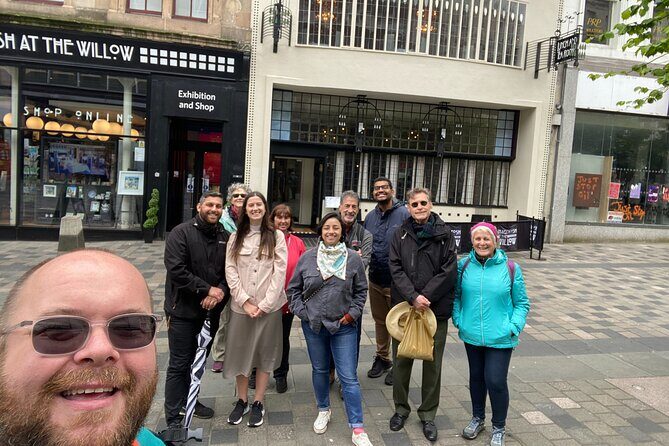
Old Town Edinburgh comes alive in stories. In about two hours, you’ll walk the Old Town with a guide and hear how famous Edinburgh citizens shaped Scotland’s capital, step by step. Guides like Edgar, James, Robert, and David are described as story-first, with a good sense of humor that keeps the pace moving.
I love how the walk gives you big turning points in short stops, especially at St Giles’ Cathedral and the Reformation-era threads. I also love the way the route ties darker local tales into place, including Greyfriars Bobby and the bodysnatching/anatomy angle.
One possible drawback: it’s a weather-dependent outdoor stroll, so you’ll want to dress for rain and cool wind and accept that some stops are brief.
In This Review
- Key highlights you’ll feel right away
- Why this Old Town Stories route is such a smart time-saver
- Getting oriented at West Parliament Square (before you hit the Royal Mile)
- St Giles’ Cathedral: the Reformation, John Knox, and political shockwaves
- Mercat Cross: architecture lessons and the Great Fire of 1824
- The Royal Mile stretch: long-gone buildings and landmarks you’ll actually remember
- Writers’ Museum: Scotland through a landmark building and famous authors
- Grassmarket: gallows history, Covenanters, and a memorial you can find again
- Greyfriars: prison gates, bodysnatching, anatomy, and Greyfriars Bobby
- Group size, pacing, and what you’ll actually learn (without feeling overloaded)
- Price and value: $20.72 for a structured Old Town orientation
- Who should book this Old Town Stories walking tour?
- Should you book it?
- FAQ
- How long is Old Town Edinburgh Stories?
- Where does the tour start and end?
- How much does it cost?
- Do I need to buy entry tickets for the stops?
- What language is the tour offered in?
- Will I get a ticket on my phone?
- Is there a limit on group size?
- Is the tour outdoors, and what about weather?
- Is there anything about accessibility or service animals?
Key highlights you’ll feel right away

- Two-hour route with a clear storyline, so you get context fast
- St Giles’ Cathedral linked to John Knox, the Reformation, and bigger conflicts
- Royal Mile walking with “what you’re seeing” explanations along the way
- Writers’ Museum built into a stop that mixes literature with architecture
- Grassmarket and Greyfriars that turn Edinburgh’s past into real locations you can stand on
Why this Old Town Stories route is such a smart time-saver

Edinburgh’s Old Town can feel like sensory overload. You see stone, statues, closes, church towers, and you’re thinking: where do I even start? This tour solves that problem with a simple approach: walk a short, central loop and use each landmark as a chapter.
What makes it work for you is that you’re not just “seeing.” You’re getting the city’s origin story and then watching it branch out into religion, war, fire, writing, punishment, and science—all within a compact two-hour window. At $20.72 per person for around two hours on foot, it’s priced like a budget-friendly way to get structure without paying for a full-day plan.
The group size tops out at 30, which usually means you can stay aware of where you are and ask questions without feeling lost in a crowd. And with a mobile ticket and confirmation at booking, you’re not juggling paper tickets at the start.
You can also read our reviews of more tours and experiences in Edinburgh.



Getting oriented at West Parliament Square (before you hit the Royal Mile)
You start at West Parliament Square (W Parliament Sq, Parliament Sqr, Edinburgh EH1 1RF). That’s a helpful anchor because it puts you right where you can understand the Old Town flow—then follow your guide toward the spine of the city.
From there, the tour is built for practical momentum. You’ll be walking through key points that are easy to find again later. That matters because after a guided walk, you want to keep exploring on your own without feeling like you’re wandering in circles.
If you’re arriving during busy periods (Old Town can get noisy), a guide who can hold attention with anecdotes makes a real difference. Based on the guides’ descriptions (Edgar, James, Robert, David), the vibe is story-driven rather than a lecture, with a pace that helps you cover a lot without feeling rushed.
St Giles’ Cathedral: the Reformation, John Knox, and political shockwaves
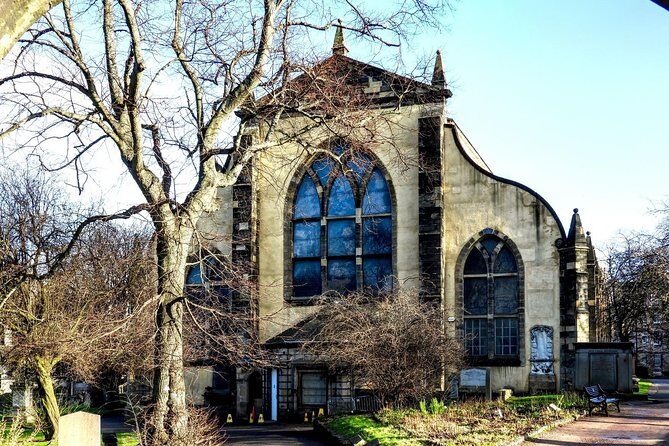
Your first major stop is St Giles’ Cathedral for about 15 minutes, with free entry (no ticket cost noted). This is one of those places where the building itself makes the conversation feel real. You’ll walk around and get the cathedral’s history, plus how John Knox and the Reformation connect to what you see.
You’ll also hear how the Wars of the Three Kingdoms may have started, which is a great reminder that religion here wasn’t just spiritual. It was political power, public conflict, and national identity.
The practical side: 15 minutes is enough to grasp the storyline and notice key features, but it’s not enough for a full sit-down visit. If you want quiet time to look closely inside and read every placard, you’ll likely need a separate return visit. Still, as a first “chapter,” this stop sets you up to understand why Edinburgh’s Old Town looks the way it does.
Mercat Cross: architecture lessons and the Great Fire of 1824

Next is Mercat Cross for about 10 minutes, again with free admission. This is a smaller stop, but it’s a useful one. You’ll hear about the architecture and the impact of the Great Fire of 1824—the kind of event that changes a city’s rhythm, rebuilding choices, and street-level look.
Why you’ll care: Old Town streets can make you assume everything grew slowly over centuries. A major fire is a reminder that cities also get remade under pressure. When you understand that, you start noticing differences in building styles and repairs as you walk.
If you’re the type who likes photos, this stop can be great for a quick shot because it’s a recognizable landmark. The main consideration is time: it’s a brief orientation stop, not a long deep-dive into urban planning. You’ll get the key idea and move on.
The Royal Mile stretch: long-gone buildings and landmarks you’ll actually remember

After Mercat Cross, you’ll walk up the Royal Mile. Expect it to be an active segment: the tour uses the route itself as a “moving museum.” You’ll hear about important long-gone buildings and pick up context around surrounding landmarks and statues.
This is where the tour starts feeling like a real-time map. You stop enough to understand what you’re seeing, but you still get that sense of progression uphill through Old Town. It’s a smart way to build memory—because your brain tags places to story beats, not just street names.
A small drawback to keep in mind: because it’s a walking tour with multiple stops, this isn’t a slow, detailed walking pace designed for lingering at every view. If you’d rather spend 30–60 minutes per sight, you might feel the time moving. But if you want a fast way to understand the area before you choose what to revisit, this format fits well.



Writers’ Museum: Scotland through a landmark building and famous authors
One of the most pleasant mid-route stops is the Writers’ Museum, also for about 10 minutes, with free entry noted. You’ll learn about one of the city’s oldest standing buildings—now home to a museum dedicated to Scottish writers.
This part is especially valuable if you like literature or even if you don’t. The tour approach is to connect culture to place. Edinburgh doesn’t just have famous streets; it has a reputation built by people who wrote, argued, and shaped ideas.
From the guide stories, there’s a strong chance you’ll hear about Scottish writers/works and even get specific quotations as part of the storytelling style. That’s a fun bonus because it turns “museum” into something you can picture in your mind, even during a short stop.
The trade-off: 10 minutes means you’re not going to read everything inside. You’re getting the context so that if you want more later, you’ll know what to seek out.
Grassmarket: gallows history, Covenanters, and a memorial you can find again
Then you head toward Grassmarket for about 10 minutes, again with free admission noted. This stop shifts the mood in a good way—Edinburgh’s past includes punishment and public spectacle, and this is one of the places where the city’s grim side is tied to an actual site.
You’ll hear about the former gallows site, plus the characters who met their fate there. The stop also touches on the Covenanters and includes a visit to the Memorial.
Why this works on foot: you’re not reading a history summary in an office. You’re seeing how the Old Town layout surrounds you, which makes the story feel less abstract. It also gives you a better sense of why certain neighborhoods developed reputations.
If you’re sensitive to violent history, this is still fairly short. But it’s not a “light” stop. It’s more respectful than sensational—still, it’s part of the tour’s core storyline.
Greyfriars: prison gates, bodysnatching, anatomy, and Greyfriars Bobby
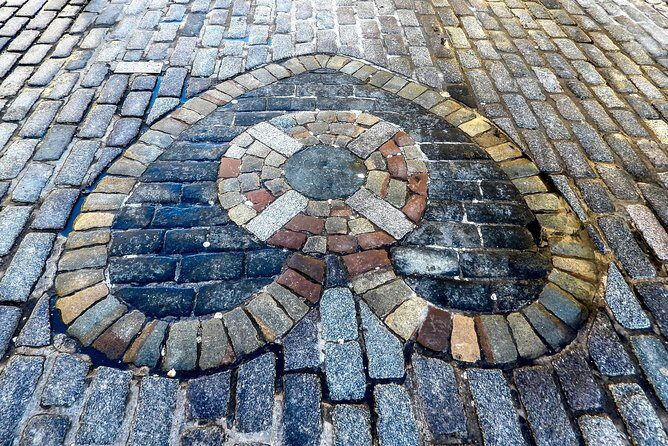
Your final big segment is Greyfriars for about 30 minutes, with free admission noted. This is the longest stop, and it’s also the most story-dense.
You’ll visit the gates of the Covenanters Prison, and you’ll hear about a convoluted period of history. Then the tour moves into the darker Edinburgh chapter of bodysnatching and how it impacted studies of anatomy. Finally, you’ll get the heartwarming story of Greyfriars Bobby.
That combination is exactly why this stop is powerful. Edinburgh likes to balance grim reality with local legend, and Greyfriars shows both sides in the same area. The result is that your photos and your memories don’t just capture a gate or a cemetery edge—they capture a theme.
A practical consideration: with longer time here, you’ll want to wear comfortable shoes. Greyfriars is part of a walking route that ends at Greyfriars Kirkyard Cemetery (Greyfriars Place, Edinburgh EH1 2QQ). If you’re hoping for lots of quiet strolling, this is the place where you’ll likely want to slow down on your own after the guided portion.
Group size, pacing, and what you’ll actually learn (without feeling overloaded)
A lot of walking tours fail when they try to pack too much. This one succeeds because the stops are short and targeted. You get an idea, see the place, then move on. That’s why people leave with a stronger sense of direction through Old Town instead of just a list of sights.
The guide style matters, and the experience clearly varies by guide while staying consistent in tone. In the guide accounts, Edgar, James, Robert, and David are repeatedly described as enthusiastic storytellers who keep momentum and handle questions well—even on smaller groups where you can ask more.
As for questions and engagement, this tour setup supports that. With a max group size of 30, you’re unlikely to feel invisible. And because the route is central, you can compare what you learn with what you see on future walks.
If you’re a solo traveler, a couple, or someone who wants to build confidence walking Old Town, you’ll probably find this format easier than trying to self-plan a full day.
Price and value: $20.72 for a structured Old Town orientation
Let’s talk value in plain terms. $20.72 per person for roughly two hours plus a guided storyline through several major Old Town anchors is strong value, especially if you’re not already planning to pay for paid-entry attractions during your first hours in Edinburgh.
You also get free entry at each listed stop (St Giles’ Cathedral, Mercat Cross, Writers’ Museum, Grassmarket, and Greyfriars are all noted as Admission Ticket Free). That helps your budget stay predictable.
The real “cost” is time on your feet. But if you’re already sightseeing in Old Town, you’d probably walk a version of this route anyway. The tour simply adds context and makes the walking pay off.
Who should book this Old Town Stories walking tour?
I’d point you toward this tour if:
- You want a fast, guided introduction to Edinburgh’s Old Town
- You like learning through stories tied to real buildings, not just dates
- You plan to return to a few sights later and want a head start on what matters
- You enjoy Scotland’s blend of literature and local legend
You might choose something else if:
- You need long time inside churches or museums
- You dislike walking between multiple stops in a short window
- You want a mostly “quiet and contemplative” pace rather than a talk-and-walk format
Should you book it?
Yes—if your goal is to understand Edinburgh quickly and turn the Old Town into a connected story. The route hits St Giles, the Royal Mile, Writers’ Museum, Grassmarket, and Greyfriars in a way that helps you remember what you saw and why it mattered. With a max group size of 30, a central start at West Parliament Square, and free-entry stops, it’s a practical pick that fits neatly into most first-day or mid-trip schedules.
If the weather is your worry, plan to dress for it and accept that the tour depends on good outdoor conditions. Otherwise, this is one of those small-group walks that makes your next hours in Edinburgh easier and more meaningful.
FAQ
How long is Old Town Edinburgh Stories?
It runs for about 2 hours.
Where does the tour start and end?
It starts at West Parliament Square (W Parliament Sq, Parliament Sqr, Edinburgh EH1 1RF) and ends at Greyfriars Kirkyard Cemetery (Greyfriars Place, Edinburgh EH1 2QQ).
How much does it cost?
The price is $20.72 per person.
Do I need to buy entry tickets for the stops?
The stops listed are marked as Admission Ticket Free, so you should not need to pay separate entry fees for those specific stops.
What language is the tour offered in?
The tour is offered in English.
Will I get a ticket on my phone?
Yes. You receive a mobile ticket, and you’ll get confirmation at the time of booking.
Is there a limit on group size?
Yes. The tour has a maximum of 30 travelers.
Is the tour outdoors, and what about weather?
It requires good weather. If it’s canceled due to poor weather, you’ll be offered a different date or a full refund.
Is there anything about accessibility or service animals?
Service animals are allowed, and it’s noted as being near public transportation. It also says most travelers can participate.