REVIEW · GLASGOW
Glasgow Highlights Bike or Ebike Tour
Book on Viator →Operated by Gallus Pedals · Bookable on Viator
Glasgow by bike feels like a shortcut. In just about three hours, you get a small-group ride with a guide who ties the streets to real stories, while you cruise along Glasgow’s river cycle paths at an easy pace. I love how the route mixes photo stops with short explanation breaks, so you’re moving, but you’re also actually learning what you’re looking at.
Two things I especially like: first, you get close-up views of major landmarks without the usual hassle of buses and traffic, including Kelvingrove Museum and the University of Glasgow cloisters. Second, the tour includes one sweet snack and safe, guided cycling gear, so it feels thoughtful rather than just “ride around and good luck.” If you’re worried about hills, the ride is offered by bike and ebike, and you can usually choose the option that matches your energy.
One thing to consider: several of the best stops are external-only sightseeing, so if you’re expecting lots of long indoor time, you’ll need to plan that separately.
In This Review
- Key highlights to look for
- The 3-hour route: how you cover Glasgow without burning the day
- Meeting at the Pentagon Centre and starting with the right gear
- Clyde and Kelvin views: cranes, Govan, and the river cycle paths
- Kelvin Hall to the park system: where the city feels made for cyclists
- Kelvingrove Museum: outside views that still feel worth it
- University of Glasgow cloisters: one incline, lots of reward
- Botanical Gardens and Kibble Palace: optional if timing cooperates
- Ashton Lane cobbles and the “intercultural centre” feeling in the parks
- Bikes, ebikes, and hills: picking the right effort level
- Price and value: what $82.64 buys you in real time
- Practical tips so your morning goes smoothly
- Should you book this Glasgow Highlights Bike or Ebike Tour?
- FAQ
- How long is the Glasgow Highlights Bike or Ebike Tour?
- What time does it start, and where do I meet?
- Are bicycles and helmets included?
- What about snacks, water, and drinks?
- How many people are in the group?
- Can most people join, even if they are not super fit?
- What if the tour can’t run because of the weather?
Key highlights to look for
- 10% of profits go to charity: you’re riding and supporting a good cause at the same time.
- Small group, max 12: easier pacing, more chances to ask questions, and less crowd energy.
- Both river cycle routes: you’ll spend real time on the Clyde and other river paths instead of getting stuck in traffic lanes.
- Museum and university focus: you get the “wow” factor of Kelvingrove and the cloisters without racing your way through.
- Sweet snack included: one small treat on the way keeps things feeling relaxed, not rushed.
- Ebike option for comfort: if hills make you nervous, this is the practical upgrade.
The 3-hour route: how you cover Glasgow without burning the day
This is a focused, half-morning style tour starting at 10:30 am. You meet at the Pentagon Centre on Washington Street in Glasgow, and you end back at the same spot. With an approximate 3-hour total time, it’s a great way to build a mental map of the city fast.
In practice, the ride feels like a rhythm: bike for a stretch, then short stops where your guide points out buildings, cultural details, and local context. That matters because Glasgow can be “all angles” if you’re just walking, especially when you’re trying to place neighborhoods. On a bike, you get the speed to cover spread-out sights, without the fatigue that can come from too much walking.
Most groups are designed to work for most travelers, and the tour size caps at 12. That’s not just a comfort thing. It also helps the guide keep the pace consistent and adjust when someone needs a slower moment or more explanation time.
You can also read our reviews of more cycling tours in Glasgow
Meeting at the Pentagon Centre and starting with the right gear
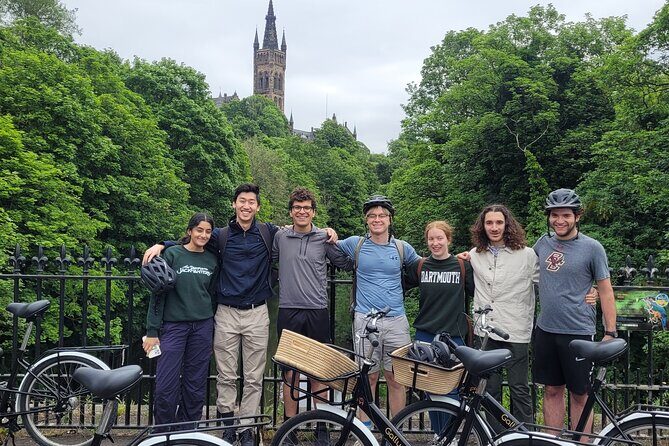
The meeting point is the Pentagon Centre, 36 Washington St, Glasgow G3 8AZ. It’s a straightforward start, and it’s described as being near public transportation, which makes it easier if you’re doing other activities the same day.
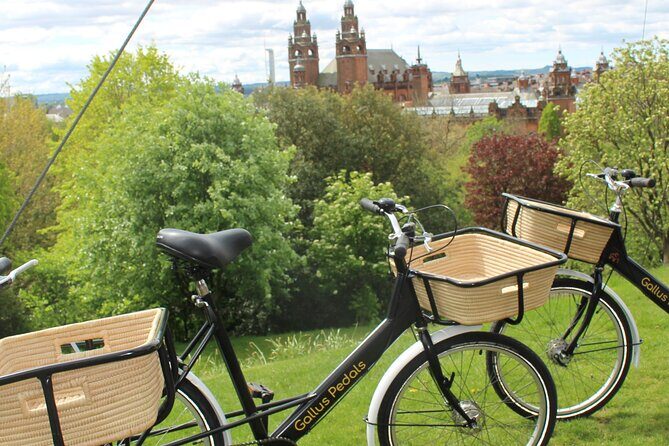
You’ll get a helmet as part of the tour, and you’ll be provided with the bicycle. The helmet is more than a box-tick. It signals that the operator is serious about a safe ride, which also shows up in how many of the stops are planned around cycle paths rather than sketchy street crossings.
One practical detail: bottled water is not included, and coffee or tea isn’t included either. If you run warm or tend to sip a lot while moving, bring a refillable bottle or plan to buy water before and after.
Clyde and Kelvin views: cranes, Govan, and the river cycle paths
A big part of the appeal is that you’re not stuck staring at Glasgow from one narrow angle. Early on, you get a close-up view of a crane and nearby cultural buildings, with the emphasis on outside viewing. You’re meant to slow down just enough for your guide to connect industrial shapes to the city’s past and present.
Then you roll out toward the area tied to Govan, including outside views and a look at interesting artefacts and the historic suburb context. Even if you’re not a “shipbuilding” person, these kinds of stops help Glasgow click. The city’s identity isn’t tucked behind a single museum. It’s in the architecture and the way the neighborhoods developed.
After that, you cycle along the cycle paths of Glasgow’s rivers, and there may be chances to stop at a couple of points depending on timing and mood. This is where the bike tour format really pays off. On foot, you’d cover less ground and miss the long sweeps of waterfront and river greenery. By bike, you get those stretches that make Glasgow feel bigger and more connected.
Kelvin Hall to the park system: where the city feels made for cyclists
You’ll also take in the new cycle path past Kelvin Hall. If you’re the type who likes “how the city is changing” stories, this section tends to land well because you’re seeing Glasgow’s transport and public-space upgrades in motion, not just reading about them later.
From there, the tour keeps mixing views with breathing space. You cycle along routes that go through parks, and you get moments to stop for photos and take in what the guide points out. The key benefit is practical: parks give you a physical reset. When you’re on a bike, that matters because your brain stays engaged longer.
If you’re doing this during a breezy or cool day, you’ll appreciate how the route is planned to avoid constant stop-and-go. One of the real perks, based on how guides run this kind of highlight route, is that you get breaks without the tour turning into a series of impatient re-groups.
Kelvingrove Museum: outside views that still feel worth it
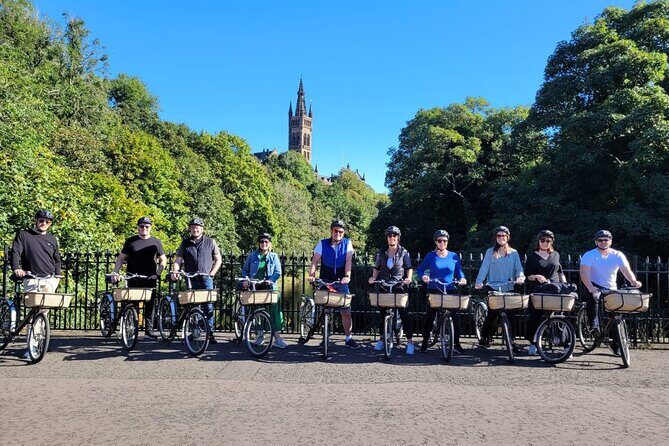
One stop centers on one of Glasgow’s famous free museums—described as a real jewel in the city’s crown. You get an external visit only close-up, with facts and details from your guide about what makes the building special. Even outside, the Kelvingrove presence is strong. The scale, the façade character, and the setting are the kind of things you’ll remember later when you pass it again.
Your time here can also be tied to your group’s schedule. Some tours include an opportunity to step inside if there’s time, but the core experience is built around the building itself and the stories around it. That’s important: you’re not losing your whole morning to museum logistics. You’re getting context first, then you can decide whether you want deeper indoor time afterward.
There’s also mention of an optional toilet stop near a major venue-area moment. The note is clear: they can’t guarantee it’s always open. So if a toilet stop is critical for you, don’t treat this as your only option. Consider planning a quick bathroom earlier in the day too.




University of Glasgow cloisters: one incline, lots of reward
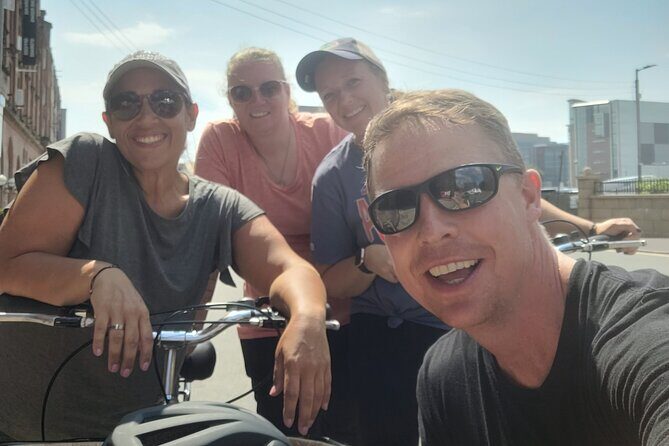
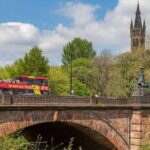
One of the best “wow” sections is the University of Glasgow stop. You’ll have a bit of an incline to get there, but it’s described as worth it. The tour focuses on getting up close and taking you inside the famous cloisters underneath the spires.
This part is more than a pretty photo. Your guide talks about famous alumni and what makes the university unique—ideas that help you connect the architecture to people and legacy. On a bike tour, the big win is timing: you see the campus area while your route is still fresh and your energy is still good.
If you choose a regular bike, treat this stop as the section most likely to feel “real” in terms of effort. With the incline, it’s a good moment to decide what works for you. If hills stress you out, this is where an ebike upgrade makes the experience feel smoother and less like a workout you didn’t plan for.
Botanical Gardens and Kibble Palace: optional if timing cooperates
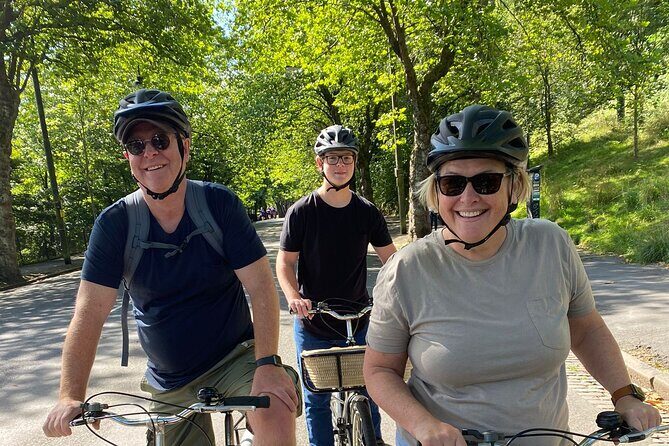
Depending on how things run, you may have an opportunity to cycle around the Botanical Gardens. The description includes a possible option to park bikes and pop into Kibble Palace. This is set up as flexible—so don’t plan your entire schedule around it.
Still, it’s a nice contrast inside the same morning. You’re mixing architectural and institutional Glasgow with a more peaceful, planted setting. It’s the kind of change of pace that keeps the tour from feeling like a checklist.
Since these stops are described as external-only in the main structure, what you’re really buying is the route, the views, and the guide’s pointers. If you want long indoor time, treat this as a bonus segment when it’s offered.
Ashton Lane cobbles and the “intercultural centre” feeling in the parks
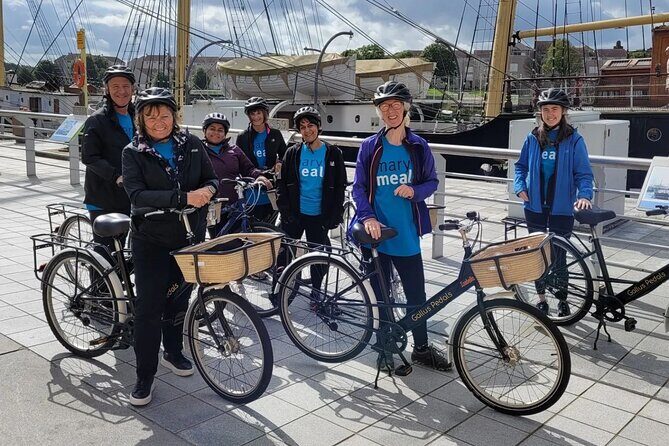
Later, the tour heads through Glasgow’s most scenic park sections and you park at what’s described as Glasgow’s intercultural centre. The naming here is practical: you’re stopping at a place where the vibe shifts from straight-through sightseeing to a more neighborhood-feeling moment, with time for photos and a short reset.
Then you cycle through the West End. Depending on time, there’s an option to go through the cobbles of Ashton Lane. That’s a fun touch if you like street texture and small lanes—especially because bike tours can usually only show you these kinds of details when the route has flexibility.
One of the subtle benefits of doing this by bike is that the stops aren’t all “monument, monument, monument.” You get murals, parks, neighborhood streets, and the in-between spaces that make Glasgow feel human.
Bikes, ebikes, and hills: picking the right effort level
This is advertised as a bike or ebike highlights tour, and the practical reality is that the route includes some hills. The overall pace is described as relaxed, and a regular bike should be doable for many people, but it’s not completely flat.
A few riders have noted that the ride is not too hilly for most, while others mention more hills than expected on a regular bike. The consistent advice is simple: if you want an easy, low-stress ride, choose the ebike. If you’re comfortable biking and don’t mind some incline work, a regular bike can still be a good fit.
There’s also a safety angle: the bikes are described as sturdy and safe. That matters because a stable, well-maintained bike makes you relax into the ride, which makes the whole tour better. If you’re traveling with a wide age range—as some families do—this is the kind of tour that stays workable because there’s room for different comfort levels.
Price and value: what $82.64 buys you in real time
At $82.64 per person for about three hours, this tour is priced for visitors who want high value per hour. You’re paying for guided interpretation, not just transportation. The guide’s job is to connect streets and buildings to how Glasgow actually works as a city—today and historically.
You also get real inclusions: bike use, a helmet, and one sweet snack. What’s not included is equally important: bottled water and coffee/tea are not part of the price. That’s normal for bike tours, but it’s worth planning so you don’t get caught at a stop with nothing to drink.
Then there’s the charity element: 10% of the tour’s profits go directly to charity. That’s not a vague feel-good line. It’s a concrete part of the booking.
Overall, I’d call this a strong “first Glasgow morning” choice if you want a fast overview that still feels personal, thanks to the small group size and the guide’s stop-by-stop storytelling.
Practical tips so your morning goes smoothly
Bring layers. Glasgow weather can change fast, and you’ll be outdoors cycling. Also, cycling can feel cooler when the wind picks up, even on otherwise mild days.
Expect that not every major stop is designed as an interior visit. Several of the key sites are outside-focused by design. Use that to your advantage: take the photos, read the context from your guide, then decide what to revisit on your own time.
Also remember that the tour is described as requiring good weather. If conditions are poor, you’ll be offered a different date or a full refund. In other words, you’re not gambling your whole trip day on one slot.
Finally, plan around the optional toilet stop. It’s noted you can’t guarantee it will be open. So if you need a predictable bathroom stop, aim to use facilities before you start, and treat optional stops as a bonus.
Should you book this Glasgow Highlights Bike or Ebike Tour?
Book it if you want a practical, time-efficient way to see a lot of Glasgow without dealing with traffic on foot. It’s especially good for first-timers who need a sense of layout—river paths, parks, West End streets, and big landmarks like Kelvingrove and the University campus all in one morning.
Choose the ebike if you’re not sure how your legs will handle inclines. The tour is relaxed, but there is a real hill moment, and it’s worth matching effort level to your day.
Skip it if your main goal is long indoor museum time. The tour’s structure leans toward outside viewing and guided context, with indoor access only as a timing-dependent bonus.
If you’re the kind of traveler who likes photos, short breaks, and learning why places look the way they do, this is a great use of a 3-hour window.
FAQ
How long is the Glasgow Highlights Bike or Ebike Tour?
It lasts about 3 hours.
What time does it start, and where do I meet?
The tour starts at 10:30 am at the Pentagon Centre, 36 Washington St, Glasgow G3 8AZ, UK. It ends back at the meeting point.
Are bicycles and helmets included?
Yes. The tour includes use of a bicycle and a helmet.
What about snacks, water, and drinks?
You get 1 sweet snack. Bottled water and coffee or tea are not included.
How many people are in the group?
The tour has a maximum of 12 travelers.
Can most people join, even if they are not super fit?
Most travelers can participate. The ride includes some incline, so if hills are a concern, the ebike option can help.
What if the tour can’t run because of the weather?
The tour requires good weather. If it is canceled due to poor weather, you will be offered a different date or a full refund.
If you want, tell me your travel dates and whether you’re considering regular bikes or ebikes, and I can help you decide the best strategy for your comfort level.