REVIEW · GLASGOW
City Sightseeing Glasgow Hop-On Hop-Off Bus Tour
Book on Viator →Operated by City Sightseeing Ltd - UK and Ireland · Bookable on Viator
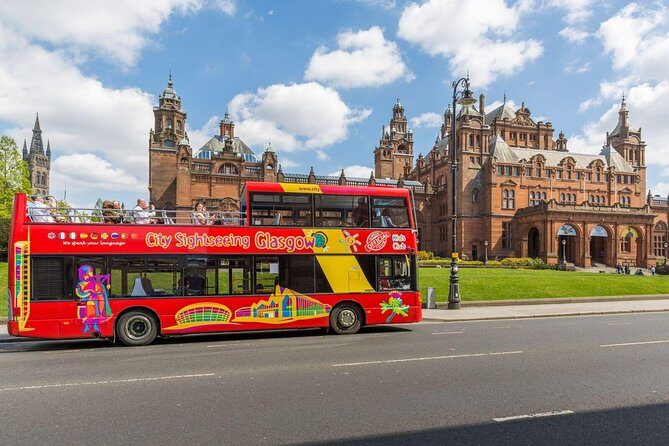
Glasgow from the top deck is the easy win. This hop-on hop-off bus tour strings together the city’s big sights with recorded or live guidance, so you can hop off for a museum or a photo and then get back on when you’re ready.
I like the flexibility: buses run often enough that you’re not stuck waiting forever, and the loop takes about 90 minutes so you can do a full circuit or just sample a few stops. I also like the commentary: you get English audio (and the Red Route includes free headphones and versions in multiple languages).
One thing to keep in mind is stop changes and timing. The operator has noted temporary relocations and some departures that may not finish the full loop, so check your stop location before you stand out in the cold.
In This Review
- Key Things I’d Focus On Before You Ride
- Hop-On Hop-Off Basics: The Glasgow Value Pitch
- Red Route vs Yellow Route: Live Guide and Electric Buses
- Where to Catch the Bus: Stop Locations and Temporary Moves
- Starting Smart: How to Time Your Ride for a Full Loop
- Red Route City Centre: George Square to Merchant City
- St. Enoch to the Distillery and Transport Museum Loop
- Westward Glasgow: University, Kelvingrove, and the Museum District
- Yellow Route: Drygate to Celtic Park, Then Science Centre
- Commentary That Actually Helps: Audio vs Live
- Should You Book This Hop-On Hop-Off Bus in Glasgow?
- FAQ
- How long is the Glasgow Hop-On Hop-Off bus tour?
- Do I get access to both the Red and Yellow routes?
- Is there live commentary, or is it only recorded audio?
- What languages are available for commentary?
- Can I hop on and off as many times as I want?
- Does the ticket include entry to attractions?
- When do the Red and Yellow routes run?
- Is the Yellow Route electric?
Key Things I’d Focus On Before You Ride
- Frequent service: buses run about every 30 minutes, with a ~90-minute route loop.
- Two modes of narration: Red Route can include a live guide (seasonal), while Yellow Route is audio-only in English.
- Electric-bus Yellow Route: you’ll be riding electric buses on that route during high season.
- Open-top double-decker views: sit upstairs when you want photos that aren’t ruined by shoulder-height railings.
- Some stops move around: the start/end point and a few stop numbers can shift temporarily.
- You still pay for entries: tickets cover the ride and commentary, not attraction admission.
Hop-On Hop-Off Basics: The Glasgow Value Pitch

For about $27.62, you’re paying for one practical thing: transport that lets you explore Glasgow on your own schedule, plus commentary that helps you connect the dots between neighborhoods. That matters in a city like Glasgow, where hopping between the center, riverside areas, and the university/museum zones can eat up time if you’re relying only on walking or random taxis.
The big “value” here is control. You can do a full loop to get your bearings, then come back for specific stops you care about. If your time is tight, this is an efficient way to see a lot without committing to a tight guided schedule.
Just know what it does not include. Your ticket covers the bus tour and audio/live commentary, but entry to attractions is not included, so plan museum tickets separately if they’re part of your day.
You can also read our reviews of more city tours in Glasgow


Red Route vs Yellow Route: Live Guide and Electric Buses
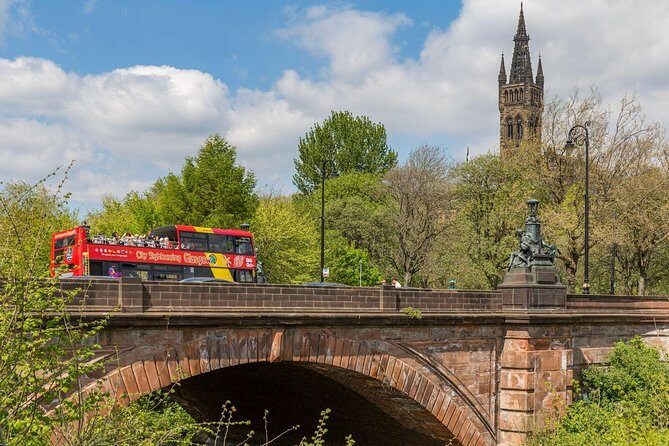
City Sightseeing Glasgow runs two different loops: the Red Route (all year round) and the Yellow Route (high season only). If you’re visiting outside that high season window, you’ll still get the Red Route.
Here’s the difference that affects your experience:
- Red Route (all year): open-top double-decker bus with recorded commentary, and (seasonally) a live guide on the Red Route from April to September. The Red Route also includes free headphones, and the recorded commentary is available in multiple languages, not just English.
- Yellow Route (high season only: April 4 to September 29): audio commentary in English only, and electric buses for that loop.
From a comfort perspective, live narration can feel more “human,” especially if you want to ask quick questions or hear extra context on the move. One tip that shows up again and again: when you’re lucky enough to catch a live narrator (names like Jim and Luke have been mentioned), the ride can feel less like a headset tour and more like a guided city talk on wheels.
Where to Catch the Bus: Stop Locations and Temporary Moves
This is the part you don’t want to wing. The operator has posted that some stops are relocated or adjusted temporarily. That means the “stop number” in your head might not match the stop number at the curb right now.
Pay special attention to these current notes:
- Stop 1 may be located on Cathedral Street in front of the Charles Oakley Building, and it may operate as pick-up and drop-off only.
- Stop 7 has relocated to St. Vincent Street (past West Nile Street) and is the main starting and ending point.
- On some departures—specifically tours leaving Stop 7 at 3:30pm, 4pm, and 4:30pm—the tour may terminate on Cathedral Street instead of completing the full route.
- Stop 8 remains on Jamaica Street outside Lidl.
- Stop 9 is temporarily out of use.
Practical takeaway: before you wait, confirm which stop is actively starting buses for the route you want that day. It’s especially important if you’re trying to connect to a specific plan like a cathedral visit or a museum timed ticket.
Starting Smart: How to Time Your Ride for a Full Loop
The Red Route runs from 10:00am to 4:00pm, with buses about every 30 minutes, and the full run takes about 90 minutes. The Yellow Route runs only in high season, with the first tour around 9:45am and the last around 4:15pm.
If you want the best shot at doing the whole thing (not just a slice), start earlier rather than later. A helpful rule of thumb: start before about 2:30pm if you want time to complete the full run and still hop off for stops that matter.
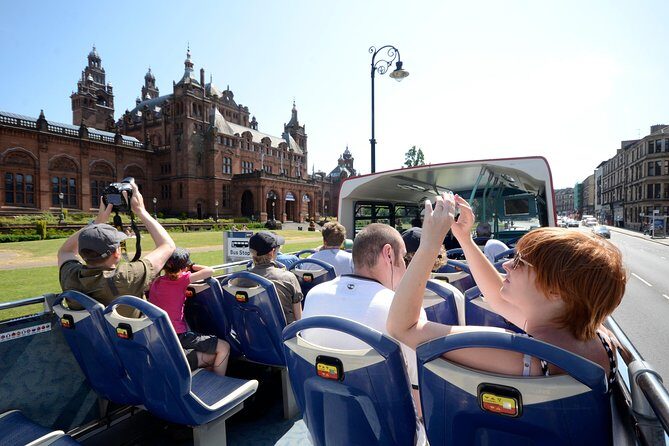
Also, consider this simple comfort hack: when you’re choosing where to sit, go for upstairs for better city views and photos. Even on a busy day, that extra height makes the differences between “nice snapshot” and “clear, memorable view.”
Red Route City Centre: George Square to Merchant City
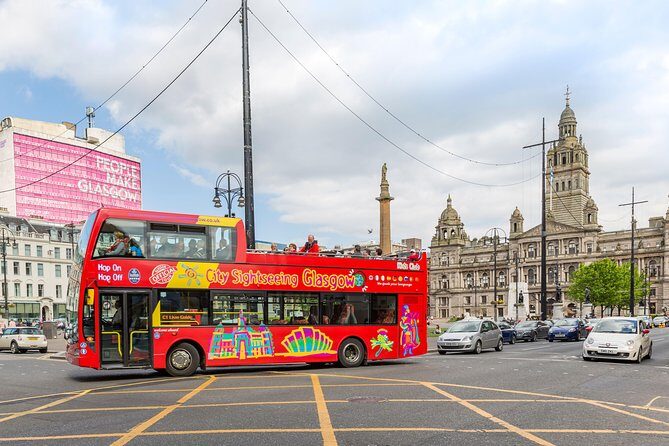
The Red Route is built around a classic Glasgow arc: civic center, major religious landmark, and the older commercial streets.
Here’s what you’ll encounter early on:
- Stop 1: George House / George Square
This is a strong starting point because it’s tied to George Square. It’s also useful if you want your first photos and a quick orientation before you commit to hopping off for something more time-consuming.
- Stop 2: Cathedral Square / Glasgow Cathedral
If your must-see list includes Glasgow Cathedral, this stop lines up with it. It’s a natural “hop off and explore” moment because the bus gets you there without you plotting routes.
- Stop 3: Blackfriars Street / Merchant City
Merchant City is a key Glasgow area name, and this stop helps you connect the city’s center with shopping, streets, and that lively urban feel you’re looking for.
- Stop 4: 18 London Rd / The Barras
The Barras is an easy “get off, wander, get back on” kind of stop if you want street-level atmosphere.
- Stop 5: (Glasgow Green area stop)
This is your chance to get to Glasgow Green for a different texture of the city—more open-space energy than pure streetscape.
This early segment is best if you want to understand how Glasgow’s center is arranged: squares, landmark buildings, and neighborhood edges. It’s also the part where you’re most likely to decide what to revisit later.





St. Enoch to the Distillery and Transport Museum Loop
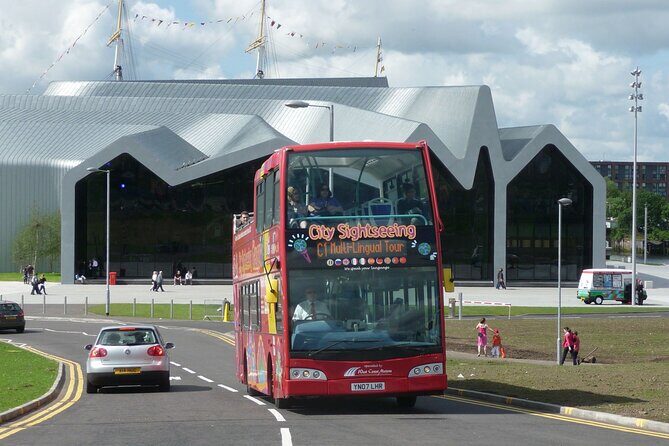
After the center, the Red Route shifts you toward areas where you can pair quick stops with longer breaks.
A few highlights on this stretch:
- Stop 6: The Scottia / St. Enoch Centre
This stop connects you with the St. Enoch Centre area—handy if you want food options (not included on the tour, but convenient nearby) or just a central meetup point.
- Stop 7: St Vincent Palace / St. Vincent Place
Even if you’re not hopping off here, this stop is part of the route’s “spine,” tying the center to the next set of stops.
- Stops 8–11: Argyle Street / Oswald Street area, then Tunnel Street, then SEC Centre
Expect SEC Centre and major city infrastructure around here. It’s useful if your day includes events, venues, or you just want a quick look at where big city happenings sit.
- Stop 12: Pumphouse Visitor Centre / Clydeside Distillery
If Clydeside Distillery is on your list, this is the aligned stop to make it easy without extra transit.
- Stop 13: Riverside Transport Museum / Riverside Museum
This is the kind of stop where you can easily turn “one quick hop” into a longer visit, since transport museums tend to be time sinks in the best way.
A practical note: open-top buses are great, but this stretch can mean more traffic delays than you’d like. If your schedule is tight, build in buffer time between hopping off and re-boarding.
Westward Glasgow: University, Kelvingrove, and the Museum District
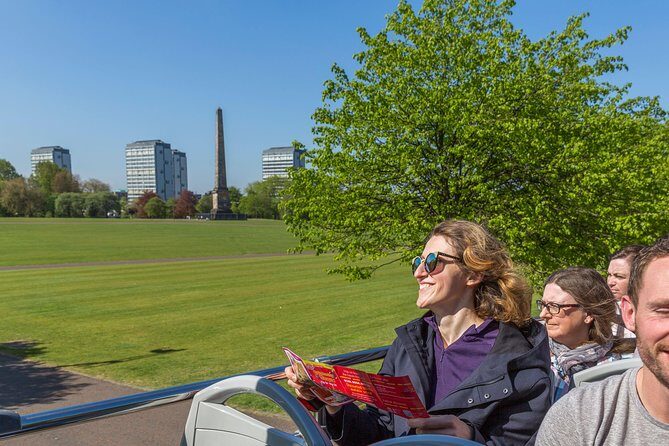
The later portion of the Red Route moves you into the parts of Glasgow that feel more “arts and learning,” and where you can spend real time.
Stops to look for:
- Stop 14: Burnbank Bowling Club / Woodlands Road (Old Schoolhouse)
This is one of those neighborhood-feeling stops. It’s ideal for strolling if you want a break from the main commercial streets.
- Stop 15: University Library / University of Glasgow
If University of Glasgow matters to your itinerary, this stop is your gateway.
- Stop 16: Boyd Orr building / Byres Road
This is a useful tie-in to the Byres Road area, which can be a good base if you want restaurants and local street life near the campus zone.
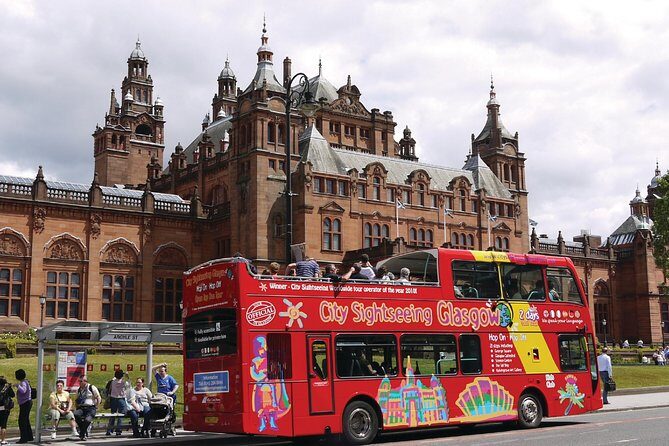
- Stop 17–18: Blantyre Street (Kelvingrove Museum), then Sauchiehall St (Kelvingrove Hotels)
Kelvingrove Museum is the anchor here. If you want museums plus a scenic walk-and-look day, this section is the place to build it.
- Stop 19: Garnet Street / Charing Cross
This connects you with the Charing Cross area, helpful if you want to reposition quickly rather than commit to one neighborhood for hours.
- Stop 20–21: School of Art (Sauchiehall St), RSAMD (Renfrew St)
If you’re into arts-and-education spaces, these stops keep you close to that creative campus vibe.
- Stop 22: Killermont Street / Buchanan Bus Station
When your day is winding down, Buchanan Bus Station can be the convenient “end-game” spot. It’s also useful if you plan to head to another part of the city afterward.
If you only do one thing with the Red Route: do enough of this later stretch that you know where to spend your next visit. The loop is basically a built-in planning tool.
Yellow Route: Drygate to Celtic Park, Then Science Centre
The Yellow Route follows a different Glasgow storyline. It’s also hop-on hop-off, but it’s designed more around distinct neighborhoods and landmarks on one linked daytime run.
Key stops you’ll likely care about include:
- Drygate / Tennent’s Brewery
This is a strong choice if you want a Glasgow “taste-of-place” stop that feels different from the cathedral/merchant-city arc.
- High Street for Merchant City (from the Blackfriars area)
You’ll loop back toward central streets, but the pacing and stops feel different depending on whether you’re doing the Yellow or Red route that day.
- Ross Street / Barrowlands
Barrowlands is the kind of stop that can turn into a quick wander, then back onto the bus for the next big view.
- Celtic Park (Dalserf Pl)
If Celtic Park is on your list, this gives you an easy drop-off alignment.
- Bridgeton / Bandstand (Bridgeton Cross area)
Another “hop off and stroll” zone where you can reset your day.
- West Brewery (Binnie Pl)
Again, very neighborhood-specific and easy to pair with a short time commitment.
- Science Centre (Golspie St area)
The Science Centre stop is perfect if you want a museum-type destination that’s usually an all-ages crowd pleaser, even if you just do a quick look.
- Govan Stones / Fairfield / Ibrox Stadium
This stretch shifts you toward riverside/outer-city viewpoints and sports landmarks.
- Hidden Lane / Blythswood Square / Nelson Mandela Place
These final-city stops help you return toward recognizable names, useful for a last round of photos before you call it a day.
Because the Yellow Route uses electric buses, you may notice a smoother feel while riding. The bigger benefit, though, is the routing choice—if you only do one loop, you’ll likely find the two routes overlap partly, so doing both can be worth it only if you’re in town long enough to justify the second day.
Commentary That Actually Helps: Audio vs Live
Commentary is where this tour earns its keep. You’ll have:
- Recorded English audio on the Yellow Route.
- Recorded commentary in 7 languages on the Red Route, plus free headphones.
- Live guide on the Red Route from April to September.
A practical tip: if you’re choosing your seat, try to be where you can hear clearly. Some open-top riders do better upstairs when wind and street noise aren’t swallowing the audio. If you catch live narration, it can be more engaging than headsets, especially when the guide points out what’s worth looking at next.
And if you’re the type who likes to understand what you’re seeing while you’re still on the move, live guides can add humor and extra context. Names like Jim, Luke, and drivers like Brian have been specifically mentioned in connection with informative commentary and helpful driving.
Should You Book This Hop-On Hop-Off Bus in Glasgow?
Book it if:
- You want one easy day plan that covers a lot of Glasgow without committing to timed tickets back-to-back.
- You like the idea of open-top views and using the route to choose which areas deserve a deeper visit.
- You’re planning your first trip and you want a quick way to get your bearings and decide where to return.
Consider skipping (or doing only part of it) if:
- You hate waiting in public if the stop you picked isn’t the one currently starting buses.
- Your schedule is so tight that you can’t absorb traffic or the natural stop-and-go rhythm.
- You want only museum entries with no time spent riding; this tour is mainly for transport + narration, not attraction admissions.
If you do book: start earlier, confirm your current stop location (especially if you’re aiming for a specific departure), and plan to hop off at just 2–4 priority stops. That’s when the tour feels like smart travel, not just sightseeing by bus.
FAQ
How long is the Glasgow Hop-On Hop-Off bus tour?
The Red Route is listed as about 1 hour 30 minutes (around 90 minutes). Buses run roughly every 30 minutes.
Do I get access to both the Red and Yellow routes?
Your ticket is valid for the Red Route and Yellow Route during high season only (Yellow runs April 4 to September 29).
Is there live commentary, or is it only recorded audio?
On the Red Route, there can be a live guide from April to September. The Yellow Route uses recorded audio in English.
What languages are available for commentary?
For the Red Route, the recorded audio commentary is available in 7 languages and you get free headphones. The Yellow Route audio guide is English.
Can I hop on and off as many times as I want?
Yes. Your pass lets you hop on and off repeatedly along the route(s).
Does the ticket include entry to attractions?
No. The tour includes the ride and commentary, but entry to attractions is not included.
When do the Red and Yellow routes run?
Red Route tours run daily from about 10:00am to 4:00pm. Yellow Route tours run during high season from about 9:45am to 4:15pm.
Is the Yellow Route electric?
Yes. The Yellow Route uses electric buses.