REVIEW · GLASGOW
3 Hour Private City Highlights Glasgow Walking Tour
Book on Viator →Operated by Walking Tours in Glasgow · Bookable on Viator
Glasgow hits you fast—then it keeps talking. This 3-hour private highlights walking tour is built for getting your bearings quickly, with a local guide who ties together landmarks, street art, and culture as you move from stop to stop. I really like the mix of big icons and everyday scenes (from Glasgow Cathedral area views to Merchant City murals), and I also like that it’s private, so your guide can keep the pace right for your group, like Lauren, Mary, Dave, and Stephen did for past guests.
One thing to consider: it’s a walking tour with a brisk rhythm (about 15 minutes per main stop), and much of what you see is exterior-only—so if you want slow museum time, you’ll need to plan that separately.
In This Review
- Key takeaways before you set out
- Glasgow in three hours: why this highlights walk works
- Starting at George Square and City Chambers: Glasgow’s civic core
- Glasgow Cathedral and the Necropolis: origins and the city’s darker air
- Merchant City murals, Tolbooth Steeple, and St Andrew’s Square: old center, new attitude
- Glasgow Green and People’s Palace: a break that’s actually part of the story
- River Clyde to Buchanan Street: shipbuilding to Victorian streets
- Finishing at the Gallery of Modern Art: a strong end point
- Guides make this tour: Lauren, Mary, Dave, and Stephen’s style
- Price and value at $151.17 per person
- Who should book this Glasgow private highlights walk?
- Should you book this Glasgow highlights tour?
- FAQ
- How long is the Glasgow walking tour?
- Is this tour private?
- Where does the tour start and end?
- Is hotel pickup included?
- What sights are included on the walk?
- Are admission tickets included?
- Is the tour offered in English?
- Is the tour suitable for people who can walk?
- What happens if the weather is bad?
Key takeaways before you set out
- Private group, local guide energy: the tour stays focused because it’s just your group.
- Great orientation in 3 hours: you’ll connect the dots between civic Glasgow, old streets, and modern art.
- Cathedral visit is conditional: you can step inside only if it’s open, and admission isn’t included.
- Lots of free stops on the route: several key areas are free, with time kept realistic.
- Ends at a major art stop: finishing at the Gallery of Modern Art makes a strong wrap-up.
- Weather matters: good weather is required, with alternatives if conditions are poor.
Glasgow in three hours: why this highlights walk works
If you only have a day (or even half a day) in Glasgow, a highlights walk is the fastest way to learn how the city is put together. You start at the civic center and work your way outward through classic landmarks, then back toward the busier retail and cultural core. It’s not about rushing into one big attraction—it’s about learning the city’s logic.
The private format matters. With a guide like Lauren or Mary, the tour can feel like a conversation with direction: you get clear wayfinding, stories that connect different neighborhoods, and a pace that fits what your group wants to notice. You’ll cover a lot of ground without feeling like you’re just collecting photos.
The route also makes practical sense for planning. Because it starts in George Square and ends at the Gallery of Modern Art, it’s easy to build the rest of your day around it—lunch before, dinner after, and optional add-ons based on what grabs you.
You can also read our reviews of more walking tours in Glasgow


Starting at George Square and City Chambers: Glasgow’s civic core
Your tour begins at 80 George Square, right in the heart of Glasgow’s old and civic center. First stop is Glasgow City Chambers. You’ll see it from the outside—this is a quick, focused opener that sets the tone for how important civic buildings are in Glasgow’s identity.
Why this start works: City Chambers gives you a reference point. From there, the rest of the walk stops feeling random. You understand the direction of the city and why certain places became the natural gathering points.
Then you move into George Square itself, with the idea behind the famous slogan People Make Glasgow. Even if you’re not from Scotland, you’ll get what that means in practice: Glasgow’s story isn’t only about famous figures—it’s about the people, the jobs, and the communities that built the city’s reputation.
A nice touch here is the time allotment. About 15 minutes at these first stops is enough to learn what matters and still keep your legs fresh for what’s coming next.
Glasgow Cathedral and the Necropolis: origins and the city’s darker air
Next up is Glasgow Cathedral. The focus is on the Cathedral area and Glasgow’s early story. If the building is open, you may be able to step inside—though admission tickets aren’t included—so treat it as a bonus rather than a guarantee.
This stop is worth it because it shifts you from civic Glasgow into origins. You start seeing how the city’s spiritual and historical roots shaped the streets around them.
From there you head to The Necropolis, the famous cemetery area that sits above the city. This is another exterior-focused stop, but it’s a strong one if you like history with atmosphere. You’ll learn the concepts behind the Necropolis and how it fits into Glasgow’s growth, when the city expanded and the way people thought about life, death, and status.
One practical note: cemetery areas often mean hills and uneven ground. Wear comfortable shoes. Bring your phone for photos, but keep an eye on footing, especially if Glasgow’s weather does its usual switch-up.
Merchant City murals, Tolbooth Steeple, and St Andrew’s Square: old center, new attitude
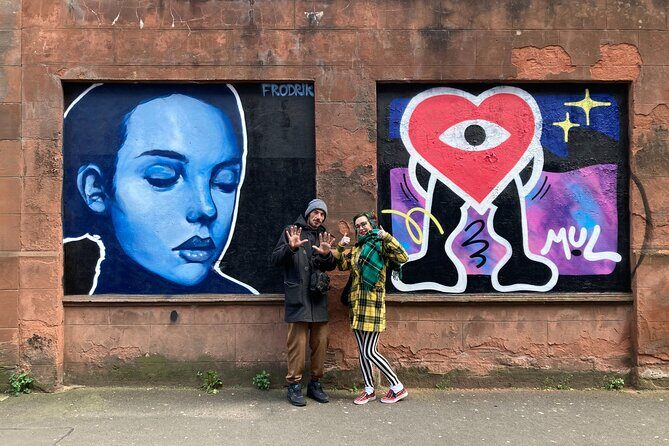
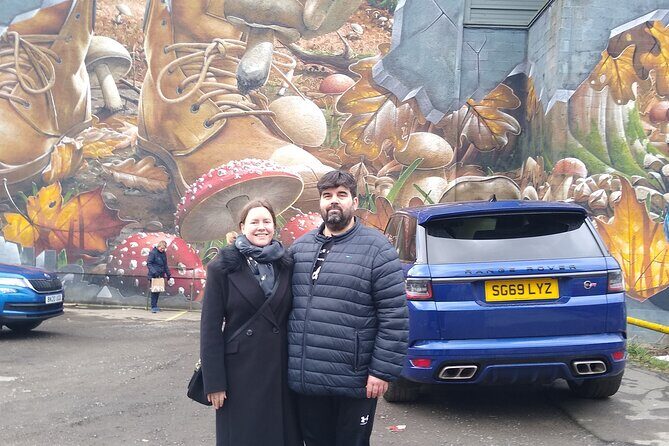
Now you get into Merchant City, where Glasgow shows a different side—trade and commerce, then today’s creative layer. You’ll spend time around the murals blooming across the area. If you’re the type who notices street art and wants the story behind it, this is a good moment in the walk to slow down for a minute and look up.
Merchant City also gives you a contrast with earlier stops. City Chambers and Cathedral communicate power and time depth. Merchant City shows what people added later—style, commentary, and the creative habits of living in the city.
You’ll also see Tolbooth Steeple, described as part of the original hub of the city centre. Even from the outside, a steeple like this helps you picture the old civic web: where decisions were made, where the city met, and how the center functioned before modern streets took over.
Then the route continues to St Andrews In The Square (St Andrew’s Square), Glasgow’s hub for Scottish culture. This stop is mostly exterior too, but it’s useful because it frames the cultural geography of the city. You’ll likely leave with a better sense of where to return later—especially if you’re planning one or two museum or performance stops after your walk.
Glasgow Green and People’s Palace: a break that’s actually part of the story
Between the architectural stops and the riverfront, you get two calmer moments.
First is Glasgow Green, the oldest park in Glasgow. This isn’t just a scenic break. It’s a chance to learn how public green space became part of the city’s routine life, not an afterthought.
Then you reach People’s Palace and Winter Gardens. Even if the emphasis is on the exterior, you’re given a break here—your guide points you toward the social-history angle, and there’s mention of having a wee coffee. That’s a smart pacing move for a walking tour: you recover energy while still staying on theme.
Why this matters for value: not every highlights tour includes an intentional pause. Here, the break helps the rest of the route feel less like a sprint and more like an organized walk.
You can also read our reviews of more city tours in Glasgow



River Clyde to Buchanan Street: shipbuilding to Victorian streets
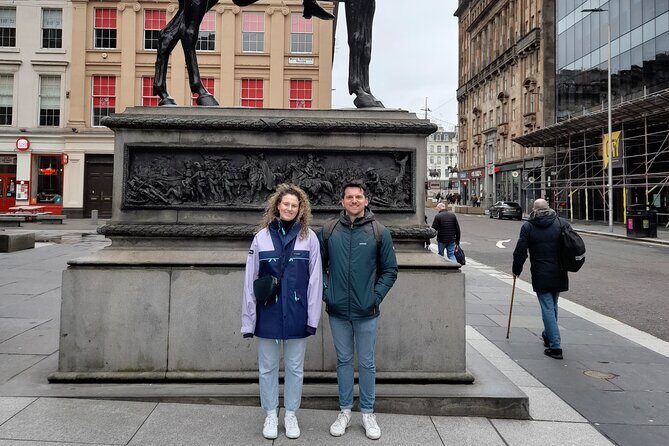
After the palace stop, you head to the River Clyde. This section focuses on shipbuilding history, which is one of those Glasgow topics that explains a lot about the city’s reputation. The Clyde isn’t just a river—it’s tied to labor, industry, and how Glasgow’s economy shaped the neighborhoods you’ll see elsewhere.
Then you reach Buchanan Street, where you get the busy city feel. The tour includes a reminder to look up at the Victorian architecture—so instead of only rushing past shops, you’ll get a reason to notice details in the building fronts.
This combination is practical. River Clyde is the big-picture story. Buchanan Street is what you do with your time once you’re back near shops and transit. You’ll finish feeling oriented both historically and practically.
Finishing at the Gallery of Modern Art: a strong end point
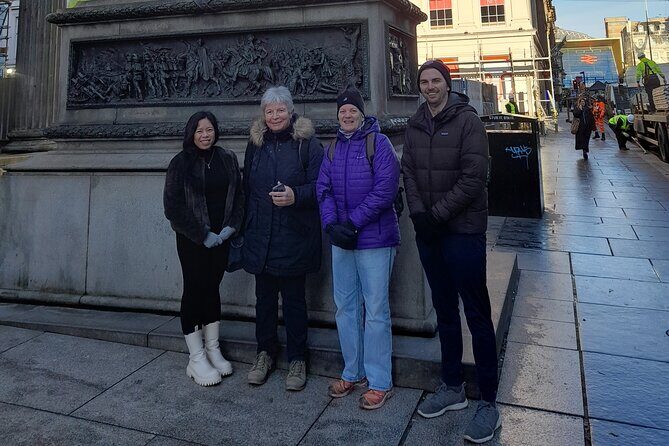
Your walk ends at the Gallery of Modern Art. The stop is exterior-focused, but it’s still a satisfying closer because it pulls you into modern Glasgow at the end of a route that started with the civic core and moved through older landmarks.
There’s also something psychologically helpful about the ending location. Because you finish at a major art site on Queen Street / Royal Exchange Square, you can keep going easily—browse, grab a snack, or plan your next step without having to backtrack across town.
If you’re wondering whether the ending feels abrupt: it shouldn’t. By this point, you’ve seen enough pieces of Glasgow that modern art seems like a natural continuation rather than a random last stop.
Guides make this tour: Lauren, Mary, Dave, and Stephen’s style
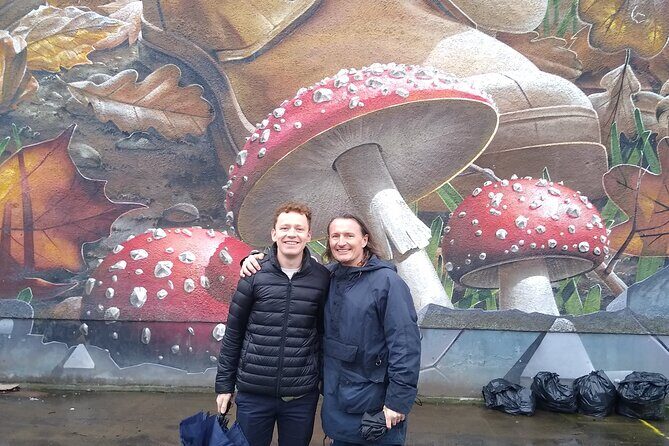
The standout theme across guide performance is energy with structure. Guides like Lauren and Mary are praised for being sweet, friendly, and tuned in to the group’s interests. Dave and Stephen are described as fun and talkative in a good way—sharing how Scotland connects to the rest of the world, not only facts about Glasgow.
Pacing shows up as a big factor, too. In a tour this size, timing matters; 15 minutes flies by fast. The best guides handle that by knowing when to speed up and when to slow down so you actually notice what you came for.
If you want a tour that feels like it has a point—rather than just a list of sights—this guide-led approach is the real engine.
Price and value at $151.17 per person
At $151.17 per person, this isn’t the cheapest way to do Glasgow on foot. But private tours can be good value when you factor in what you’re really buying: time, a route that makes sense, and a guide who can connect the dots.
Here’s where the value clicks:
- You cover a lot of famous spots in about 3 hours without needing to plan a route yourself.
- Several stops are free areas, and the stops are designed around outside views and short segments, so you’re not waiting in lines.
- It’s private, which can matter a lot if you’re traveling with kids, older family members, or anyone who wants more conversation than crowds allow.
The main reason some people feel it’s pricey is simple: it’s a walking tour with limited interior time at certain sites. If you’re seeking ticketed attractions as the headline, you may want to pair this with one museum or indoor site later.
Who should book this Glasgow private highlights walk?
This is a great fit if you want:
- Fast orientation in Glasgow with a human guide
- A route that mixes cathedrals, civic buildings, street art, and the river
- A private experience where you can ask questions and adjust the pace
It may be less ideal if you want:
- Long, sit-down time in interiors and ticketed attractions
- A slow, deep architectural tour where every building gets an hour
Good news: the tour is built for most people to participate, and it’s in English. If you’re traveling as a family, the tour format has enough variety that different ages usually find something to enjoy.
Should you book this Glasgow highlights tour?
Book it if you’re trying to turn your first day in Glasgow into something meaningful. The route covers the city’s main “how it works” story: civic Glasgow, religious origins, dramatic Necropolis atmosphere, merchant-era streets and murals, social life at People’s Palace, and industry along the Clyde—ending with modern art.
Skip it or adjust expectations if you want mainly indoor ticketed attractions. This tour is built around outside views and short stops. Think of it as your guided roadmap, then build the deeper dives after.
If the weather cooperates, it’s a smart way to spend a half-day—especially if you like walking and you want a guide who can explain why Glasgow looks the way it does.
FAQ
How long is the Glasgow walking tour?
It’s about 3 hours.
Is this tour private?
Yes. It’s a private tour/activity, so only your group participates.
Where does the tour start and end?
It starts at 80 George Square, Glasgow G2 1DU, UK and ends at the Gallery of Modern Art at 111 Queen St, Royal Exchange Square, Glasgow G1 3AH, UK.
Is hotel pickup included?
Hotel pickup is available on request.
What sights are included on the walk?
You’ll see Glasgow City Chambers, George Square, Glasgow Cathedral (exterior and possibly interior if open), The Necropolis, Merchant City murals, Tolbooth Steeple, St Andrews Square, Glasgow Green, People’s Palace and Winter Gardens (including a break), River Clyde, Buchanan Street, and finish at the Gallery of Modern Art.
Are admission tickets included?
Admission tickets are not included. Some areas are free, and many stops are exterior visits, but interior access (like Glasgow Cathedral if open) may not be covered.
Is the tour offered in English?
Yes, the tour is offered in English.
Is the tour suitable for people who can walk?
Most travelers can participate.
What happens if the weather is bad?
This experience requires good weather. If it’s canceled due to poor weather, you’ll be offered a different date or a full refund.