REVIEW · GLASGOW
Glasgow Must-See Attractions Walking Tour with A Guide
Book on Viator →Operated by Guydeez · Bookable on Viator
George Square to the River Clyde in one smooth loop. This 3-hour walking tour is built for first-time orientation, with quick stops at landmarks you can’t easily miss, plus a guide who can explain how Glasgow works as a city. I especially like the tight stop timing (about 18 minutes each) and the chance to see both the big civic highlights and the everyday local fabric, depending on who leads—guides like Keith MacKenzie and Gary are praised for story-telling and real-life context.
One thing to weigh: it is a lot of walking in a short window, and if you want deep, standing-around lectures at every corner, pacing may feel rushed.
In This Review
- Key things I’d aim for
- Meeting at George Square and Getting Oriented in Three Hours
- George Square in Quick Time: Why the City Starts Here
- Glasgow Cathedral and the Necropolis: Two Moods, One Medieval Thread
- Merchant City, Tolbooth Steeple, and What the Clock Tower Used to Mean
- St Andrews in the Square and People’s Palace: Church to Culture, Then City Life
- River Clyde and Glasgow Green: Water Views and a Real Pause
- Buchanan Street Finish: Prime People-Watching Time
- Guide Quality Makes the Difference (Yes, Really)
- Price and Value: What $62.71 Buys You
- Who Should Book This Walking Tour
- Should You Book It? My Straight Answer
- FAQ
- Where does the tour start and end?
- How long is the walk?
- Is this tour private?
- Are tickets and entry fees included?
- What languages are guides available in?
- Is public transportation involved?
- How much walking is involved?
- Can I cancel for a full refund?
- How far in advance should I book?
Key things I’d aim for
- George Square first: a clear starting point that quickly sets the city’s “public life” tone
- Cathedral + Necropolis pairing: medieval architecture on one side, cemetery views over the skyline on the other
- Tolbooth Steeple timing: a 17th-century prison-and-courthouse reminder near the city’s commercial core
- People’s Palace + Winter Gardens: social-history exhibits mixed with tropical gardens and Victorian glasshouses
- River Clyde and Glasgow Green together: waterway views, then a breather in the oldest public park
Meeting at George Square and Getting Oriented in Three Hours
Start at George Square in Glasgow’s city center. The tour ends back at the meeting point, so you don’t have to worry about missing a transit connection just because your feet hurt.
The whole experience runs about 3 hours and is structured around 10 stops, each timed at roughly 18 minutes. That timing matters. You get to see a lot of Glasgow without turning it into an all-day marathon, but it also means you’ll be moving often and spending less time standing in one place.
This is a private tour in the sense that only your group goes along, not a large shared crowd. Prices run $62.71 per person, with the option for private or small-group formats, plus group discounts where applicable.
You can also read our reviews of more walking tours in Glasgow


George Square in Quick Time: Why the City Starts Here
At George Square, you’re dropped right into the civic center of Glasgow—statues, monuments, and major historic buildings. Even if you’re not a “statue person,” this is a smart first stop because it gives you a mental map of how the city presents itself.
In practice, you’ll use this stop to orient: where the important roads run, what the architecture style feels like, and which directions your next sights will follow. If your guide is doing their job well, this is also where they’ll explain the basic story of Glasgow’s public life—how citizens gather, and what parts of town grew into what they are today.
Glasgow Cathedral and the Necropolis: Two Moods, One Medieval Thread
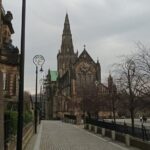
Stop two is Glasgow Cathedral, described as a medieval landmark with soaring arches, stained glass windows, and intricate stone carvings. Since this is a walking tour and not an extended museum crawl, your time here is best used for exterior details and quick interior impressions if the site allows it.
Then you move to The Necropolis, a cemetery that looks out over the city skyline. The Necropolis is set up for slower, more reflective walking than the earlier civic square. You’ll see winding paths, ornate tombs, and hear stories about notable people buried there.
What I like about pairing these two stops back-to-back is contrast. Cathedral architecture signals faith and endurance; the Necropolis signals memory and the way Glasgow has looked at death and legacy for centuries.
Merchant City, Tolbooth Steeple, and What the Clock Tower Used to Mean
Next up is Merchant City, known for cobblestone streets, historic buildings, and lots of boutiques and art spaces. This part of the walk is more “street level.” You’re not just looking at landmarks; you’re feeling how the city shops and gathers now.
Then you’ll reach Tolbooth Steeple, a historic 17th-century structure that once served as a prison and courthouse. It’s an easy stop to overlook if you’re rushing, but it gives you a needed shift from trade and commerce to law, punishment, and civic control.
If you care about architecture and urban function, this is one of the most useful transitions on the route: you see how a city organizes space around business, then how it organizes authority around institutions.
St Andrews in the Square and People’s Palace: Church to Culture, Then City Life
Stop six is St Andrews In The Square – Glasgow, a restored church-turned-venue. You’ll get a look at Georgian architecture and a serene courtyard, and the setting is known for concerts and cultural events.
Stop seven is People’s Palace and Winter Gardens, a stop that tends to win people over because it mixes social history with actual garden space. You’ll find interactive exhibits focused on Glasgow’s working-class heritage, plus lush tropical gardens and Victorian glasshouses.
This is where I’d slow down mentally, even if the clock says keep moving. People’s Palace is the sort of place where a guide’s storytelling adds value fast, because it turns the building and exhibits into a picture of daily life rather than a list of facts.
You can also read our reviews of more guided tours in Glasgow


River Clyde and Glasgow Green: Water Views and a Real Pause
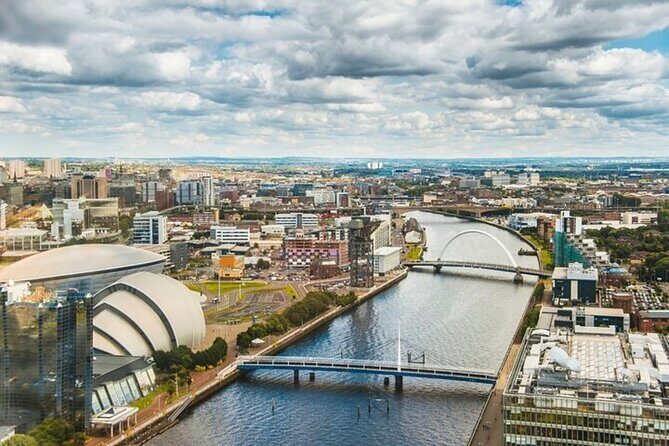
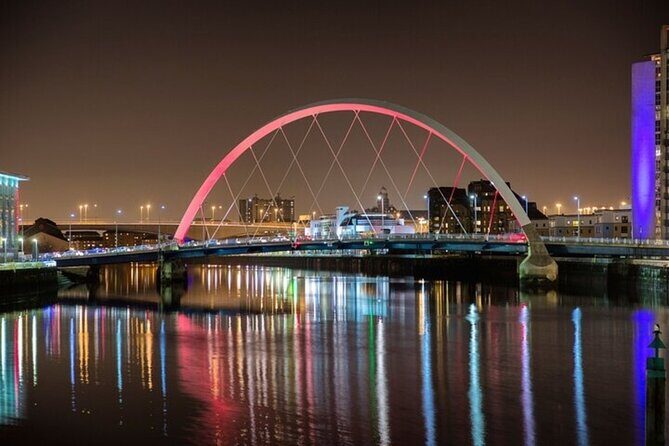
At River Clyde, you follow the banks of the waterway that shaped Glasgow’s development. The tour description highlights modern bridges, waterfront developments, and panoramic views of the skyline. This stop helps you understand why Glasgow grew where it did—around trade routes and the movement of goods and people.
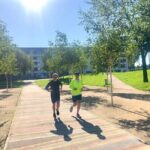
Then the walk continues to Glasgow Green, the city’s oldest public park. You’ll get scenic paths and historic monuments, plus a chance to relax in green space. This is the breather stop on the itinerary, and it’s also one of the best times to take photos without feeling like you’re juggling a crowd.
If you’re someone who hates long walks that never reward you, the Clyde-to-park sequence is your payoff. You get open views, then you get space to reset before the final city-center push.
Buchanan Street Finish: Prime People-Watching Time
Finish at Buchanan Street, Glasgow’s premier shopping street. It’s lined with larger stores, department stores, and cafes, so it’s a practical place to end a walking tour: it’s easy to grab a drink, regroup, or head toward wherever you’re staying next.
I also like this finish because it matches the earlier Merchant City stop. You get commercial Glasgow in two forms—smaller, historic street energy first, and then a bigger retail artery to close.
If you’ve got time after the tour, you can use this street like a hub. The tour ends where it started, but Buchanan Street gives you an easy place to transition into the rest of your day.
Guide Quality Makes the Difference (Yes, Really)
The tour is only as good as the guide in terms of story depth and pacing. The strongest feedback points to local flair and the ability to connect buildings to real life.
For example:
- Keith MacKenzie stands out in feedback for passionate, detailed story-telling, covering both architecture and day-to-day life in Glasgow.
- Gary is praised for friendliness, patience, and solid answers—plus careful follow-through at the end of the tour to make sure people got the right train.
- Josh is noted for enthusiasm and for asking visitors what they want to see, then answering questions as he walks.
- Noor gets mentioned for extra care and for language ability, with Spanish described as impeccable.
- One architecture-focused guide experience also shows up in feedback, where building structure and design details get treated seriously, not as quick trivia.
On the flip side, a common complaint is the walk can feel like a quick pass between highlights. A few people felt they didn’t get enough history detail at each stop, and one person said it felt like they could have used maps for free. Another mentioned the downside of lots of walking and another wished the guide told stories more while standing rather than talking only while moving.
So here’s my practical take: if you want the best experience, message your guide with your interests ahead of time—architecture, social history, law and justice, or city planning. When guides tailor well, the same set of stops becomes a lot more memorable.
Price and Value: What $62.71 Buys You
At $62.71 per person, you’re paying for a guided route that hits the major “must-see” areas within about 3 hours. That can be good value if you’re the kind of person who learns faster with a human pointing things out and telling you what you’re looking at.
This price also comes with a few helpful perks:
- Mobile ticket
- Private tour structure (only your group)
- Help from the team to book tickets for desired visits
One note that affects value: entry to monuments and museums is not included. The itinerary includes stops described as having free admission ticket references, but your actual ability to go inside will depend on what the tour does that day and which sites you choose to enter.
To make the money feel worth it, plan to treat this as a guided walk and orientation first, then decide on your own time at any place you want to go deeper.
Also, this tour is often booked early—on average 84 days in advance—so if your dates are fixed, don’t wait until the last week.
Who Should Book This Walking Tour
Book it if:
- You want a first-time Glasgow overview without building your own route
- You like mixing civic landmarks, historic sites, and city streets
- You value guide story-telling, especially around architecture and local life
- You’re okay with a brisk pace and brief stops rather than long hangs at each site
Skip it (or adjust your expectations) if:
- You hate walking and want a slower, sit-down format
- You expect a deep history lecture at every stop and lots of time inside buildings
- You prefer a more flexible route where you can roam without time constraints
Overall, the rating is 4.6 from 21 reviews, which signals you’re likely to have a good day, but it also fits the pattern: guide quality and pacing can swing your experience.
Should You Book It? My Straight Answer
If you’re short on time and want a clean, well-signposted route through Glasgow’s big highlights, I’d book this. The route covers the essentials: civic square, cathedral and Necropolis atmosphere, Merchant City and Tolbooth Steeple, then People’s Palace, the Clyde, Glasgow Green, and Buchanan Street.
If you care about depth, do a small bit of prep: tell your guide what you want to hear more about before you meet. That’s the difference between feeling like you got a guided walk and feeling like you got a real Glasgow lesson.
FAQ
Where does the tour start and end?
It starts at George Square, Glasgow G1, UK and ends back at the meeting point.
How long is the walk?
It lasts about 3 hours.
Is this tour private?
Yes. It’s listed as a private tour/activity, meaning only your group participates.
Are tickets and entry fees included?
Entry to monuments and museums is not included. The tour description notes help from the team to book tickets for the visits you want, and food and drinks are not included either.
What languages are guides available in?
The in-person guide is offered in English, and also in Spanish, French, and Italian.
Is public transportation involved?
The meeting point is near public transportation, but transportation during the tour is at your own expense.
How much walking is involved?
It’s a walking tour with multiple stops over the full route, and it’s noted that most travelers can participate.
Can I cancel for a full refund?
Yes. You can cancel up to 24 hours in advance for a full refund.
How far in advance should I book?
On average, this is booked about 84 days in advance, so earlier planning helps.