REVIEW · GLASGOW
Glasgow Private Self-Guided Tour
Book on Viator →Operated by Pandemic Tours · Bookable on Viator
Glasgow tells stories on every corner. This private self-guided audio route stitches together medieval landmarks, a famous graveyard, and street-art murals into one practical loop—easy to follow and fun to wander. It’s built for your pace, with a map and GPS route so you’re not stuck decoding streets.
I especially like the human audio narration by Alex. And I like that the tour connects big historical sights with Glasgow’s modern mural culture, including Smug’s work. You get both the old city and the street-level city without needing a guide on foot.
The main drawback is the phone-and-app experience. If your audio volume is low or navigation feels clunky, the walk can feel more effort than it should, so plan to have your phone charged and your headphones handy.
In This Review
- Key highlights worth aiming for
- How This Self-Guided Glasgow Walk Works (and why it feels private)
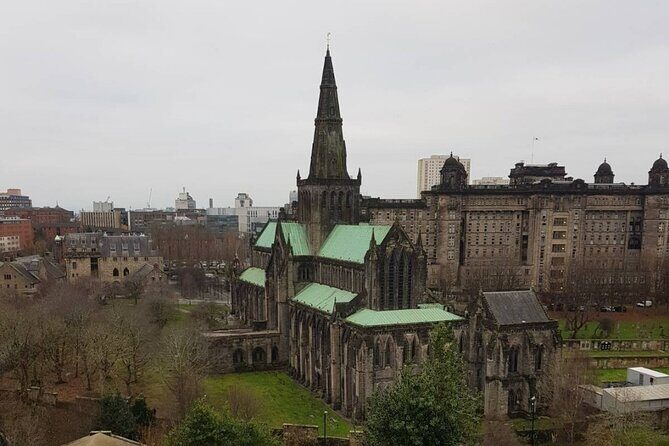
- Start at Glasgow Cathedral: 1197 history, not just a pretty façade
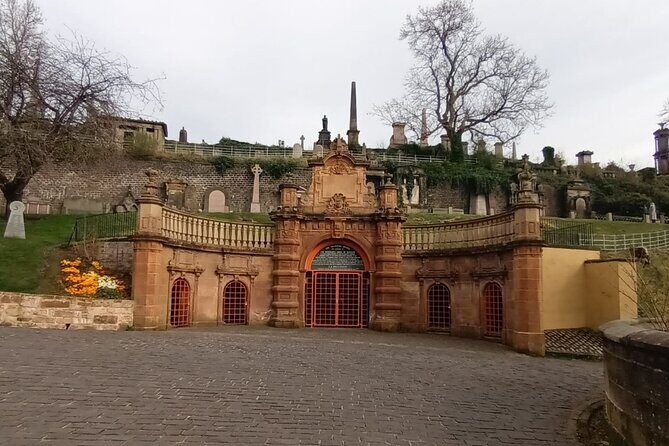
- Glasgow Necropolis: A graveyard you can actually enjoy walking through
- Provand’s Lordship and the mural trail: where the city tells you what it values
- University of Strathclyde: architecture plus art you can spot at a glance
- St Enoch cradling St Mungo: a mural you’ll remember longer than the stop itself
- A 1626 civic building and the Tron Theatre area: names, places, and why they matter
- Glasgow Police Museum: the first police force story you won’t get from a quick pass
- Merchant City symbols: Smug’s murals, Mercury, and the City Chambers
- Mackintosh-inspired tea rooms and the Lighthouse on Buchanan Street
- Finish at St Enoch Subway: the loop closes near the Roman Fort
- Price and value: is $12.37 per person a fair deal?
- Who should do this tour, and who might want a different style
- Should you book the Glasgow Private Self-Guided Tour?
- FAQ
- How long is the Glasgow Private Self-Guided Tour?
- Where does the tour start and end?
- Is this tour self-guided, or do I get a live guide?
- What language is the audio available in?
- How much does it cost?
- Do I need to download an app?
- Is there an admission fee included for the stops?
- Is the tour private for my group?
- Can I use the tour during the day?
- Are service animals allowed?
- Is it refundable if I cancel?
Key highlights worth aiming for
- Alex’s audio guide (not computer text-to-speech) keeps the stops connected and helps you move without guessing.
- Glasgow Cathedral’s 800+ years of uninterrupted worship gives you a real sense of continuity.
- Glasgow Necropolis (1831) is dramatic and self-contained, and you’ll cover a lot of ground in a short time.
- Smug murals show up repeatedly, turning street art into a visual theme you can track.
- Merchant City landmarks like the Mercury statue, City Chambers, and George Square add variety without extra ticket hunting.
- The walk ends near St Enoch subway, so you finish with an easy transit option.
How This Self-Guided Glasgow Walk Works (and why it feels private)
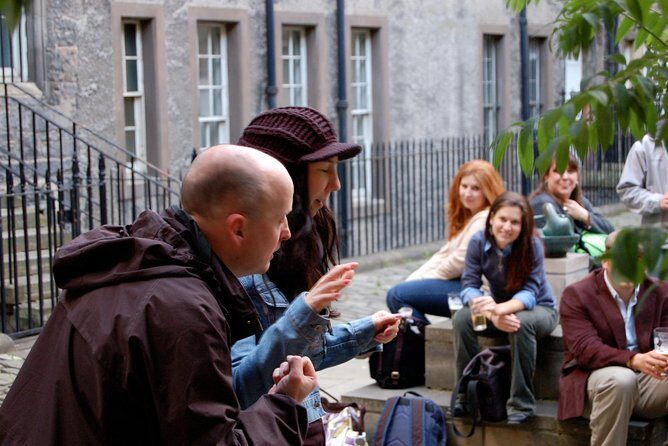
This is a private self-guided experience, meaning only your group is using the route. You’re not waiting on a live guide, and you can pause as long as you want for photos, a quick coffee, or simply reading plaques.
You’ll download the Pandemic Tours app once your booking is confirmed. After that, an email gives you instructions to activate your tour in the app (your booking reference is not the code). Once activated, you get three weeks of unlimited access, plus a map, GPS route, and stop-by-stop directions.
The tour is designed for about 2 to 3 hours, but your actual time depends on your walking speed and how often you stop. A big plus: several stops are listed as admission ticket free, which makes it easier to stick to a simple budget.
Finally, note the format: you follow audio guidance by Alex. If your device volume is too low or the app needs extra taps to keep you on track, that’s when the experience can get slightly annoying.
You can also read our reviews of more guided tours in Glasgow


Start at Glasgow Cathedral: 1197 history, not just a pretty façade
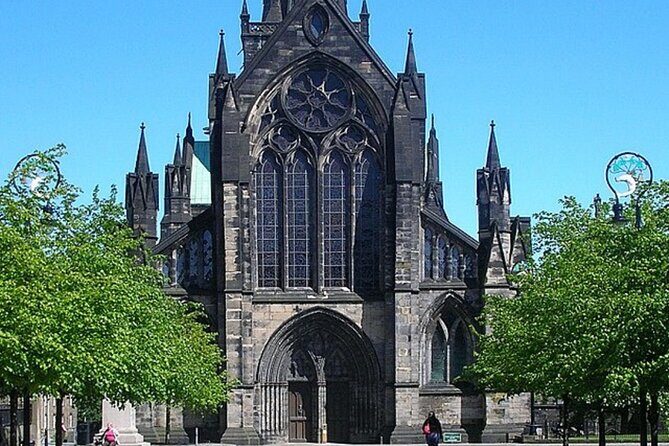
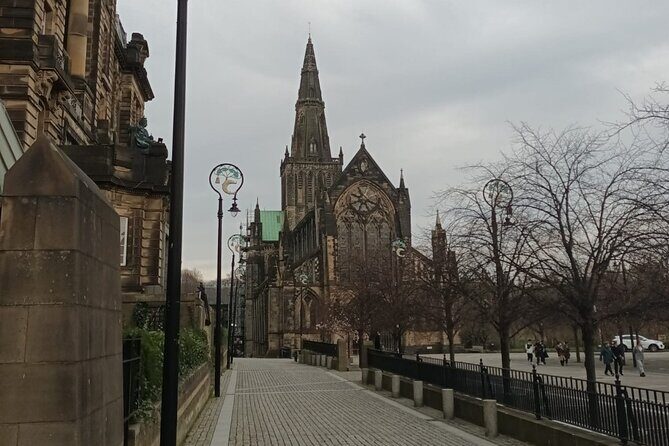
Your walk begins at Glasgow Cathedral on Castle Street (meeting point: Glasgow Cathedral, Castle St, Glasgow G4 0QZ). This is not a generic old church stop. The version you see dates to 1197, after the original cathedral was damaged by a fire shortly after being built in 1136.
What I like about starting here is how quickly it sets the tone. You’re dropped into a place tied to more than 800 years of continuous worship, which makes later stops feel less like random sightseeing and more like a timeline.
The cathedral stop is about 30 minutes, and it’s listed as ticket free. Use that half hour for a slow look around the surrounding areas too, since the tour frames the cathedral as one of Glasgow’s emblems, not just an interior visit.
Practical tip: wear shoes with good grip. Even if the walking is moderate, older city areas can still be uneven underfoot.
Glasgow Necropolis: A graveyard you can actually enjoy walking through
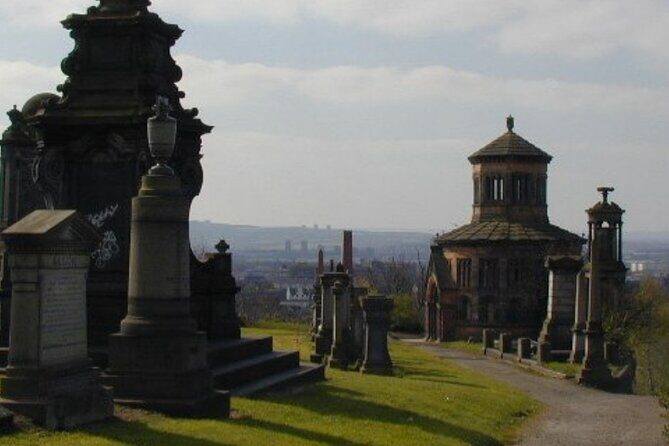
Next up is The Glasgow Necropolis, Glasgow’s most famous graveyard. It was established in 1831, and it was inspired by the Parisian graveyard Père Lachaise—but it quickly becomes its own statement.
This stop matters because it explains a Glasgow attitude: wealth and status didn’t end at death. The Necropolis stretches over 37 acres (about 150,000 m²), and the tour frames it in human terms too—roughly the size of 15 football (soccer) fields.
You’ll spend around 15 minutes here, and it’s listed as ticket free. That time is enough to pick a vantage point, understand the layout, and notice how the cemetery is built to impress even before you read every name.
If you’re sensitive to scale, go with the tour’s pacing. Necropolis sites can feel endless if you drift off, and 15 minutes is the sweet spot for a self-guided route.
Provand’s Lordship and the mural trail: where the city tells you what it values
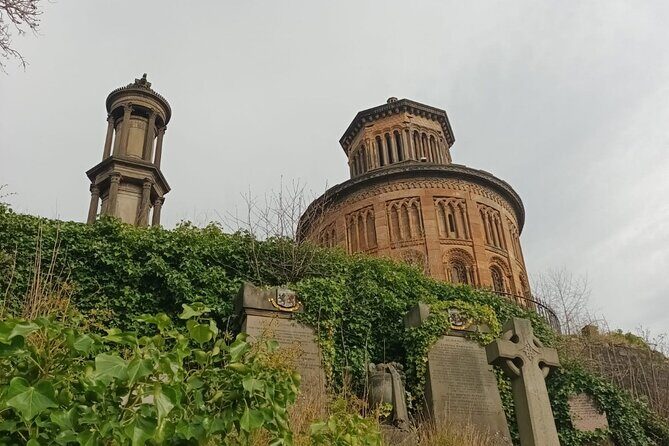
After the Necropolis, the route moves to a lovely stone building called Provand’s Lordship (it was known earlier as the Hospital of St Nicholas). The tour notes that the name Provand’s Lordship comes from the late nineteenth century, which is a nice reminder that even historic labels can shift over time.
This is a good transition stop. You’re moving from the cemetery’s heavy mood to smaller-scale architecture and then straight into visual culture.
Then comes the part Glasgow does especially well: murals. The tour explicitly calls out Glasgow’s countless street murals and treats them as more than decoration. They were created to revitalize neglected walls and gable ends, and they also challenge how people see street art.
In practice, this makes your walk feel like a themed stroll instead of a checklist. You’re learning to look for details—faces, symbols, storytelling characters—rather than just clocking locations.
University of Strathclyde: architecture plus art you can spot at a glance
The tour heads to University of Strathclyde, listed as one of Glasgow’s three major universities. This stop gets about 15 minutes, and it’s ticket free.
I like this stop because it connects two Glasgow themes at once: education and street-level creativity. The route notes a variety of murals and interesting architecture, so even if you don’t go inside, the area gives you something to read with your eyes.
When a walking tour includes both institutional buildings and murals, you avoid the common problem of spending all your time in either the museums-or-nothing trap. Here, you get a mix.
Tip: keep your camera ready, but slow down. Some mural details are only obvious when you step back and then look closer.
You can also read our reviews of more private tours in Glasgow



St Enoch cradling St Mungo: a mural you’ll remember longer than the stop itself
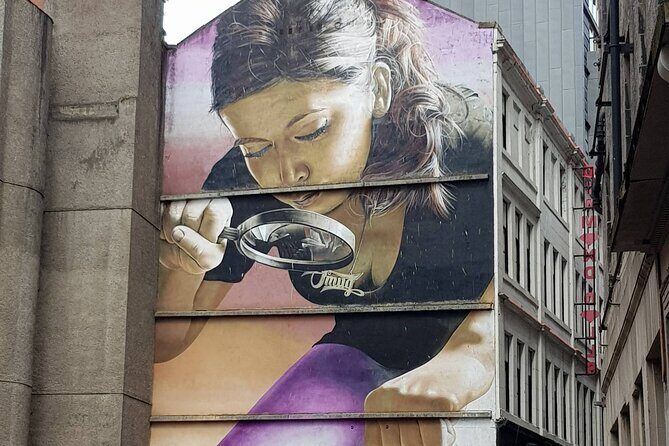
One of the most specific mural moments is St Enoch cradling St Mungo. The tour describes it as a mother lovingly cradling a baby, with a futuristic representation of St. Mungo.
This matters because St Enoch and St Mungo pop up again later through the tour’s street-name and landmark explanations. If you’re into “story geography,” this kind of repetition makes the city feel connected.
It’s a short stop (about 5 minutes) and ticket free. For that kind of time, you want to do two things: first, take in the whole mural. Then, look for the small details the audio points out, because that’s where the extra meaning lives.
A 1626 civic building and the Tron Theatre area: names, places, and why they matter
The walk then points you to a building tied to early Glasgow civic life. The tour describes a stone building with a first official record from 1626, and it notes that over time it served as the Town Clerk’s office, Justice Court, Town Council, and even had a jail at the top for security.
This stop is valuable because it turns a plain-looking structure into a role in the city’s story. Without a guide, many buildings like this become background. Here, you get a reason to look.
Next, you’ll be looking at the tower of Tron Church, which today is Tron Theatre, and the street is called Trongate. The tour explains the older street name Saint Thenew’s Gait, tied to the supposed site of Thenew’s burial.
Then you get the connection: Thenew is Saint Enoch, who is the mother of Saint Mungo. Suddenly the mural theme (St Enoch and St Mungo) and the street-name theme snap together.
If you like walking tours that explain the “why” behind street names, this is one of the strongest stretches.
Glasgow Police Museum: the first police force story you won’t get from a quick pass
The tour includes a spot at the museum focused on Glasgow’s police history. It states that Glasgow had the first police force in Great Britain, and the museum covers history from 1800 to 1975.
You’ll spend a short chunk of time here as part of the broader route, so think of it as a quick context stop rather than a full museum day. Still, it’s a fun change of pace from religious sites and murals.
Also, because the tour says any entrance fee is not included, you should expect that some museum or gallery time might cost extra depending on what you choose to enter. If you’re trying to keep everything free, stick to the parts that don’t require paid admission.
Merchant City symbols: Smug’s murals, Mercury, and the City Chambers
This stretch is about turning small details into a big picture.
You’ll see a mural called Fellow Residents of Glasgow, painted by Smug. The tour describes it as a fairy-tale scene of a hiker foraging for mushrooms in woodlands, with animals appearing through wall holes. That detail matters because it’s not just a pretty image. It’s a way of making the city’s green spaces feel present.
Then you reach 98 Ingram St, where the tour notes a church originally built in 1824 and designed in the gothic revival style by English architect Thomas Rickman. It also points you to the graves of tobacco merchants Andrew Buchanan and John Glassford. Nearby, it explains that the older Ramshorn cemetery, now partly covered by Ingram Street, was the expensive place to be buried in the 1700s before the Necropolis became the new choice.
From there, you’ll spot a statue of Mercury, described as the Roman god connected to financial gain, commerce, eloquence, poetry, travelers, boundaries, luck, trickery, and thieves. The Mercury statue stands on a marble plinth, and the tour says there are two sculptures by Alexander Sandy Stoddart representing the Italian quarter of Merchant City.
Then comes civic grandeur: the City Chambers, completed in 1888, inaugurated by Queen Victoria (and the tour notes her statue is across in George Square). It also points out the City Chambers are used as a registry office in a famous series, which is a fun fact if you like recognizing places you’ve seen on screen.
Finally, you reach George Square, named after King George III, laid out in 1781 as part of a grid-style scheme, then developed about 20 years later. That time math helps you picture how the city grew rather than imagining everything happened at once.
If this section feels packed, it’s because it is. The self-guided format works best when you treat each stop as a brief story beat, not a full immersion.
Mackintosh-inspired tea rooms and the Lighthouse on Buchanan Street
After the Merchant City highlights, you shift into the more modern Glasgow feel at Buchanan Street. The tour frames this as a move into the twenty-first century, connecting the medieval and industrial past to today’s street life.
You’ll also pass by The Lighthouse, described as a visitor centre, exhibition space, and event venue in the heart of Glasgow. Since it’s an exhibition and event place, you might find more happening here than at the churches and statues, but the tour’s audio pace will keep you moving.
Another strong stop is the tea room experience at 98 Ingram St, where the tour says the interior is inspired by Charles Rennie Mackintosh. It also notes the tea room itself is modelled on Kate Cranston’s Ingram Street tea rooms from the early 1900s. Alex will tell the origin story, which makes the architecture feel less like a photo-op and more like a local tradition.
If you’re the type who enjoys a short break during a walk, this is where you can naturally slot one in without ruining the route.
Finish at St Enoch Subway: the loop closes near the Roman Fort
The tour wraps with a final mural: Honey, I shrunk the Kids, described as photo-realistic street art by Smug. It’s short, but it’s a great visual punch at the end since you’ve seen other murals earlier and now they’re part of one ongoing theme.
You finish close to St Enoch subway station. The tour notes the area is near a Roman Fort, so the ending quietly echoes earlier “layers of time” thinking in the route.
This finish is practical. When you end by transit, you don’t have to backtrack or plan a second leg just to get home.
Price and value: is $12.37 per person a fair deal?
At $12.37 per person, you’re paying for more than narration. You’re paying for a structured way to cover a lot of central Glasgow in about 2 to 3 hours with GPS support.
Here’s the value math I see:
- Three weeks unlimited access means you can repeat it or slow it down if you want.
- The app includes a map, directions, GPS route, and multimedia (audio, videos, pictures, recommendations).
- Many stops on the route are listed as admission ticket free, which helps you avoid surprise costs on a city walk.
The one thing that can affect value is that entrance fees are not included for attractions mentioned. So if you decide you want full museum time, an interior visit, or a paid gallery activity, your final spend may rise. Still, with the self-guided pacing, you can choose what you pay for and what you just look at from outside.
For a short trip, a low cost, and a theme-based city walk (history plus murals), this price lands in the good-deal zone.
Who should do this tour, and who might want a different style
This works best if you:
- Like a walk that mixes historical places and street art
- Want freedom to pause, wander, and not feel herded
- Prefer solo-friendly pacing where you can spend more time on what grabs you
- Enjoy listening to a real person’s audio while you move between stops
You might rethink it if you:
- Want a live guide who can answer questions in real time (this is not that)
- Have a phone that struggles with GPS or audio playback
- Need very clear audio at all volumes, since the experience depends on your device setup
Self-guided tours are partly about technology comfort. If you’re fine with that, you’ll likely enjoy the flow.
Should you book the Glasgow Private Self-Guided Tour?
Book it if you want an efficient, themed walk across Glasgow’s key layers: cathedral history, Necropolis drama, and the street-art trail tied to specific artists and stories. The audio by Alex plus GPS directions make it easy to keep moving without a live guide.
Before you go, do three simple checks:
1) Download the Pandemic Tours app in advance so you’re not stuck at the start.
2) Charge your phone and use headphones so you don’t miss details.
3) Expect that you’ll likely want to look more than once, since the route is built around short stops with story clues.
If you’re the kind of traveler who likes to learn while you walk, this is a strong fit.
FAQ
How long is the Glasgow Private Self-Guided Tour?
It’s approximately 2 to 3 hours long, depending on your pace and how often you pause at each stop.
Where does the tour start and end?
It starts at Glasgow Cathedral on Castle St (Glasgow G4 0QZ) and ends near St Enoch Subway Station (Glasgow G1 4BW).
Is this tour self-guided, or do I get a live guide?
It’s self-guided. You get an audio guide (by Alex) through the app, not a live guide.
What language is the audio available in?
The tour is offered in English.
How much does it cost?
The price is listed as $12.37 per person.
Do I need to download an app?
Yes. You must download the Pandemic Tours app once your booking is confirmed, then activate your tour using the email instructions you receive.
Is there an admission fee included for the stops?
Entrance fees are not included. Some stops are listed as ticket free, but if you choose to enter museums or other ticketed attractions, you’ll need to cover those separately.
Is the tour private for my group?
Yes. Only your group participates.
Can I use the tour during the day?
The listed opening hours run from 12:00 AM to 11:30 PM (within the overall date range provided).
Are service animals allowed?
Yes, service animals are allowed.
Is it refundable if I cancel?
No. The experience is non-refundable and cannot be changed for any reason.