REVIEW · GLASGOW
Merchant City Music Walking Tour of Glasgow
Book on Viator →Operated by Glasgow Music City Tours · Bookable on Viator
Glasgow’s music story starts on this walk. I like how the tour keeps you on real venues and not just souvenir stops, and I especially love the way guides connect artists to specific corners of the city. One possible drawback: you may not get inside Britannia Panopticon during your visit, but the guide still shares the stories from the outside.
If you’re the type who wants to understand why Glasgow sounds the way it does, this tour gives you a clear route through the city’s music landscape. I also like that the group stays small, so you get room for questions and the guide can tailor the pace.
The walk runs about two hours, with an easy stride and a comfort break. It operates in all weather, so bring proper shoes and a layer.
In This Review
- Key highlights you will actually feel on this tour
- A music map of Glasgow that avoids the usual tourist beat
- Price and pacing: what $27 buys you in about two hours
- The guides: local music writers who connect songs to streets
- The 8-stop walk through Glasgow’s live-music backbone
- Stop 1: Clutha Bar and the mural-covered live-music walls
- Stop 2: Britannia Panopticon Music Hall (and why you might not go inside)
- Stop 3: City Halls and Old Fruitmarket, including the punk-ban story
- Stop 4: Tron Theatre and the Hellfire Club connection
- Stop 5: Barrowland Ballroom, where gig-goers remember everything
- Stop 6: Barrowland Park Pathway artwork and big-name stories
- Stop 7: St Andrews In The Square, an 18th-century church turned venue
- Stop 8: King’s Court and the theories behind Glasgow’s unique music scene
- What to bring and how to time your day
- Is it worth it for your travel style?
- Quick checklist before you book
- Should you book the Merchant City Music Walking Tour?
- FAQ
- How long is the Merchant City Music Walking Tour of Glasgow?
- Where does the tour start and end?
- What time does the tour begin?
- Is the tour offered in English?
- What is included in the ticket price?
- Do you pay admission fees at the stops?
- How large is the group?
- Does the tour run in bad weather?
- Can I cancel for a full refund?
Key highlights you will actually feel on this tour
- Small group size (up to 26) keeps the vibe intimate and question-friendly
- Local music guides often with a writer’s eye, like Fiona or Phil from past tours
- Eight venue stops in the Merchant City area, all tied to songs and scenes
- Great storytelling even when an interior is closed, since Britannia Panopticon may be off-limits
- Photo-friendly spots as you move between murals, theatres, halls, and streets
- 20% food discount voucher for Mono Cafe Bar after you finish near King Street
A music map of Glasgow that avoids the usual tourist beat
This tour is built for people who care about where music happens, not just where it gets talked about. You start in the Merchant City, then you walk a tight loop through places tied to singalongs, legendary performers, punk drama, and the long-running live scene Glasgow is famous for.
What makes it work is the tour format. It’s short enough that you stay sharp for the whole 2 hours, but each stop is treated like a chapter. Instead of dumping facts, your guide ties each place to the people and events that gave it meaning.
I also like that it’s clearly designed for real wandering. You’re not rushed through a checklist. You’re moving from murals and pub walls to working music buildings and theatres, with enough time at each stop to look around and get your bearings fast.
You can also read our reviews of more walking tours in Glasgow


Price and pacing: what $27 buys you in about two hours
At $27.08 per person, this tour is a straightforward value play if you want music context without spending hours researching on your own. Most of the stops are listed with free admission for the tour visit, so you’re mainly paying for the guide and the route design, not entry fees.
The pacing matters too. You’re out for roughly two hours, and there’s a comfort break. That’s a key detail for Glasgow, where you can easily cram too much into one day and then end up tired and cranky instead of curious.
You’ll also want to treat this as a light-to-moderate walking experience. The itinerary is close enough for an easy city walk, but you still should wear shoes you’re comfortable in for a couple of hours, plus any time you spend stopping for photos.
The guides: local music writers who connect songs to streets
The tour is led by local guides, including music writers. That matters because it changes the tone. You’re not just hearing venue descriptions. You’re getting cultural connections—how a pub mural reflects decades of bands, why a music hall matters historically, and what happened around a famous concert that influenced rules for punk in Glasgow.
In past groups, guides like Fiona and Phil have been highlighted for their depth of knowledge and clear passion for Glasgow’s music. Even if your guide isn’t the same person, the style tends to be similar: talk that feels like a conversation between someone who lives here and someone trying to understand what they’re hearing.
The 8-stop walk through Glasgow’s live-music backbone
Here’s what the route looks like and what to watch for at each stop. I’ll also flag the one place where you should expect a possible change.
Stop 1: Clutha Bar and the mural-covered live-music walls
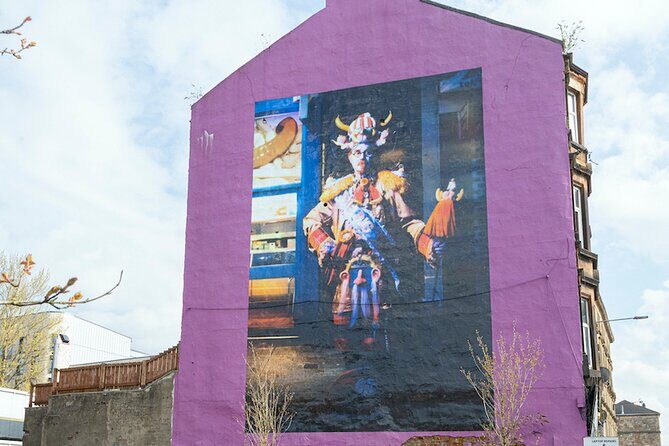
You start at the Clutha & Victoria Bar at 159 Bridgegate, Glasgow G1 5HZ. This is a strong opening choice because it frames Glasgow’s music story right away: the Clutha Bar is one of the city’s best-loved live music pubs, and it’s covered with murals that show the diversity of the music scene across the years.
What you should do here:
- Take a slow look at the murals. The guide will point out connections you might miss if you just snap photos.
- Listen for how the murals act like a timeline of genres and eras.
Why it’s a great first stop: it grounds the tour in Glasgow’s everyday live culture. You’ll feel less like you’re studying and more like you’re visiting.
You can also read our reviews of more city tours in Glasgow


Stop 2: Britannia Panopticon Music Hall (and why you might not go inside)
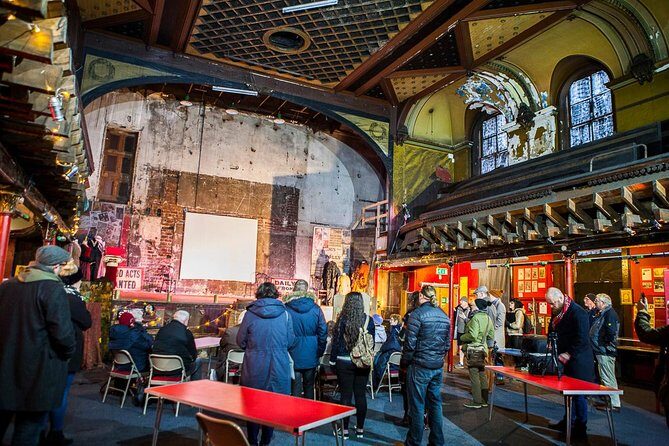
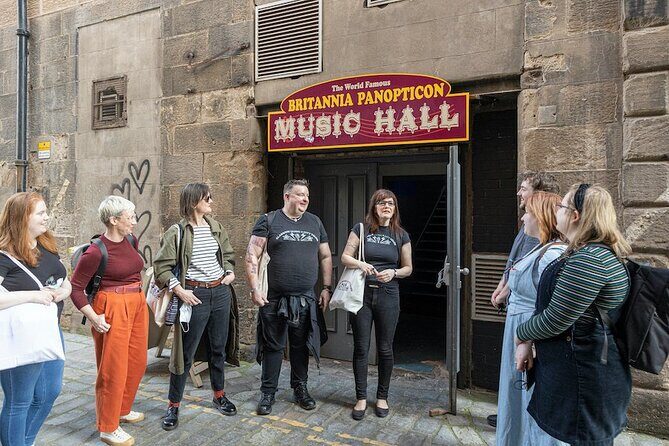
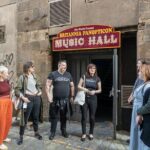
Next up is Britannia Panopticon Music Hall, noted as Britain’s oldest surviving music hall and still a working venue. The building has hosted major Scottish performers like Harry Lauder, and it’s been linked to a surprising range of famous stage stars over the years.
Important consideration: at the moment, access to Britannia Panopticon may be limited due to Covid, so you might not get entry inside. If that happens, you’ll still hear the stories your guide can’t help but share, but the experience will be more outside-the-doors than inside-the-hall.
What to watch for even from outside:
- How the guide describes the hall’s atmosphere and its role in keeping live performance alive.
- Any hints about why the place has such a long life compared with music venues that didn’t survive.
This is the one stop where expectations should be flexible. If you absolutely need an interior view, plan your day so you’re okay with a story-focused stop instead.
Stop 3: City Halls and Old Fruitmarket, including the punk-ban story
You’ll move to the City Halls and Old Fruitmarket area, where many memorable gigs took place. One of the standout stories is linked to The Stranglers concert and the way it led to punk rock being banned in Glasgow.
If you’re a music fan, this stop is fun because it turns a concert into a city turning point. You’re not just learning trivia—you’re learning how culture can rub against local rules and push back.
What to do with this stop:
- Listen closely for the cause-and-effect story. The point isn’t only that something happened, but how Glasgow reacted.
- Look for how this area sits in the bigger map of venues you’ll visit later.
The potential drawback here is also simple: because the stop is short, you’ll want to keep your eyes open rather than plan on deep exploration.
Stop 4: Tron Theatre and the Hellfire Club connection
Next is Tron Theatre, now a leading theatre and concert venue. The building’s backstory includes a date tied to the notorious Hellfire Club. That kind of story can feel like it belongs in the old pages of a novel, but it fits the way Glasgow keeps blending the past with live culture.
This stop works well if you like architecture and you enjoy hearing how old spaces become modern stages. It’s also one of those stops where you can get quick photo angles without needing a long break.
Stop 5: Barrowland Ballroom, where gig-goers remember everything
Then you head to the Barrowland Ballroom. It’s much loved by Glasgow gig-goers, and its history is described as colourful—matching the energy of the bands that have played there.
This stop is one of the reasons I recommend the tour even if you already know a few Glasgow bands. The guide connects how the Ballroom sits inside the city’s live-music rhythm, rather than treating it like a museum piece.
What to pay attention to:
- The way the guide talks about the venue’s reputation.
- Any details that help you understand why people keep returning to this kind of hall year after year.
Stop 6: Barrowland Park Pathway artwork and big-name stories
From the Ballroom area, the tour continues to Barrowland Park (the Barrowland Pathway artworks). This is where the walk turns into a kind of outdoor mural gallery.
The guide points to artwork connected with acts that have played its namesake venue, and you’ll hear stories about major names including The Smiths, Simple Minds, David Bowie, and Bob Dylan.
This is a great pause for photos and for mentally linking a sound to a place. If you’ve ever wondered why certain venues feel like magnets for famous careers, this stop helps explain it through the city’s physical cues.
Stop 7: St Andrews In The Square, an 18th-century church turned venue
Next you visit St Andrews In The Square, an 18th-century church that has become a live music venue. The contrast is striking: a church built for worship now hosts performances, and the guide will highlight its connections to major names in Scotland’s cultural history.
This stop is valuable because it reminds you that Glasgow’s music scene isn’t only about pubs and ballrooms. The city reuses and transforms spaces, and that shapes the sound and the crowd.
Stop 8: King’s Court and the theories behind Glasgow’s unique music scene
Finally, you finish at King Street / King’s Court. This is where your guide wraps up with theories about why Glasgow developed its own unique music scene.
You’ll also hear about modern-and-older threads tied to names like Postcard Records, The 13th Note, and Mono Bar. Since the tour includes a voucher for 20% off food at Mono Cafe Bar, this ending point is practical: you can keep the music mood going with a meal or a coffee nearby.
What I like about ending here: it transitions from past to present. You don’t just leave with a list of famous venues. You leave with a sense of the city as a living system where old and new overlap.
What to bring and how to time your day
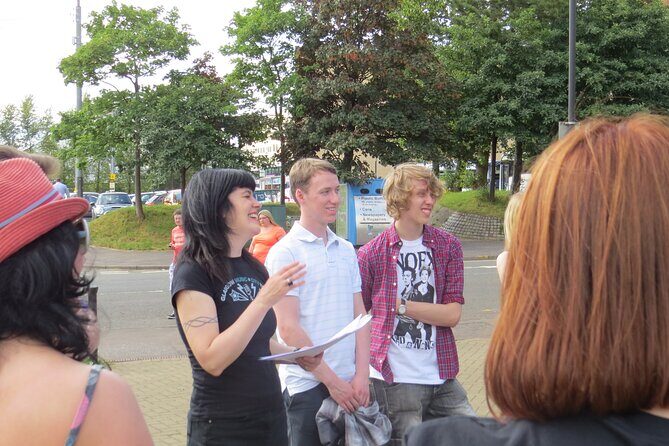
This tour starts at 11:00 am at the Clutha & Victoria Bar (159 Bridgegate). You should arrive 10 minutes early at the departure point.
A few practical tips:
- Wear comfortable shoes. You’re walking between venues, and the route is designed for steady movement.
- Dress for all weather. The tour operates in all weather conditions, so bring a layer and rain protection if it looks questionable.
- Have a phone ready for the mobile ticket.
If you have mobility concerns, contact the provider to discuss what will work for you. The tour notes that most people can participate, but it’s still smart to check.
Is it worth it for your travel style?

This tour is best for you if:
- You love live music and want the context behind the venues.
- You prefer walking tours where the guide tells stories tied to places.
- You want a compact 2-hour activity that fits neatly into a day in Glasgow.
You might want to choose something else if:
- You need guaranteed access inside Britannia Panopticon. The tour may talk about it even if entry isn’t possible.
- You dislike walking in light-to-moderate stretches, even when breaks are included.
Also, it’s priced in a way that makes it a strong add-on. At about $27, it’s easier to justify than a longer museum-style outing if your main goal is music culture.
Quick checklist before you book
- You like stories tied to venues, not just general city facts
- You’re okay with a possible outside-only stop at Britannia Panopticon
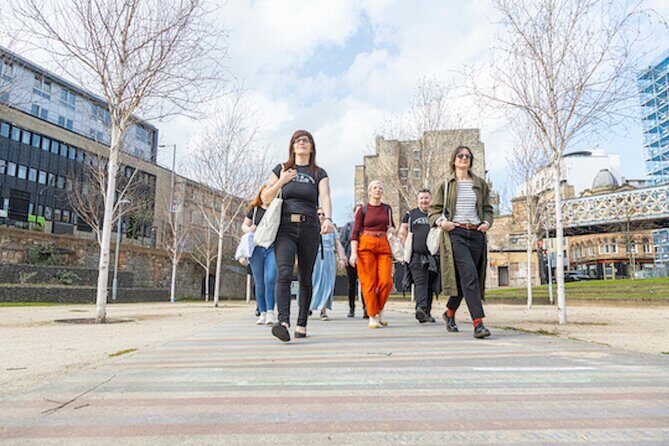
- You want a small group experience in the Merchant City area
- You want a nearby food option after the tour with a Mono Cafe Bar discount
Should you book the Merchant City Music Walking Tour?

I think you should book it if Glasgow’s music scene is on your radar and you want to understand it in a way that feels local and specific. The combination of venue-hopping, music-writer style guiding, and an easy two-hour pace makes it a good use of time.
The only reason I’d hesitate is the Britannia Panopticon access issue. If interior viewing is a must for you, plan to be flexible and treat the stop as story-first.
If you want a short, meaningful walk that turns streets into a soundtrack, this one fits the bill.
FAQ
How long is the Merchant City Music Walking Tour of Glasgow?
The tour lasts about 2 hours.
Where does the tour start and end?
It starts at Clutha & Victoria Bar, 159 Bridgegate, Glasgow G1 5HZ, UK, and ends at King Street, King St, Glasgow, UK.
What time does the tour begin?
The start time is 11:00 am.
Is the tour offered in English?
Yes, the tour is offered in English.
What is included in the ticket price?
The tour includes a mobile ticket and a voucher for 20% discount on food at Mono Cafe Bar.
Do you pay admission fees at the stops?
The stops listed on the route note admission ticket free for each venue stop on the itinerary.
How large is the group?
The tour has a maximum of 26 travelers.
Does the tour run in bad weather?
Yes, it operates in all weather conditions, so you should dress appropriately.
Can I cancel for a full refund?
Yes. You can cancel up to 24 hours in advance for a full refund. Canceling less than 24 hours before the start time does not get refunded.