REVIEW · EDINBURGH
Royal Mile and Old Town Walking Tour
Book on Viator →Operated by Edinburgh Guided Tour · Bookable on Viator
If you want Edinburgh to make sense fast, start walking. This Royal Mile and Old Town tour strings together landmarks and story-rich side courts so you get a real feel for the city’s layers on foot. I love how the route keeps moving, yet still gives you time to stop for photos and quick questions.
Two things I really like: the small group size (maximum 12) means your guide can tailor the pace, and the hands-on storytelling makes famous sights feel personal, from the legends tied to Deacon Brodie to the Scottish Enlightenment names along the way. One drawback to plan for: it’s a lot of walking on uneven Old Town streets, so you’ll want comfortable shoes and a moderate fitness level.
In This Review
- Key Highlights at a Glance
- Why the Royal Mile Walk Is the Best First Move
- Price and What You Actually Get for $48.54
- Starting at Usher Hall: A Baroque-Style Entry Point
- Edinburgh Castle Views Without the Time Trap
- Grassmarket, Marketplace Energy, and Hogwarts-Linked George Heriot
- Milne’s Court and James Court: Where Old Town Life Feels Real
- Writers’ Museum and Riddle’s Court: Names You’ll Recognize Later
- Deacon Brodie’s Tavern and St Giles Cathedral: The City’s Contradictions
- The Finish Line: City Chambers, Waverley Station, and the Scott Monument
- How the Guides Make or Break This Walk
- Getting the Most Out of the 3-Hour Route
- Who Should Book This Tour (and Who Might Skip It)
- Should You Book This Royal Mile and Old Town Walking Tour?
- FAQ
- How long is the Royal Mile and Old Town Walking Tour?
- Where does the tour start and end?
- What is the group size?
- Are admission tickets included for all stops?
- Is the tour suitable for families and children?
- What happens if the weather is poor?
Key Highlights at a Glance

- Maximum 12 people keeps the walk friendly and question-friendly
- Royal Mile orientation from Usher Hall to Princes Street Gardens helps you plan the rest of your trip
- Views first, tickets optional at big stops like Edinburgh Castle
- Courts you’d miss otherwise (Milne’s Court, James Court areas, Riddle’s Court) add local color
- Stops work in bad weather when a guide swaps to indoor options like a museum
Why the Royal Mile Walk Is the Best First Move

Edinburgh can feel like a maze until someone ties the streets together for you. This tour does that job by moving along the spine of the Old Town and then handing you off near Princes Street Gardens, right by the Scott Monument.
The value here isn’t only the sights. It’s the order of them. You start with a big civic building atmosphere, then shift to the castle viewpoints, then into medieval marketplace spaces and tight closes, and you finish at the Old/New Town boundary marker. That flow helps you connect what you see with how the city grew.
You can also read our reviews of more walking tours in Edinburgh



Price and What You Actually Get for $48.54
At $48.54 per person for about 3 hours, you’re paying mainly for the guide and the guided pacing. The group is small, and you’ll spend most of the time outside, moving street to street with a historian-style narrative.
Here’s the key money detail: some of the stops are not included for admission tickets. Edinburgh Castle, Usher Hall, and St Giles Cathedral list admission as not included, so if you want to go inside those, you’ll likely pay separately. Other stops are marked free—courts and exterior-view locations give you plenty even if you skip ticketed interiors.
If you like tours where you can choose how much you pay at each stop, this format tends to work well. You get context first, then decide on entrances without feeling rushed.
Starting at Usher Hall: A Baroque-Style Entry Point
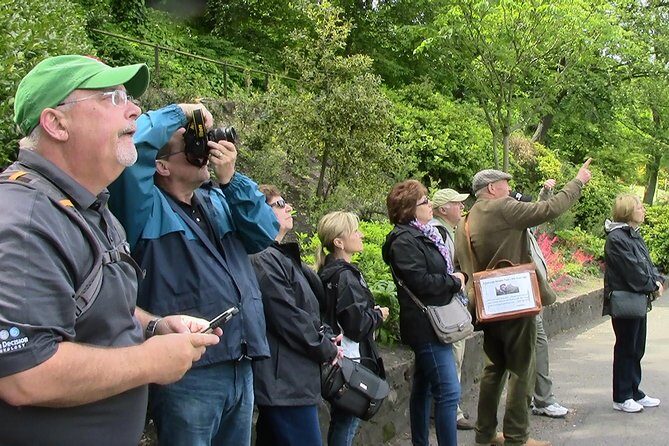
The tour kicks off at Usher Hall (Lothian Rd, Edinburgh EH1 2EA). This isn’t just a starting pin on a map. It sets the tone: you’re standing in the heart of Edinburgh, looking at a Baroque Beaux Arts masterpiece linked to the Usher family story.
This matters because it trains your eyes. Before you even hit the Old Town lanes, your guide helps you notice what makes Edinburgh feel so dramatic—stonework, scale, and why certain buildings dominate the skyline.
Even if you’re not a museum person, starting in a landmark like Usher Hall makes it easier to understand what you’ll later see at the castle and along the Royal Mile.
Edinburgh Castle Views Without the Time Trap
Next comes Edinburgh Castle—mostly a look from the outside, from a few viewpoints. You’ll learn about the big arcs: the Scottish Wars of Independence, the Stuart dynasty, and the Union of the Crowns, plus the darker, messier parts of its history.
The practical win: you can get the castle effect fast, without being locked into a long internal visit unless you choose it. If you want to go inside later, this tour gives you the background so tickets feel worth it.
One caution: Castle is famous for crowds and weather exposure. If you’re visiting in shoulder season or during drizzle, this is the part where an umbrella and layers help.
Grassmarket, Marketplace Energy, and Hogwarts-Linked George Heriot

Then you shift into Grassmarket, a centuries-old area that once functioned as the city’s medieval marketplace. It’s one of those places where the street shape tells a story—how trade and daily life once moved through this part of Edinburgh.
You’ll also spot George Heriot School, noted as an inspiration behind Hogwarts. Even if you’re not tied to the Harry Potter universe, it’s a fun way to connect pop culture to real architecture and local identity.
This stop is also a good pace-break. It’s not all theory; you get a chance to look around, take photos, and let your eyes adjust to the Old Town’s textures.



Milne’s Court and James Court: Where Old Town Life Feels Real
From the open energy of Grassmarket, the tour turns into tighter spaces with Milne’s Court. This is where you learn what it meant to live in the 17th and 18th centuries, in a court-like environment that feels enclosed compared to the main street.
A few minutes later, you reach the Jolly Judge area and see classic examples of Edinburgh tenement-style buildings in James Court—plus the quirky, charismatic Jolly Judge pub. That pub name makes people smile, but the real value is how the buildings and courts explain social history.
This is the part of the walk that often feels most “Edinburgh.” It’s the city’s character in compressed form: stone, narrow passages, and the sense that life once unfolded in spaces that still exist.
Writers’ Museum and Riddle’s Court: Names You’ll Recognize Later

Next up is a literarily themed stop at the Writers’ Museum. You can look in and explore the connections between Scotland’s literary heroes and the city that shaped them. Even if you only skim, it helps you see why Edinburgh earned its reputation for ideas.
After that, you get Riddle’s Court, including the exterior of the home of David Hume, described as the father of the Scottish Enlightenment. The best part about an exterior-focused stop is that you’re not stuck indoors while you still need fresh air. You learn the idea, then you look at the setting where it happened.
If you’ve got even a mild interest in philosophy or the 18th-century mind, this section is a strong payoff. If you don’t, it still gives you names that will pop up later when you wander on your own.
Deacon Brodie’s Tavern and St Giles Cathedral: The City’s Contradictions

Then the tour shifts into a more dramatic character story: Deacon Brodie’s Tavern. You’ll learn about Deacon Brodie as a real-life blackguard behind the famous Jekyll and Hyde connection. It’s a reminder that Edinburgh wasn’t only poets and philosophers—people were complicated, sometimes dangerous.
After that, you’ll look at St Giles’ Cathedral from the outside. Your guide covers its pivotal role during the middle ages and Reformation periods. The cathedral exterior gives you a “big moment” feeling without forcing you to commit to a ticketed interior.
This portion can be the most memorable because it mixes scale (cathedral presence) with human stories (Brodie’s life). It’s also where I like having the guide’s voice, since it turns architecture and dates into something you can picture.
The Finish Line: City Chambers, Waverley Station, and the Scott Monument
From St Giles, you move into the busy heart of the Royal Mile area, including Edinburgh City Chambers highlights such as the Mercat Cross. This is a good time to watch people move through the street and realize how much the public spaces still function like gathering hubs.
Then comes the shift toward the boundary between Old and New Towns. You’ll cross one of the first bridges connecting the two sides, leading you toward Princes Street Gardens.
Finally, you arrive at the Scott Monument in East Princes Street Gardens. The monument marks the separation of Old and New Towns, and both areas are described as UNESCO world heritage sites. Even if you don’t go close up, it’s a clean ending: you’ve walked the spine, and now you can pick which side you want to explore next.
How the Guides Make or Break This Walk
This tour stands or falls on the guide’s storytelling style—and the name recognition from past guides here is a big clue. I’ve seen groups rave about Craig Goodman, Fiona, Dr Alison Duncan, David Forsyth, Douglas Graham, Alastair Sim, and Stuart Usher in particular.
What those guides seem to have in common is not just facts. They answer questions, they pace for comfort, and they use humor to keep the walk from turning into a lecture. One helpful detail I like: some groups noted that when weather turned awful, the guide took them indoors—such as a stop at the National Museum—so learning could continue without freezing.
With a maximum of 12 people, your questions don’t get swallowed by the crowd. If you’re the type who likes asking why something is the way it is, this format usually delivers.
Getting the Most Out of the 3-Hour Route
You’ll cover a lot in 3 hours, so set yourself up for success. Wear comfortable shoes because Old Town streets are uneven and there can be stairs. Even reviews that praised the tour still flag that there is a decent amount of walking.
I’d also bring a small layer and something to block drizzle. Edinburgh weather can flip fast, and while the route is outdoor-heavy, good guides will help you keep the momentum.
If you’re taking photos, this tour is built for it. You’ll have chances to pause at viewpoints (especially with Castle) and along major sight lines before moving back into the courts.
Finally, treat this as an orientation. After the walk, you’ll know what parts of the Old Town you want to linger in and what’s better for your own pace—especially around the Royal Mile and the courts.
Who Should Book This Tour (and Who Might Skip It)
This is a great fit if you’re a first-time visitor who wants a structured introduction to Edinburgh’s Old Town and Royal Mile. It’s also ideal if you like history told through characters and specific places, not just a list of dates.
It can also work for cruise passengers and short-stay visitors because the ending puts you near the classic stroll zones by Princes Street Gardens. If you’re traveling with kids, note that children under 12 are free and 12–16 pay 75%, which can make it more budget-friendly for families.
I’d be cautious if you strongly dislike walking on cobbles or if you expect lots of seated museum time. This tour is built for moving. Even though some stops invite optional interiors, the core experience is the walk.
Should You Book This Royal Mile and Old Town Walking Tour?
If your goal is to get your bearings fast and leave with a clearer sense of how Edinburgh works, I’d book it. For the money, the mix of major landmarks plus the smaller courts is what makes it feel like more than a standard highlights walk.
Book it especially if you care about stories tied to real people—Hume, Deacon Brodie, and the city’s political turning points around the castle. The small group size also means you’ll get more than just pass-by sightseeing.
If you’re short on time and want one guided backbone for the Old Town, this is a strong choice.
FAQ
How long is the Royal Mile and Old Town Walking Tour?
The tour lasts about 3 hours.
Where does the tour start and end?
It starts at Usher Hall, Lothian Rd, Edinburgh EH1 2EA, UK. It ends at East Princes Street Gardens, with the ending point at the Scott Monument.
What is the group size?
The tour is limited to a maximum of 12 travelers, and it’s led by a professional guide.
Are admission tickets included for all stops?
No. Admission tickets are not included for Usher Hall, Edinburgh Castle, and St Giles Cathedral. Other stops in the route are marked as free, and you can choose to visit inside where available (such as the Writers’ Museum).
Is the tour suitable for families and children?
Children under 12 are free, and children aged 12–16 pay 75%. The tour requests travelers have a moderate physical fitness level.
What happens if the weather is poor?
The tour requires good weather. If it’s canceled due to poor weather, you’ll be offered a different date or a full refund.