REVIEW · ST ANDREWS
St Andrews Old Course History Tour, for the Golfer
Book on Viator →Bookable on Viator
The Old Course tells its story in 75 minutes. I love how this St Andrews Old Course History Tour turns big golf myths into real places you can stand on, and you get a rare chance to walk across the fairway area. Your guide, Richard, weaves in the town’s golf roots while you move stop to stop, so history never feels like a textbook.
I especially like the small-group format (up to 15), because it keeps the pace easy and the stories more personal. Plus, the tour includes professionally taken photos at Swilcan Bridge (with limits on tournament days), and that alone makes it feel like real value for money.
One thing to consider: this tour runs in English at a fluent level, and the guide doesn’t slow down for translation.
In This Review
- Key points that make this tour worth your time
- St Andrews Old Course history in a tight, meaningful walk
- Price and value: what $25 really covers
- Start at Hotel du Vin: town history and the 1123 Links charter
- The Links origins: from stick-and-ball roots to Home of Golf
- Royal & Ancient Golf Club: Old Course design stories that explain the game
- Grannie Clark’s Wynd: Open Championship moments and the jump to 18 holes
- Rusacks St Andrews: the 1st/18th story, the Mannings, and putting green legend
- Swilcan Bridge photo stop: iconic views with tournament-day limits
- Finish at the Old Course Road Hole: 17th green stories and the Jigger Inn
- Small-group pacing, audio clarity, and timing tips that matter
- Should you book the St Andrews Old Course History Tour?
- FAQ
- How long is the St Andrews Old Course History Tour for the Golfer?
- Where do I meet the guide?
- How many people are in the group?
- Is the tour suitable for non-golfers?
- Do I need to speak English fluently?
- Is the Swilcan Bridge stop included on Open Championship or other tournament days?
- What happens if bad weather cancels the tour?
Key points that make this tour worth your time
- Richard the retired Old Course caddie brings golf stories to life, with humor and lots of detail.
- A short, efficient route that hits the most iconic history stops without dragging you around town.
- Walkable access near the Old Course with a rare fairway walk experience on appropriate days.
- Swilcan Bridge photos included (the stop is excluded on tournament days).
- Small group size (max 15) means you can hear the guide and ask questions more easily.
- Works for golfers and non-golfers, since the focus is St Andrews history plus golf’s origin story.
St Andrews Old Course history in a tight, meaningful walk
This is the kind of tour that helps you get your bearings fast. If the Old Course feels like a place you’ve seen in photos your whole life, this walk gives you the missing context: where the game came from, how St Andrews shaped it, and why a few holes have become legends.
The route is designed for a comfortable rhythm. You’re moving through classic public areas in St Andrews, then landing at the Old Course edges and landmarks that golfers chase year after year. It’s not a long hike, but you do want moderate walking fitness, since there are no strollers or mobility aids catered to during the route.
Best of all, the tour makes room for your questions. Reviews consistently highlight that the guide tells stories like a caddie would—short punchy moments, then the extra explanation when you want it.
You can also read our reviews of more historical tours in St Andrews

Price and value: what $25 really covers
At $25 per person for about 1 hour 15 minutes, the value is mostly in two things: a pro local guide and included photos.
- You’re paying for more than directions. You’re paying for Richard’s story skills and golf-location expertise, with stops tied to specific sites on and around the Old Course.
- You’re also getting Swilcan Bridge photography handled professionally. That’s a real “save your own camera effort” perk, especially at one of the most crowded photo spots in golf.
This price is also unusually friendly for a golf history experience in St Andrews, especially when you compare it to the cost of private guiding. If you’re traveling with a mix of golfer and non-golfer friends, it’s one of the easier ways to keep everyone happy without splitting the group.
Start at Hotel du Vin: town history and the 1123 Links charter
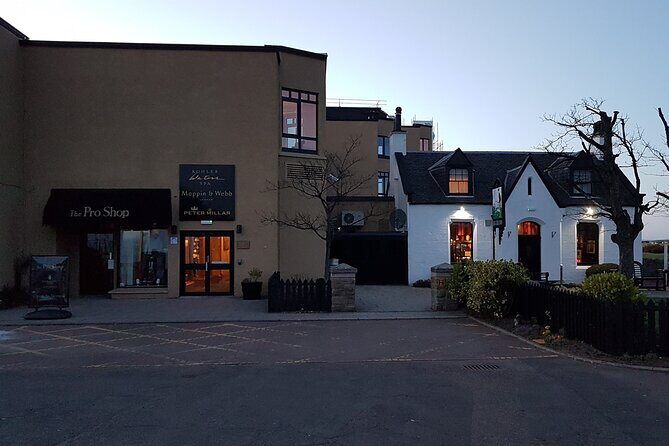
You meet at Hotel du Vin St Andrews, right by 40 The Scores. The tour begins with a town history overview and a key moment often linked to the early Links: the 1123 charter.
This first segment matters more than it sounds. St Andrews isn’t just a golf venue. It’s a small town with a long relationship to the coast, travel, trade, and community rules. When you understand that foundation, the course doesn’t feel like random tradition. It feels like local culture built over centuries.
Practical tip: be on time. The tour start is strict—these public tours won’t wait if you’re late.
The Links origins: from stick-and-ball roots to Home of Golf
Next you head to The Links for the big origin story. You’ll hear how golf’s early game is traced from a 13th-century stick-and-ball culture in the Low Countries, moving toward places like Edinburgh by 1744. Then the tour connects the dots to why St Andrews is often called the Home of Golf.
This stop works well because it frames everything you’ll see later. When you understand that St Andrews didn’t just host golf—it helped shape the idea of golf as a course-based game—you start noticing details in the places around you.
Even if you’re not a golfer, this is where the tour becomes fun. You’ll recognize the names and moments that show up in documentaries, but you’ll also learn why they mattered to the people who lived with the course day after day.
Royal & Ancient Golf Club: Old Course design stories that explain the game
Then comes the Royal & Ancient Golf Club of St Andrews, a stop that puts the Old Course into a bigger golf history picture. Expect stories about how Old Course development also shaped the game, including how fairways and bunkers connect to the way golf evolved.
You’ll also hear about Old Tom and the old Caddie Shack, which is a smart pairing. It ties the physical course to the people who worked it—caddies, club culture, and the practical realities of playing on the Links.
One benefit of this stop: it doesn’t just name-drop. It helps you understand why course features exist. Once you get that, looking at the Old Course from the outside feels less like sightseeing and more like reading a map.



Grannie Clark’s Wynd: Open Championship moments and the jump to 18 holes
At Grannie Clark’s Wynd, the tour shifts into later-course development and major tournament context. You’ll hear about the Open Championship and the Dunhill Cup, plus the process that links course evolution from earlier hole counts—12, 10, and eventually 18—to what golfers play today.
This stop is useful because it gives you a timeline anchor. A lot of golf history online is “cool facts” without clear sequence. Here, you get the sense of how the Old Course reached the form that tournaments could test again and again.
You’ll also get pointers toward important sites around the 18th, which helps you understand the Old Course isn’t one hole—it’s a connected set of challenges, traditions, and architecture shaped by time.
Rusacks St Andrews: the 1st/18th story, the Mannings, and putting green legend
At Rusacks St Andrews, the tour focuses on the 1st/18th fairway area and the people tied to the course’s early routines—especially the Mannings. You’ll also hear about the original 1st tee and the 18th hole setting.
This is a great stop for golfers because the story connects physical places to the human side of the game. One of the most memorable claims you’ll hear here is that early caddies and ladies influenced Old Tom to create what’s described as the world’s first putting green. Whether you think of it as myth or history, it’s the kind of story that captures how the course served real people’s needs.
The bigger takeaway for you: this stop teaches you to look at the Old Course like a living setup, not a fixed museum. That mindset makes your later walking (on your own) more rewarding, because you’ll know what you’re looking for.
Swilcan Bridge photo stop: iconic views with tournament-day limits
The tour includes the Swilcan Bridge photo moment, one of the most photographed landmarks in golf. You’ll get a proper photo shoot here—included in the tour price—and you’ll learn the place in context.
Important limit: the Swilcan Bridge stop is excluded on tournament days (like the Open or Dunhill). So if your dates land during major events, you may need to plan your golf photo goals around that.
If you want the best experience, plan your time around light and crowds. The bridge area can get busy fast, and the tour’s photo setup means you’ll get your shot without having to fight for angles.
Finish at the Old Course Road Hole: 17th green stories and the Jigger Inn
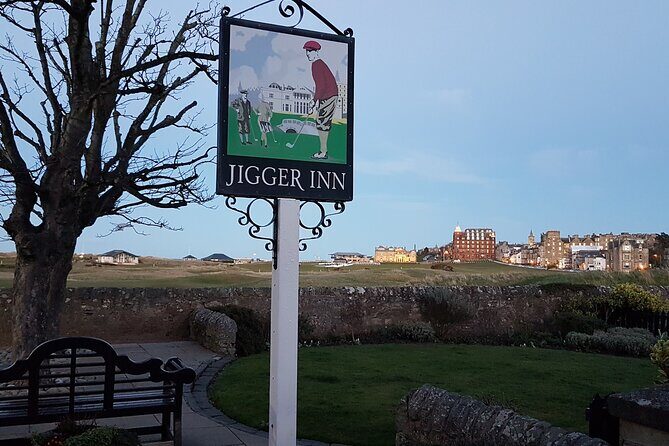
The final stop is the Jigger Inn, near the Road Hole and the 17th green. This is where the tour leans into the jaw-dropping moments connected to the Road Hole story—exactly the kind of legend that makes golfers talk in the pub afterward.
You’ll finish near the Old Course Jigger Inn for refreshments. Drinks and food are not included, but it’s a convenient end point. After the walk, you can relax by the fairway side of the action and either recharge or plan your next Old Course views.
If you’re doing the Old Course on your own after this tour, I’d treat this finish as your “course orientation moment.” By the time you’re at the 17th area, you usually have enough story context to choose what to watch and what to photograph next.
Small-group pacing, audio clarity, and timing tips that matter
This tour is built for attention. With a maximum of 15 travelers, you’re not stuck in a big herd while Richard talks. The stops are timed to keep the pace comfortable, with frequent learning moments.
A few practical points that will help you enjoy it more:
- English matters. The tour requires a fluent command of English. Speaking slowly or translating doesn’t work for the format.
- Bring layers. Scotland weather changes fast, and you’ll be outdoors for the duration.
- Don’t arrive late. The start at Hotel du Vin is the one moment you can’t casually miss.
- Plan for no left-behind gear. The tour notes that there’s nowhere to leave items like crutches, mobility scooters, or golf clubs while you’re out on the route—so travel light.
Also, you’ll want to think about your group. This works especially well if you have:
- one golfer who wants the history behind the holes, and
- one non-golfer who wants a story-driven walk through St Andrews that doesn’t require golf swing talk.
Should you book the St Andrews Old Course History Tour?
I think it’s a strong booking if you want golf history in a short window and you like story-driven tours with a real connection to the course. The included Swilcan Bridge photos, the small group, and Richard’s caddie-style storytelling make it feel like more than just walking past famous spots.
Skip it (or plan carefully) if fluent English is a problem for your comfort level, because the tour is designed for full-speed understanding. And if you have mobility limitations that involve devices you can’t leave behind, you’ll want to check fit with the tour’s physical requirements before you commit.
If your dates avoid tournament days, you’ll likely get the most complete experience. If they don’t, you can still do the history portion, just know the Swilcan Bridge photo stop has limits.
FAQ
How long is the St Andrews Old Course History Tour for the Golfer?
It runs for about 1 hour 15 minutes.
Where do I meet the guide?
You start outside Hotel du Vin St Andrews, at 40 The Scores, St Andrews KY16 9AS.
How many people are in the group?
The tour has a maximum of 15 travelers.
Is the tour suitable for non-golfers?
Yes. The tour focuses on St Andrews history and golf origins, not just play-by-play golf technique.
Do I need to speak English fluently?
Yes. A fluent command of English is essential, and speaking slowly or translating is not suitable for this tour format.
Is the Swilcan Bridge stop included on Open Championship or other tournament days?
No. The Swilcan Bridge photo shoot is excluded on tournament days such as the Open and Dunhill.
What happens if bad weather cancels the tour?
The experience requires good weather. If it’s canceled due to poor weather, you’ll be offered a different date or a full refund.