REVIEW · ST ANDREWS
St Andrews Walking Tours
Book on Viator →Operated by St Andrews Tours · Bookable on Viator
St Andrews looks postcard-perfect. A historian-led stroll through its most important corners makes it click fast, from the university and cathedral to the Home of Golf. You’ll also get the kind of context that helps you stop seeing buildings and start understanding power, faith, and sport in the same place.
I especially like two parts of the route: the quiet breather at St Mary’s College, and the quick stop that doubles as a treat at Jannettas Gelateria. Both feel very St Andrews—soft and lived-in, not just tourist-trippy.
One thing to consider: this tour runs in English and moves at a pace that expects moderate walking fitness. If your English is shaky or you need to go slower than average, you may feel rushed.
In This Review
- Key highlights worth planning for
- Why this St Andrews walk hits different
- Value check: $20.57 and what you really get
- Route breakdown: every stop, what you’ll notice, and what to watch for
- Stop 1: St Mary’s College for a calm warm-up
- Stop 2: Jannettas Gelateria for a quick palate reset
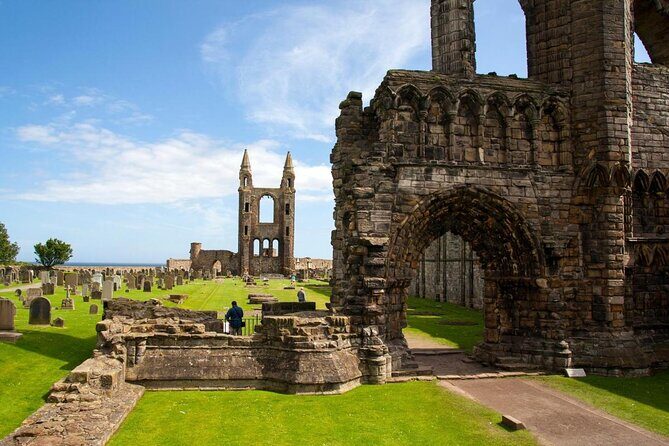
- Stop 3: St Andrews Cathedral for faith, politics, and power
- Stop 4: St Andrews Harbour Trust and the fishing heart of town
- Stop 5: St Andrews Castle area and the Bishop’s Palace story
- Stop 6: University of St Andrews and St Salvators chapel
- Stop 7: The Old Course, golf history, and finishing by Swilcan Bridge
- Who this tour fits best (and who should rethink it)
- The guide experience: what you can expect from a good walk
- Practical tips so your 1 hour 45 minutes actually feels like yours
- Should you book this St Andrews Walking Tour?
- FAQ
- What time does the St Andrews walking tour start?
- Where is the meeting point?
- Where does the tour finish?
- How long is the tour?
- How much does the tour cost?
- Do I need to print anything, or do I get a mobile ticket?
- Is the tour suitable for children?
- What happens if the weather is bad or I need to cancel?
Key highlights worth planning for
- A historian guide connects St Andrews royal and religious stories to golf’s origin story
- Small-group limit (up to 30) keeps the walk flexible for different interests
- Short, efficient stops work well when you only have a slice of time
- St Mary’s College is a calm detour just off the main flow
- St Andrews Cathedral is framed as the seat of the Catholic Church and the Rome of Scotland
- Finish at Swilcan Bridge so you end right where the Old Course photo ops live
Why this St Andrews walk hits different
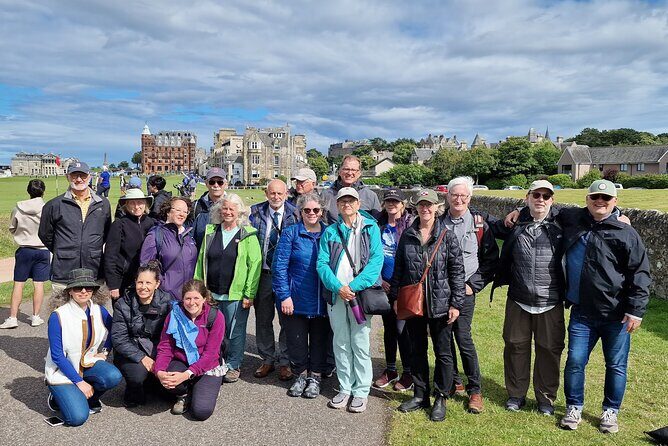
St Andrews can feel like two towns stacked on top of each other: tight medieval lanes and big-ticket university buildings. This tour helps you read both layers at once. The route is designed around important institutions—college, church, harbour, castle, and university—so you don’t just see sights. You understand why this place mattered, long before anyone talked about par, greens, and tournaments.
What makes it work is the pacing. At about 1 hour 45 minutes, it’s long enough to connect the dots, but short enough that you’re not stuck in the same spot for ages. That matters in Scotland, where weather can change moods quickly.
And yes, golf is the headline. But the tour doesn’t treat golf like a separate theme park. It places the Old Course story in the real civic world around it—where royals visited, fishermen worked, and power got argued about.
You can also read our reviews of more walking tours in St Andrews


Value check: $20.57 and what you really get
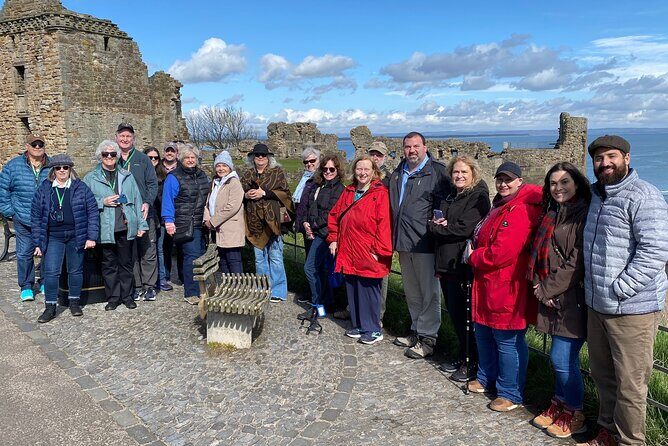
At $20.57 per person, this is priced like a smart add-on, not a big splurge. You’re paying for a guide who can explain what you’re looking at while you walk, plus a route that hits multiple major landmarks without you needing to plan a route map on your own.
A big part of the value is how the stops are built: several are quick-view moments that still feel meaningful. For example, you get time at the cathedral, time at the Old Course, and brief context at the harbour and castle area. You also get a tour finish at a prime location with plenty to do right after.
One practical detail: the ticket is a mobile ticket, which keeps you from juggling paper confirmations while you’re out sightseeing.
Route breakdown: every stop, what you’ll notice, and what to watch for
Stop 1: St Mary’s College for a calm warm-up
You start at St Mary’s College, described as the second college of the University of St Andrews and also the kind of place that sits a bit off the beaten track. That first stop is a smart move. It lets you ease in before the busier sights start pulling you in different directions.
Why I like this as a tour opener: it sets the tone that St Andrews is a working place, not just a museum. College buildings here aren’t background scenery. They’re part of the city’s daily rhythm, and this stop is quiet enough that you can actually hear the guide’s story.
Potential drawback: because it’s a more peaceful spot, it’s easy to feel you’re not going to get much out of it. But that’s exactly why it’s valuable. You get context early, before the route gets more dramatic.
Stop 2: Jannettas Gelateria for a quick palate reset
Then you’re at Jannettas Gelateria. It’s framed as the top ice cream parlour in Scotland, and the stop is brief—just a couple minutes.
This is less about calories and more about momentum. After a college stop, a tiny break keeps the energy up. It’s also a good reminder that St Andrews isn’t frozen in the past. Even between big history stops, life is still happening in the streets.
What to watch for: since the stop is short, treat it as a quick purchase or just a moment to regroup, not a full break like you’d want at a café.





Stop 3: St Andrews Cathedral for faith, politics, and power
Next comes St Andrews Cathedral, with the guide framing it as the seat of the Catholic Church and the Rome of Scotland for hundreds of years. That’s a wild claim on paper, but the tour makes it concrete by explaining why a place like this could matter across centuries.
This stop is one of your biggest “wow” moments because the cathedral story isn’t just about architecture. It’s about what people believed, who had authority, and how monarchs and royalty fit into the local picture over time.
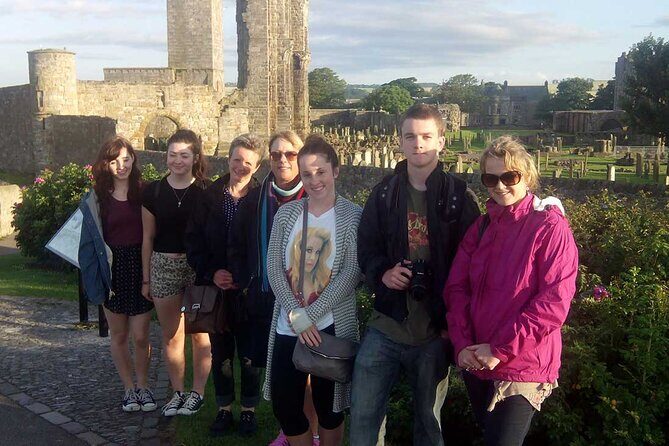
Time on site is about 20 minutes, which is enough to get oriented and understand the main points without feeling dragged. If you love religious history, this is likely the stop you’ll remember most.
Consideration: if you prefer purely visual sightseeing and could care less about historical context, you may want extra time on your own after the tour. But for most people, the framing makes the building easier to read.
Stop 4: St Andrews Harbour Trust and the fishing heart of town
Then you shift from church power to working life at St Andrews Harbour Trust, described as the old fishing harbour of St Andrews. This is where the city stops feeling like only a study hall and starts feeling like a coastal community.
You’ll likely notice how the harbour fits into the story of ordinary people, especially when the guide ties in older residents of the area, including Pictish kings and clans that once lived here. Even if you only catch a portion of that storyline on the route, the harbour stop helps you visualize daily life behind the big names.
Time is short—around 10 minutes—so the goal isn’t to become a harbour expert. It’s to add a working context layer so the later stops make more sense.
Stop 5: St Andrews Castle area and the Bishop’s Palace story
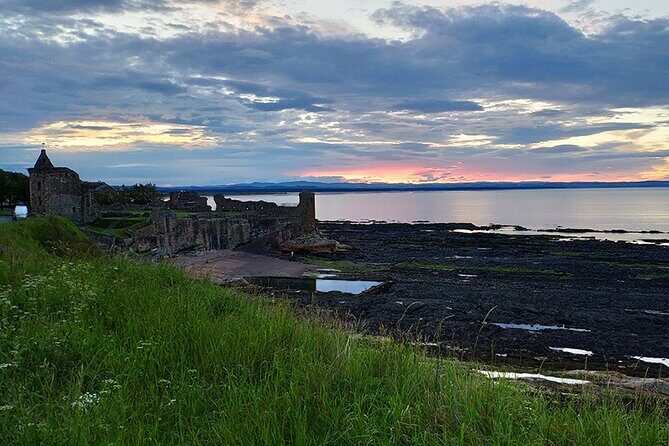
After the harbour, you get to St Andrews Castle, focused on the former Bishop’s Palace. The explanation happens outside the grounds, so this isn’t a full walk-through of rooms and exhibits.
Still, it’s useful. Bishops, religion, and city governance are tightly linked in the St Andrews story. Even if you don’t see every part of the palace structure up close, having the guide explain what it was and what it represented can totally change how you read the site.
Time is about 10 minutes. In other words, it’s a context stop, not a deep dive stop. If you love castle architecture, you’ll probably want to follow up later on your own.
Stop 6: University of St Andrews and St Salvators chapel
Next is University of St Andrews, with a chance to see the oldest part of the university and St Salvators chapel. This stop ties directly into why so many monarchs and royalty have been drawn to the city for centuries—because the university is not just another school. It’s a legacy institution.
This is also a great point in the route to think about how St Andrews evolves. You’re standing in a place that kept teaching, changing, and influencing people, even as political and religious currents shifted.
Time is again about 10 minutes. That means you should focus on the key visual cues your guide points out, and not expect museum-level detail here.
If you’re a student-at-heart, you’ll probably leave wanting one extra hour to poke around outside the tour route. But that’s a good problem to have.
Stop 7: The Old Course, golf history, and finishing by Swilcan Bridge
Finally: the Old Course. This is presented as the home of golf and the most prestigious golf course in the world. The stop is about 30 minutes, which is a solid chunk of time for the most iconic place in the itinerary.
Even if you’re not a hardcore golfer, the Old Course is one of those sites where everyone understands the hype after seeing it. The tour’s value here is the explanation—what made it important and how it connects to the wider St Andrews story.
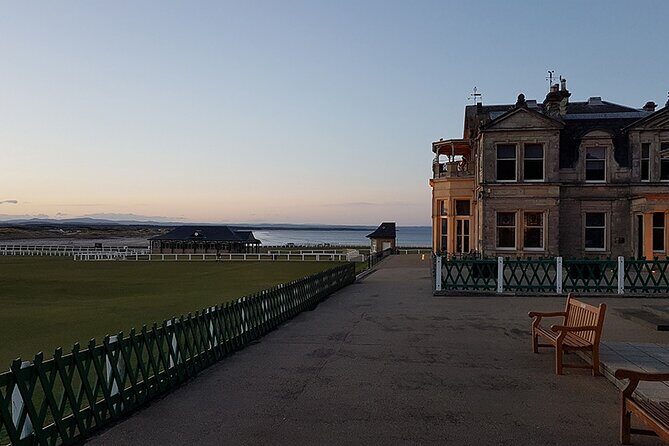
You also finish at Swilcan Bridge, right at the center of the famous scene people want photos from. After the tour ends, you’ll have plenty of options for food and refreshments nearby, plus an aquarium and two miles of sands. That’s a practical bonus: you can turn your tour into an easy half-day plan without needing to scramble for your next move.
Timing note: the tour starts at 2:00 pm, which is often a nice window for light and relaxed sightseeing. Still, keep in mind Scotland weather can flip. Wear layers.
Who this tour fits best (and who should rethink it)
I’d send you on this tour if you want:
- A history-first St Andrews experience that still keeps the pace moving
- A way to see big landmarks without building your own route from scratch
- An efficient option when you have limited time but still want real stories behind what you’re seeing
It’s also a solid fit for mixed group interests. Golf fans will love the Old Course finish. University and cathedral lovers will get their moments. And if you’re just curious about how a town like this functioned across centuries, the stop order helps.
I’d hesitate if:
- You need a slower pace. The tour asks for moderate physical fitness, and it’s not suitable for people with walking difficulties or those who walk slowly.
- Your English is limited. The tour requires a good command of English, and translation isn’t an option on these walks.
- You’re traveling with very young kids who need frequent stops. Under 5s are free, but it’s not suitable for under 2s.
Small practical tip: since it’s up to 30 travelers, you’ll feel the group energy, but it won’t be chaotic. Bring comfortable shoes and expect a fair bit of outside walking.
The guide experience: what you can expect from a good walk
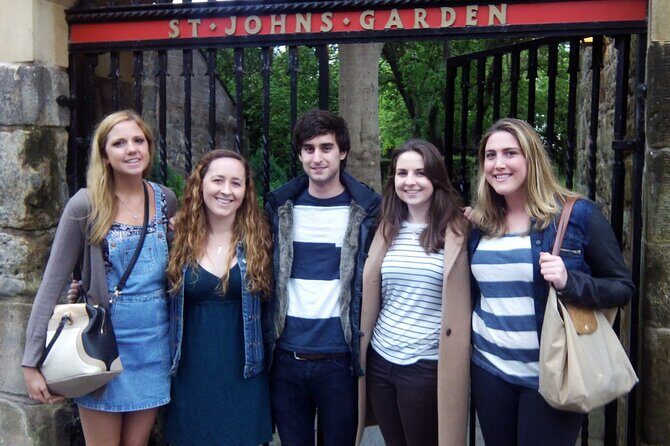
The biggest praise for this tour centers on the guide doing two things at once: being friendly and sharing local insights along with historical facts. One guide named Richard gets a specific nod for being knowledgeable and giving people the sense they saw more than the standard route.
You can feel this difference in how the walk sounds. When a guide ties together cathedral power, university legacy, harbour work, and the golf story, the city starts making sense in your head. That’s the whole point of a guided walk like this. Without the explanations, St Andrews can feel like a series of pretty buildings. With them, it becomes a living timeline.
Practical tips so your 1 hour 45 minutes actually feels like yours
- Wear shoes you’d trust on uneven outdoor surfaces. You’ll be moving between areas and absorbing a lot in a short time.
- Plan for quick stops. This isn’t a long museum schedule. It’s a guided route with moments that add up.
- Bring a layer. Even on a calm day, Scotland can turn breezy fast.
- If you want photos at Swilcan Bridge, hang out with the group near the end. The finish point is designed for that moment.
Also, do a quick mental check: this tour is not for people who need accessibility-friendly pacing. If that’s you, it’s better to choose a different style of sightseeing.
Should you book this St Andrews Walking Tour?

If you want an efficient way to understand St Andrews—college life, cathedral importance, harbour work, castle symbolism, and the golf story—this is a strong booking. The pricing feels fair for what you get: a guided narrative, a route that hits key landmarks, and an end point that makes it easy to keep exploring right away.
I’d say book it especially if you:
- Have limited time and want a route that covers the major beats
- Like history explained in plain language
- Want the Old Course finish without building a complicated plan
Skip it if you need slower walking, rely on translation, or you only want unstructured sightseeing with no history framing. For everyone else, this is an enjoyable way to get your bearings fast and leave with a city you can actually picture.
FAQ
What time does the St Andrews walking tour start?
The tour starts at 2:00 pm.
Where is the meeting point?
You meet at The Bothy St Andrews 3, Church Square, St Andrews KY16 9NN, UK.
Where does the tour finish?
The tour ends at Swilcan Bridge 17 The Links, St Andrews KY16 9JE, UK.
How long is the tour?
The duration is approximately 1 hour 45 minutes.
How much does the tour cost?
The price is $20.57 per person.
Do I need to print anything, or do I get a mobile ticket?
You receive a mobile ticket.
Is the tour suitable for children?
Under 5s are free, but the tour is not suitable for under 2s.
What happens if the weather is bad or I need to cancel?
The experience requires good weather. If it’s canceled due to poor weather, you’ll be offered a different date or a full refund. Cancellation is free up to 24 hours in advance for a full refund.