REVIEW · ST ANDREWS
St Andrews History Tours
Book on Viator →Operated by St Andrews Tours · Bookable on Viator
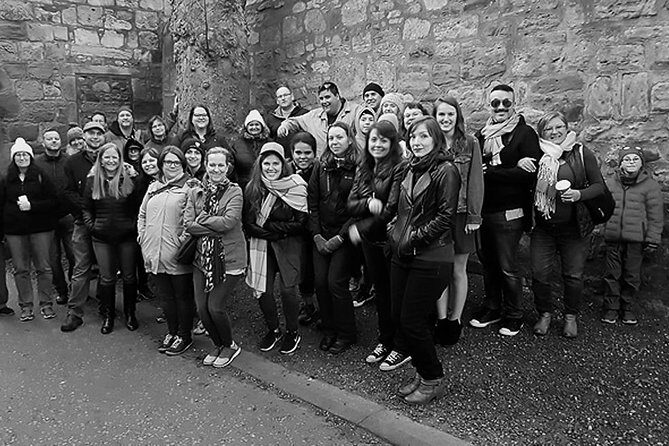
Cathedrals, ghosts, and puzzles. This 1.5-hour St Andrews walking tour led by historian Richard Falconer pulls you away from golf-only sightseeing and into the town’s darker turns: famous guests like Mary Queen of Scots and a long-running search tied to the cathedral’s lost treasure. I love the small-group feel that gives Richard room to answer your questions, and I also love that you get access to the university’s most historic quarters without turning it into a rushed photo stop.
One thing to weigh: the route is still a walking tour, so it’s not set up for people who walk slowly or who have walking difficulties. You’ll also get the most out of it if you understand English well.
In This Review
- Key highlights and why they matter
- Why this St Andrews history tour goes beyond the golf course
- Your guide: Richard Falconer and the pace of learning
- St Mary’s College (1538): why heresy was such a big deal
- St Leonards School: education tied to royal life
- The Pends: where pilgrims entered and why that mattered
- Harbor Trust stop: the calmer side of St Andrews
- St Andrews Cathedral: the Catholic center and the long aftermath
- St Andrews Castle (Bishops Palace): spiritual peace to political change
- University of St Andrews historic quarters: what you can learn in 30 minutes
- Timing and route: what to plan around a 2:00 pm start
- Is it good value at about $20.59 per person?
- Who this tour is best for
- Should you book St Andrews History Tours?
- FAQ
- How long is the St Andrews history tour?
- How much does the tour cost?
- Where do I meet the guide, and where does the tour end?
- What time does the tour start?
- Does the tour require good English?
- Is the tour suitable for young children and people with walking difficulties?
Key highlights and why they matter
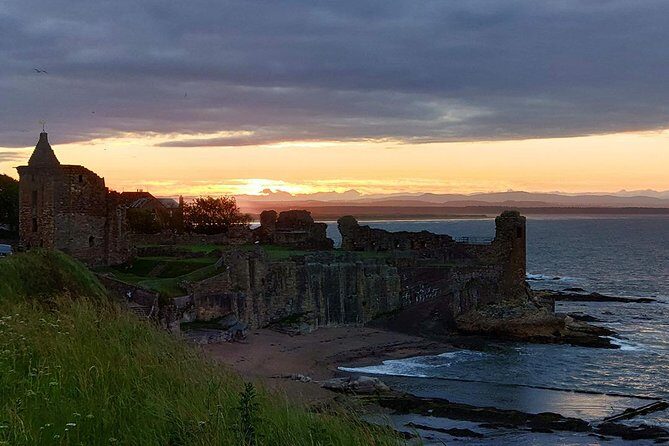
- Richard Falconer’s storytelling ties big names and big events to specific streets and buildings.
- University access focuses on St Andrews oldest and most historic quarters, not just the front gates.
- The Pends route shows how pilgrims entered the city and how that shaped where people moved.
- St Andrews Cathedral time period coverage connects faith, power, and Scotland’s major religious break.
- Bishops Palace at St Andrews Castle adds a practical sense of how daily life and politics overlapped.
- Harbor Trust stop gives you a calmer, scenic side of town many visitors skip.
Why this St Andrews history tour goes beyond the golf course
St Andrews is famous for golf, sure. But the town also runs on layers—religion, education, royal visits, and the everyday lives of people who made this place tick long before selfies were a thing.
This tour works because it treats St Andrews like a walkable timeline. You’re not just hearing dates. You’re watching how one part of town points to another: the way pilgrims flowed toward the cathedral, the way the university grew into a powerful institution, and how the church’s role changed when the Scottish Reformation hit.
You can also read our reviews of more historical tours in St Andrews


Your guide: Richard Falconer and the pace of learning
The standout for me is the way Richard Falconer keeps the tour moving without turning it into a lecture. The pacing is built for a one-and-a-half-hour experience, so each stop has a clear purpose. You learn enough to picture what the place looked like, then you move on while it’s still fresh.
You also benefit from the format: it’s a private tour/activity, so your group is the only one on the route. That matters in a town like St Andrews, where questions pop up fast—why was a building here, why did a school matter, what happened to the cathedral? With a small group, those questions don’t get pushed to the end.
If you enjoy asking questions, bring them. Richard’s style makes it easy to steer the conversation toward what you care about most—church history, education, royal links, or the legends people still trade.
St Mary’s College (1538): why heresy was such a big deal
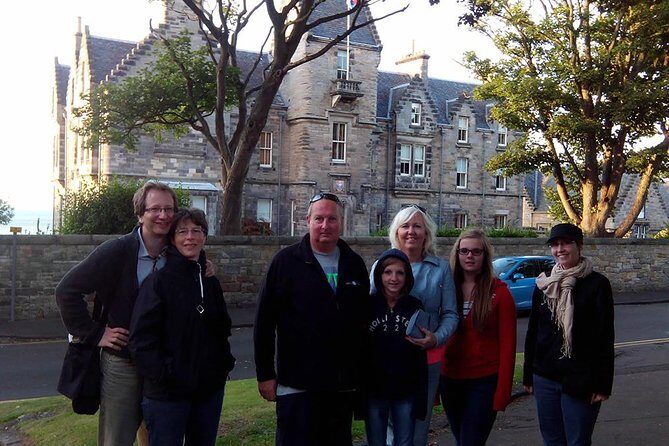
Your first stop is St Mary’s College, tucked off the beaten track. It’s tied to the university’s early strategy for controlling beliefs—this was the third college built in 1538, and it was designed to combat heresy.
That detail is more than trivia. It helps you understand why St Andrews University wasn’t just about studying. It was also about shaping ideas, training leaders, and keeping the town aligned with the powers that mattered at the time. When you stand in the area, you’re effectively stepping into the logic of the Reformation era before it fully arrives.
Practical note: this is one of those stops where a quick explanation makes the architecture and location feel more meaningful. Even if you’re not a history buff, you’ll catch the cause-and-effect behind the college’s purpose.
St Leonards School: education tied to royal life
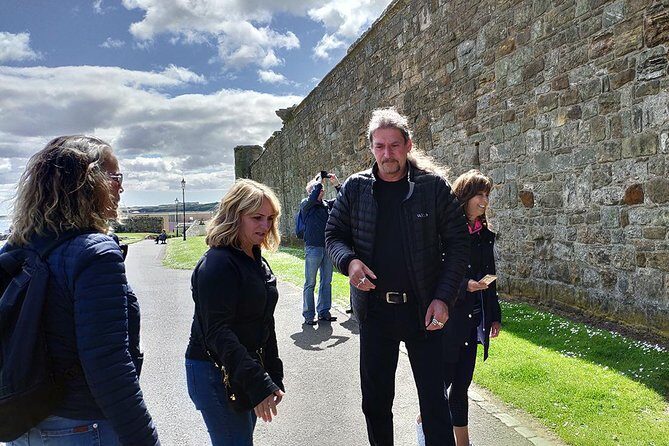
Next comes St Leonards School, described as a leading private school in Scotland and one of the top schools in the world. The specific royal connection here is that the Queen Mother attended primary school there.
This is a clever shift in tone. You start with religious discipline and then move to education as a kind of long game. The story helps you see how elite schools helped maintain social continuity—training young people within networks that could influence the future.
Also, this stop gives you a break from the heavier cathedral and castle themes. It’s still history, but it’s the kind of history that feels closer to how towns really operate: schools generate communities, and communities generate buildings that outlast their original purpose.
The Pends: where pilgrims entered and why that mattered
Then you hit the Pends, the main entrance to St Andrews for pilgrims. The point of the stop isn’t just the word pilgrims—it’s what that traffic did to the city. You follow the historic thoroughfare that runs through former priory precincts connected to the Cathedral.
Think of it like city planning driven by religion. When large groups are traveling for spiritual reasons, the town changes. Roads, gates, and the flow of people become part of the story. The Pends stop makes the cathedral feel less abstract; it turns it into a destination that shaped everyday life around it.
If you’re the type who likes walking “in the footsteps,” this is one of the best moments of the tour. You’re literally tracing where people once went for a purpose that mattered enough to travel long distances.





Harbor Trust stop: the calmer side of St Andrews
Most visitors wander straight toward the big-name sights and miss the quieter waterfront angles. This tour corrects that with a stop at the St Andrews Harbour Trust.
You’ll get time to take in the beauty of the harbor area, and that’s not just for scenic reasons. It offers context for the town’s working life. A university and a cathedral matter, but so do the ports and routes that keep a town supplied, connected, and economically real.
In short: this stop helps the tour stop feeling like a museum. It returns you to the town as a living place.
St Andrews Cathedral: the Catholic center and the long aftermath
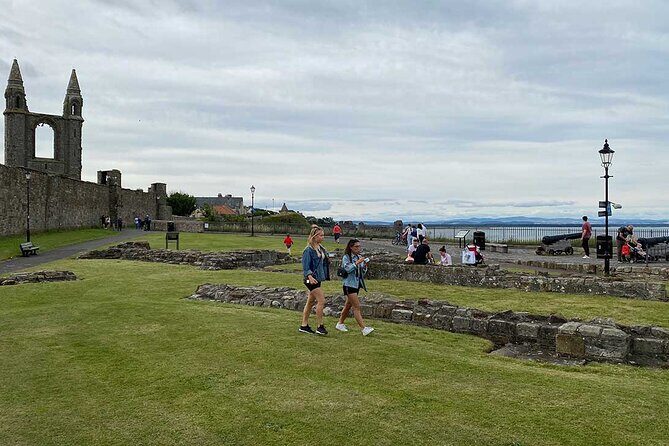
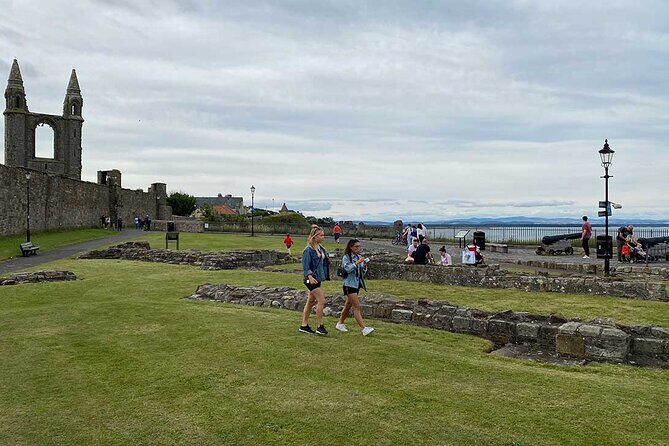
The biggest block of time goes to St Andrews Cathedral, and it’s the heart of the story. You learn about the former seat of the Catholic Church in Scotland, which gives you a framework for why this site carried such weight.
From there, the tour’s themes widen: the idea of a search for the cathedral’s lost treasure that the town and university pursued for about 50 years. That’s one of the tour’s most intriguing narrative threads because it shows how people kept returning to a mystery even after the world changed around them.
In a town where the religious shifts of the Reformation are hard to ignore, the cathedral stop gives you both a religious context and a human one. You’re not only hearing about power. You’re hearing about persistence—what people hoped to find, and why they kept looking.
Tip for your visit: before you walk into the next segment, look back for a second and mentally map the stop as a pivot point. Cathedral history explains so many other details—who visited, what streets mattered, and how institutions justified their influence.
St Andrews Castle (Bishops Palace): spiritual peace to political change
After the cathedral, you move to St Andrews Castle, where the building history starts with the Bishops Palace from the 13th century. The tour connects the site’s earlier period—described as mostly spiritual peace—with the later history that culminated in the Scottish Reformation.
This is a strong stop for anyone who likes seeing how the same stone can serve different purposes over time. The palace story isn’t only about rulers. It’s about what happened when the balance of authority shifted, and how a place designed for one worldview got repurposed by the next one.
You also get a sense of how the cathedral and castle aren’t separate stories. They’re linked parts of the same power system, and the walk between them helps you understand the geography of influence.
University of St Andrews historic quarters: what you can learn in 30 minutes
The tour ends with an exploration around the University of St Andrews, focusing on Scotland’s oldest university and its historic quarters. You’re given about 30 minutes, which means you won’t cover everything the campus offers.
But that’s not the point. The point is to get a structured sense of where to look and what to notice. The university architecture is distinctive, and the tour gives you a way to read it—why these buildings look the way they do, and why they matter.
If your goal is to leave with a mental map, this is the right final stop. You’ll have enough context to wander afterward and spot the stories in the stone, not just admire the views.
Timing and route: what to plan around a 2:00 pm start
This tour runs about 1 hour 30 minutes and starts at 2:00 pm. You meet at The Bothy St Andrews, 3 Church Square and finish at 75 Market St, by the Central Bar near the top of College Street by Market Street.
That end point is useful. It puts you in the heart of the action for an easy transition into dinner, a pint, or additional strolling. St Andrews is compact, so you can keep your day fluid rather than locking yourself into one long block of sightseeing.
One logistics detail that matters: the tour depends on good weather. If the forecast looks rough, you’ll want to plan your day with a little flexibility. A rainy St Andrews can be beautiful, but it’s still Scotland, and you’ll be on your feet for most of the experience.
Is it good value at about $20.59 per person?
For roughly $20.59 per person, this feels like solid value for three reasons.
First, the tour includes a lot of high-interest stops that typically take time to connect on your own. Second, the tour pacing gives you time with a guide, not just a self-guided walk where you need to stop and decode everything. Third, the itinerary’s focus on historic quarters, cathedral context, and the harbor area means you’re seeing a wider slice of town life than a golf-only plan would.
Also note the added value of what you don’t have to buy: the tour’s stops are described with admission ticket-free access. That doesn’t mean you’ll never encounter rules at specific sites later, but it does mean the tour experience itself is built to keep costs predictable.
Who this tour is best for
You’ll likely enjoy this tour most if you like history that you can walk through. It suits you if you want more than big monuments and prefer stories tied to actual streets and buildings.
It’s also a good fit for families who want an engaging guide and a clear route. The experience is described as suitable for ages under 5 are free, with a note that it’s not suitable for under 2. It’s not aimed at anyone needing a slow pace or who has walking difficulties.
One more match: if you’ve already done a ghost-themed walk in St Andrews, this can complement it nicely by grounding legends in real events and locations. And if you’re starting your trip, it helps you build context fast before you go chase the next sight.
Should you book St Andrews History Tours?
Yes, with a few common-sense checks.
Book it if you want a smart, small-group history walk with an active guide like Richard Falconer, and if you’re interested in the cathedral, the university, and the way St Andrews evolved around religion, education, and power. It’s also a great choice if you want to see the harbor side of town and not only the postcard core.
Skip or swap to a different format if your walking is limited or you need a slower pace. Also, if English comprehension is a challenge for your group, you may lose some of the story flow.
If you’re aiming for a first or second day in St Andrews and you want real context without spending all afternoon reading plaques, this is an easy yes.
FAQ
How long is the St Andrews history tour?
The tour lasts about 1 hour 30 minutes.
How much does the tour cost?
The price is $20.59 per person.
Where do I meet the guide, and where does the tour end?
You start at The Bothy St Andrews, 3 Church Square, St Andrews KY16 9NN, UK. The tour ends at 75 Market St, St Andrews KY16 9NU, near the Central Bar by Market Street.
What time does the tour start?
The tour start time is 2:00 pm.
Does the tour require good English?
Yes. Participants should understand English well to get the most out of the tour.
Is the tour suitable for young children and people with walking difficulties?
Under 5s are free, and it is not suitable for under 2s. It is also not suitable for those with walking difficulties or who walk slowly.