REVIEW · ST ANDREWS
St Andrews Tours: Town, Golf and Old Course History
Book on Viator →Bookable on Viator
Golf dreams meet town storytelling. In just about 1 hour 45 minutes, this St Andrews walk connects the Old Course with the town’s university and cathedral ruins, using a local author as your guide. You’ll also get to plan your day thanks to choice of departure times.
I like how the tour keeps your costs under control: the stops are listed with admission ticket free access, so you’re mostly paying for the guide and the route. Two things I’d happily do again are the way the guide ties golf evolution to real places, and the fact the walk ends with the iconic Swilcan Bridge photo moment.
One consideration: it’s a walking tour and you must be comfortable walking for long enough to cover multiple historic sites, including crossing the Old Course fairway during live play at your own risk. The tour also requires a fluent command of English, and there’s nowhere to stash golf clubs or bulky items while you’re out on the route.
In This Review
- Key things I’d mark on your map
- Starting at T-Squared Social: a modern St Andrews warm-up
- The University of St Andrews (St Salvator’s and the Chapel) in short form
- St Andrews Cathedral ruins: where golfing legends get honored
- St Andrews Castle and the Open Championship story
- The Old Course experience: crossing the 1st/18th fairway at real playing distance
- Live play reality
- Swilcan Bridge: the photo stop that ends right in the middle of golf
- Why your guide’s style matters on this walk
- Pacing and walking rules: who should book, and who should skip
- Price and value: what $27.78 really buys
- Choosing your day: weather and the Sunday idea
- Should you book this St Andrews Town, Golf and Old Course History tour?
- FAQ
- How long is the St Andrews Town, Golf and Old Course History tour?
- Where does the tour start and end?
- Is this tour offered in English?
- What’s included in the price?
- Are the sites you visit ticketed?
- Will I walk on the Old Course?
- Is it suitable for strollers or mobility aids?
- What is the group size limit?
Key things I’d mark on your map
- Small group limit (20 max): You get more real conversation and less rushing.
- Free-entry stops listed throughout: Your money goes to the guide, not extra tickets.
- Local author style storytelling: Golf history is explained through the town’s actual landmarks.
- Crossing the 1st/18th fairway: You’ll be at the heart of the game, with golf-balls-in-play precautions.
- University and cathedral ruins in one loop: Scotland’s oldest university and the cathedral site are both part of the story.
- Swilcan Bridge finish (with tournament-day caveat): Great photo op right where golfers love to gather.
Starting at T-Squared Social: a modern St Andrews warm-up
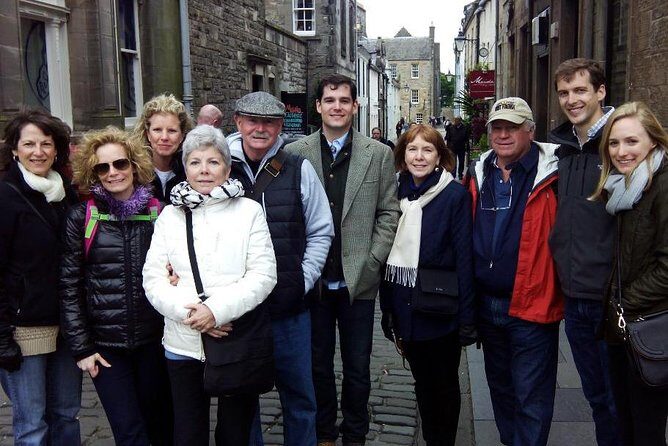
The tour starts at T-Squared Social, right on North Street. It’s a useful first stop because it helps you snap into the right mindset: St Andrews isn’t just castles and old legends. It’s a working university town with modern sports energy—there’s even virtual golf and other sporting activities around the space, which makes the transition into real golf history feel natural.
This is also where you’ll meet your guide and set expectations for what’s coming next. Expect a guided route that moves fast enough to pack in major landmarks, but organized enough that you’re not wandering around trying to figure it out yourself.
You can also read our reviews of more historical tours in St Andrews


The University of St Andrews (St Salvator’s and the Chapel) in short form
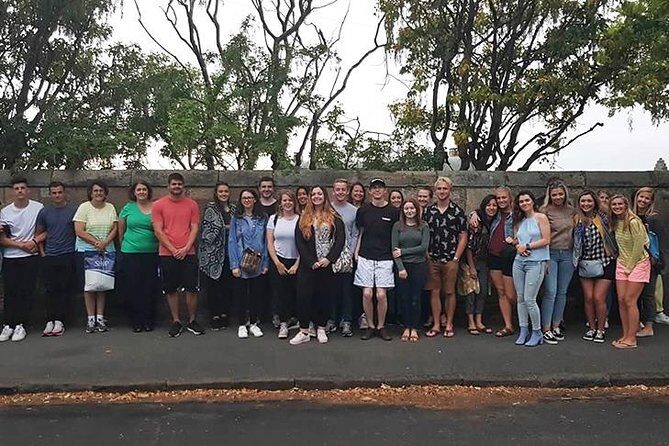
Next you’ll head to the University of St Andrews, established in 1413—a detail that matters because it frames the town as a place that has been educating minds for centuries. In around 10 minutes, you’ll learn how this oldest university shaped St Andrews and its culture over time.
The stop includes St Salvator’s College and the University Chapel. Even if you’re not a “campus tour” person, I like this part because it explains why St Andrews feels intellectual and distinctive—not just picturesque. It also gives context for why golf could grow into something bigger than a pastime. When a town has long-term traditions, sports traditions can take root too.
Practical note: this is not a slow, sit-and-stare stop. It’s a “get the story, see the key parts, move on” style. If you like structure, you’ll feel at home.
St Andrews Cathedral ruins: where golfing legends get honored
After the university, you’ll reach St Andrews Cathedral ruins. This is one of the tour’s most meaningful stops because it mixes places of worship and remembrance with the sport that later defined the area.
You’ll learn about the cathedral ruins and pay your respects at the memorials for golfing greats including Old Tom Morris, Young Tom Morris, Allan Robertson, and Jamie Anderson. That combination is the real magic: you’re not just hearing golf history as dates and names—you’re standing near the kind of legacy that golf people talk about with genuine emotion.
In a short 20-minute window, the guide typically focuses on the connection between the town, community, and the development of the game. If you’re only into golf scores, you’ll still end up caring about the human side.
St Andrews Castle and the Open Championship story
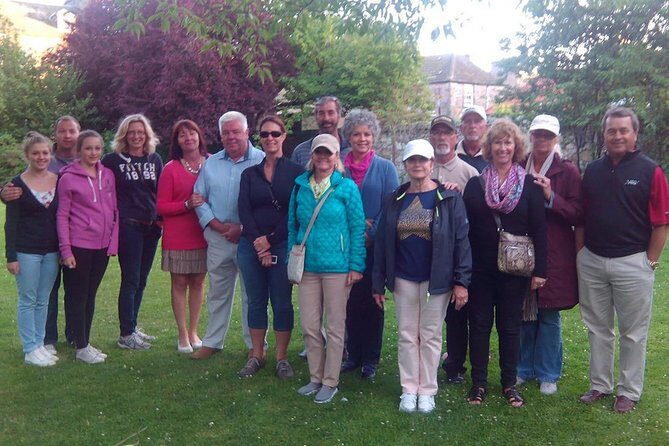
From the cathedral area you’ll move to St Andrews Castle, which you’ll learn was once a Bishops Palace. This stop works well because it shows how St Andrews functioned long before golf became the global headline act.
Then comes a key walking segment toward the Old Course. Here the guide explains Tom Morris and Allan Robertson and how the Open Championship began. I like that this isn’t treated like a trivia segment. It’s tied to the physical geography—what the town looked like, where the game could develop, and why the Open made sense for St Andrews.
This is also a good moment to absorb the pacing. You’re moving from one historic “layer” to the next, and the stories keep connecting rather than sounding like separate lectures.
The Old Course experience: crossing the 1st/18th fairway at real playing distance
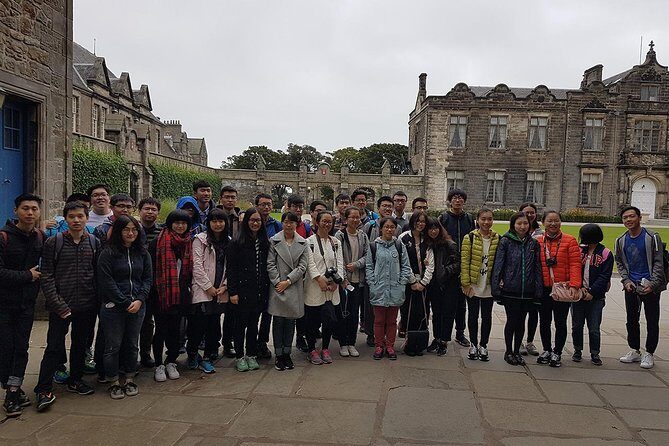
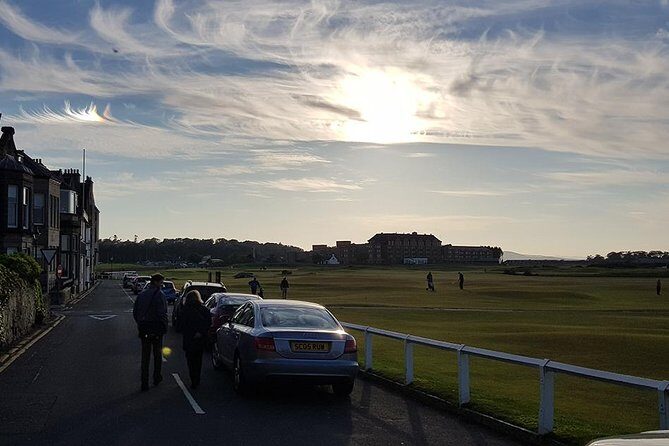
The Old Course is the main event, and the tour gives you about 40 minutes there. You’ll learn about the evolution of golf and the development of the Old Course, plus you’ll see adjoining landmarks that help explain why this place matters so much.
The standout experience is that you’ll walk across the 1st/18th fairway. That’s not the usual “view from the fence” approach. It’s a reminder that you’re in an active sporting arena, not a museum set behind ropes.
A few important, practical points:
- You’ll do this at your own risk.
- You must keep an eye out for golf balls during live play.
- The tour is best for people who can walk confidently without stopping every minute.
If you’re the type who likes to be close to the action—standing where golfers walk and feel the course—this part is what you came for.



Live play reality
The tour notes that it happens during times when golf may be in progress. So I recommend wearing shoes you can trust and keeping your attention up. It’s not scary, but it is real.
Also, don’t carry anything you’ll need to store on the spot. The tour clearly warns there’s nowhere to leave items like golf clubs while you’re out on the route—plan to keep what you bring with you.
Swilcan Bridge: the photo stop that ends right in the middle of golf

The tour finishes at Swilcan Bridge, at 17 The Links near the Old Course. This is where many people go to feel the “Holy Land of Golf” pull for themselves, and the tour gives you a structured close-out: a photo opportunity plus details about nearby iconic buildings.
There’s one timing wrinkle to know: Swilcan Bridge photos are excluded on tournament days. If you’re traveling around a major event, that’s worth considering so you’re not expecting the exact same photo moment.
Still, as a finale, it’s smart. You’re ending at the heartbeat of the game rather than dropping you back somewhere far away.
Why your guide’s style matters on this walk
A tour like this lives and dies by storytelling. This one leans hard into a local author vibe, and the guide experience shows in the details people mention: humor, historical clarity, and golf know-how in one package.
In the feedback shared with this experience, the guide Richard comes up often. Some comments highlight that he’s not just a lecturer—he’s a resident and an author, and there’s even a note that he did over 8 years as a caddie. That kind of background tends to make golf history feel practical instead of abstract.
You’ll also notice a pattern in the way guides handle questions. On many tours, you can ask something as it comes up—like why certain places matter or how the Open evolved—without the whole group feeling like it’s being yanked forward.
And yes, it’s also written for people who aren’t golfers. The best versions of this tour frame golf as a window into St Andrews itself: the town’s identity, how tradition forms, and why specific people are remembered.
Pacing and walking rules: who should book, and who should skip
This is a walking tour with multiple stops close together, but it still covers real ground. The tour is set up for people with moderate physical fitness, and you should feel comfortable walking for the duration.
Keep these rules in mind before you commit:
- You need to be comfortable with walking.
- It’s not suitable for under 2s, and under 5s are free.
- It’s not suitable for baby strollers/carriages.
- There’s no way to leave golf clubs or similar items during the tour.
- It’s not suitable if you have walking difficulties or mobility issues involving hip/knee problems, sprained ankles, walking frames, crutches, or mobility scooters.
Also, the language requirement is firm. You must have a fluent command of English. The tour notes that speaking slowly or translating doesn’t work for this format. So if English isn’t your strong suit, I’d steer you toward something that’s designed for your comfort level.
On the positive side: the maximum group size is 20, which generally keeps it from turning into a herd. And it’s noted that the tour is near public transportation, so you’re less dependent on taxis.
Price and value: what $27.78 really buys
At about $27.78 per person, the value comes from what’s included rather than the number on the ticket. You’re paying for:
- a professional English-speaking local guide
- a route that links university, cathedral ruins, Bishops Palace / castle context, and the Old Course
- a finish at Swilcan Bridge, which most golfers recognize instantly
The itinerary also lists stops as admission ticket free, so you’re not stacking extra entrance costs on top. For a guided walk that hits multiple headline sites in roughly 1 hour 45 minutes, that tends to be a fair deal—especially if you care about context more than you care about long museum time.
It’s also a practical way to experience the Old Course without needing tee-time planning. You get the sense of the course’s importance and the stories behind it, even if you don’t play a round.
Choosing your day: weather and the Sunday idea
This experience requires good weather. So if you’re booking during a changeable week, have a backup mindset. On a wet day, you’ll still walk, just with less enjoyment and more careful footwork.
One specific planning tip you’ll see from golf fans: consider booking on a Sunday. The reasoning is that the Old Course can feel more like a public walkway then, since live play is different. I can’t promise how it will look on every Sunday, but if you want a calmer Old Course atmosphere, that’s a sensible day to target.
If you’re unsure, check what else you want to do that day. This tour packs information into a tight timeline, so don’t schedule anything that requires you to be lightning-fast.
Should you book this St Andrews Town, Golf and Old Course History tour?
Book it if you want:
- a structured, story-first introduction to St Andrews
- golf history explained through actual places, not just names on a page
- a guide-led walk that keeps your day efficient
- a real Old Course moment, including the chance to cross the 1st/18th fairway and end at Swilcan Bridge
Skip it if you:
- have mobility limitations or need walking supports
- rely on strollers or need to move slowly
- can’t handle fluent English in a live group setting
- need somewhere to store bags or golf clubs during the tour
If you’re a golfer, you’ll feel how much the Old Course shaped the town. If you’re not, you’ll still come away with why St Andrews is St Andrews—university learning, cathedral memory, and a sport that grew into a legend tied to specific people.
FAQ
How long is the St Andrews Town, Golf and Old Course History tour?
It lasts about 1 hour 45 minutes.
Where does the tour start and end?
The tour starts at T-Squared Social, 117 North St, St Andrews KY16 9AD, UK, and it ends at Swilcan Bridge, 17 The Links, St Andrews KY16 9JE, UK.
Is this tour offered in English?
Yes. The tour is held in English, and you should have a fluent command of English for the experience.
What’s included in the price?
A professional English-speaking local guide is included.
Are the sites you visit ticketed?
The stops are listed as admission ticket free within the tour experience.
Will I walk on the Old Course?
Yes. You will walk across the 1st/18th fairway at your own risk and you must keep an eye out for golf balls during live play.
Is it suitable for strollers or mobility aids?
No. It’s not suitable for baby strollers/carriages, and it’s also not suitable for travelers with walking difficulties or mobility issues such as hip/knee problems, sprained ankles, walking frames, crutches, or mobility scooters.
What is the group size limit?
The tour has a maximum of 20 travelers.