REVIEW · SCOTLAND
Lewis Historical Tour
Book on Viator →Operated by Hebridean Life Tours · Bookable on Viator
A few hours can feel like a whole era on Lewis. This tour strings together Neolithic stones, island life, and Victorian power in one tight route. You get a smooth plan with private transportation, so you spend less time wrestling with logistics and more time looking closely.
Two things I really liked: the chance to see the Callanish area and other ancient sites back-to-back, and the way the guides keep the day moving without rushing your questions. You also get great added value because several stops have free admission. The only real drawback to note is timing: several stops are short, so if you love slow museum time you’ll want to prioritize what matters most to you.
In This Review
- Key highlights I’d plan my day around
- A Lewis day that starts with stones and keeps going
- Clach an Trushal: The Stone of Compassion in numbers
- Butt of Lewis Lighthouse: Northwest power and marine wildlife
- Gearrannan Blackhouse Village: Life in the 1800s, in plain sight
- Callanish Standing Stones: When you try to make sense of alignment
- Lews Castle: The Lewis Chessmen and the story of land
- Price and value: What you’re paying for, and why it can make sense
- Guides you’ll actually enjoy: Alan, Marisa, and Murdo
- What to wear and bring for a 4–6 hour Lewis history sprint
- Who should book this tour, and who might not
- Should you book the Lewis Historical Tour?
- FAQ
- What stops are included on the Lewis Historical Tour?
- How long is the tour?
- What time does the tour start?
- Is pickup available, and where do you pick up?
- Where does the tour start and end?
- Are entrance fees included?
- How much does the tour cost?
- Is this a private tour?
- Can I bring a service animal?
- What fitness level do I need?
- What is the cancellation policy?
Key highlights I’d plan my day around
- Clach an Trushal, the Stone of Compassion, with exact height and measurements to picture it fast
- Butt of Lewis Lighthouse, the most north-westerly point in the British Isles plus David Stevenson’s link
- Gearrannan Blackhouse Village, with a working-style Harris Tweed demonstration and a real peat stack to see in context
- Callanish Standing Stones, plus an on-site exhibition and a tea-and-cake break at the visitor centre
- Lews Castle (redeveloped in 2015), where the Lewis Chessmen history lands in the same place you can stand and imagine it
- Guide flexibility, with guides like Alan (and local hosts Marisa and Murdo) known for adapting when something catches your group’s eye
A Lewis day that starts with stones and keeps going
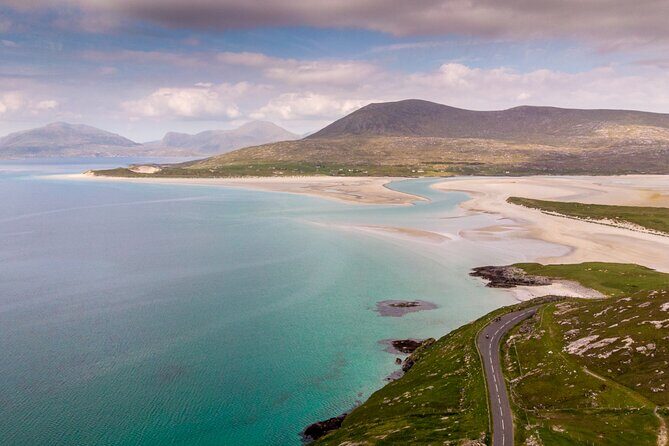
Lewis history can sound like a long list of dates. This tour turns it into a route you can understand while you’re still standing in front of the objects. You start from South Beach in Stornoway at 9:00 am, and you return to the same meeting point, usually with a day that lands somewhere between 4 and 6 hours depending on pace and stops.
You’ll move by private vehicle, which matters here because Lewis sites aren’t all packed in one town. The upside is simple: you don’t waste time on schedules, and you can keep your eyes on the scenery without planning every turn. The downside is also simple: in a half-day format, each location gets a set slice of time, so you’ll want to decide whether you’re the type who likes to linger or the type who likes to collect impressions.
You can also read our reviews of more historical tours in Scotland
Clach an Trushal: The Stone of Compassion in numbers
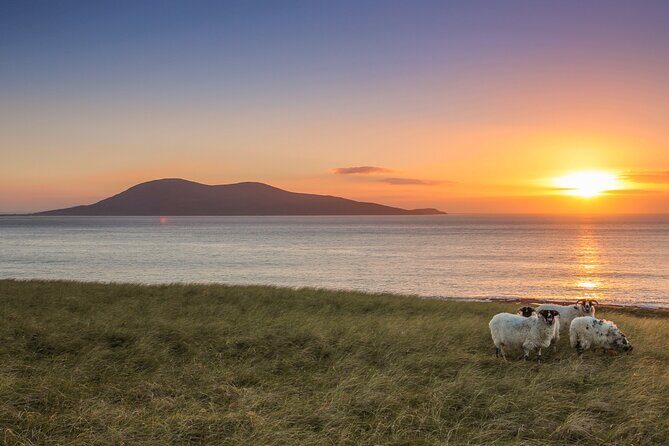
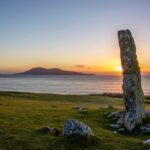
Your first stop is Clach an Trushal, often called the Stone of Compassion. What I like about starting here is how quickly it gives you a sense of scale. This standing stone is believed to be the tallest standing stone in Scotland, and the numbers help your brain. Above ground it rises about 5.8 metres, it’s about 1.83 metres wide, and its thickest point is around 1.5 metres.
It’s a short stop, around 5 minutes, so you’re not doing deep interpretation on-site. Instead, you’re doing the useful thing: getting your first real sense of what a standing stone means when you’re looking at a single, massive object rather than a photo.
Practical tip: bring your phone for quick notes. When you later see other stone sites, it’s surprisingly easy to mix up names and sizes. A quick timestamp note saves you later.
Butt of Lewis Lighthouse: Northwest power and marine wildlife
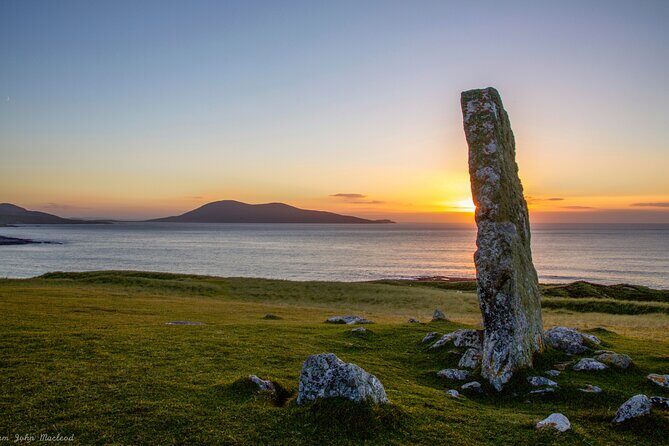
Next up is the Butt of Lewis Lighthouse, at the most north-westerly point in the British Isles. If you like location names that feel like they’re pointing at a map, this one delivers. The lighthouse was built by David Stevenson, the father of Robert Louis Stevenson. That connection is easy to remember because Treasure Island is the name most people already know.
You’ll also be near the coastline where the guide can point out the kind of things people hope to spot. The area is said to be good for watching basking sharks and porpoises, and there’s a small beach nearby if you want a quick breather between viewpoints.
There’s also a fun bit of records history: the area holds a Guinness Book record for the highest gust recorded in the British Isles, listed at 133.6 miles per hour (1962). Even if you’re not chasing weather trivia, it’s a good reminder that this is a raw edge of land, not a sheltered postcard cove.
Stop time is about 15 minutes, so think of this as: arrive, take in the view, listen for the story, then move on before your patience or the wind wins.
Gearrannan Blackhouse Village: Life in the 1800s, in plain sight
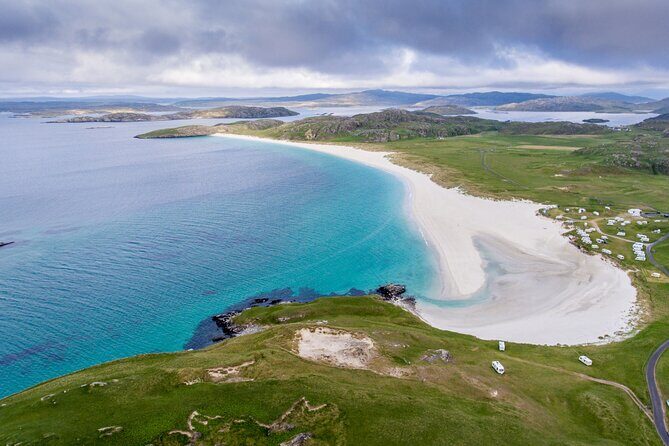
If there’s one stop that really slows the day down in a meaningful way, it’s Gearrannan Blackhouse Village. You get about 45 minutes, and admission there is included. This is the kind of stop that’s not just about architecture. It gives you something more useful: a way to picture daily life in the 1800s on Lewis.
Inside, you can watch a video on community life and culture. Then you’ll see the lived-in details: a Harris Tweed weaver working, a real peat stack, and the restored blackhouse setting that helps you understand how people stayed warm and worked with the resources they had.
A practical note on expectation: you’re not just looking at costumes. This village is designed to make the buildings and tools feel like a system. It connects to later parts of the day because once you see how people lived, the larger scale sites like Callanish and Lews Castle start to feel less like separate attractions and more like different chapters of the same island story.
Callanish Standing Stones: When you try to make sense of alignment
Then you hit Callanish Standing Stones, one of the best-known Neolithic stone circles in Scotland. The tour frames it with a comparison that’s meant to help you place it in time: it’s said to be older than Stonehenge and ages with the Pyramids. That’s a bold way to explain it, but it works if you’re trying to grasp how early this kind of monument-building happened.
You’ll have around 30 minutes here. That includes time at the stones, plus the exhibition at the visitor centre. I like that the day doesn’t pretend there’s a single simple answer to why the stones were set up. Instead, you get a chance to think about the reasons while you’re there, then use the visitor centre to ground your questions.
One of the nicest bonuses: you can have a cup of tea and some cake at the visitor centre. It’s not a massive meal-stop, but it’s a smart reset. It helps if the wind is up and you’re ready to come back to a warm, readable environment without losing the momentum of the day.
Small consideration: with only a half-hour, you’ll need to choose. If you want lots of time at the stones themselves, skim the exhibition. If you’re mainly there to understand, spend a touch more time inside and keep your stone viewing focused.
Lews Castle: The Lewis Chessmen and the story of land
Finally, the tour lands at Lews Castle, with time about 30 minutes and free admission. The building matters here, because it was redeveloped in 2015 to bring it back toward its earlier state.
The castle was built between 1840 and 1860 by Lord and Lady Matheson as a luxurious dwelling. Later it was sold to Lord Leverhulme of Unilever. Then came the part I think you’ll remember: in 1924, the castle, grounds, Stornoway, and surrounding areas were left to the people of Stornoway, leading to the first land-owning trust in Scotland.
Inside the museum portion of the redevelopment, the big draw is the Lewis Chessmen. These pieces were discovered in a sand dune in Uig in 1831, and they’re described as being carved from walrus ivory. The guide story ties them to the Vikings, suggesting they were brought to Lewis by Vikings in the 12th century AD.
What I like about ending here is that the day stops being only about ancient monuments. You end at a place where island power, land ownership, and a fascinating artifact story all show up under one roof. It’s history you can actually connect: people building, people living, and people later trying to preserve memory.
Price and value: What you’re paying for, and why it can make sense
The listed price is $493.61 per person for a 4 to 6 hour private tour. That number looks steep if you’re thinking of it like a basic group bus trip. But here’s where value comes in:
- You get private transportation, which is a real cost driver on an island.
- Several stops have free admissions, and Gearrannan Blackhouse Village has admission included.
- The itinerary hits multiple categories: Neolithic sites, maritime location, everyday 1800s life, and a castle museum stop.
There is one extra cost possibility mentioned: the option for an additional admission at Bosta Iron Age House, listed as £6.50 per person. That isn’t required by the core flow, but it’s good to know in case your guide suggests it based on your interests and time.
My take: if you want a route that feels efficient but still touches major sites, this price can feel fair. If you’re a solo budget traveler who’s fine hiring a car and picking sites yourself, you might compare costs. But if you’d rather have someone handle the driving and the context, the per-person fee becomes easier to justify.
Guides you’ll actually enjoy: Alan, Marisa, and Murdo
What lifts this tour above a checklist is the guide style. In real terms, that means your group gets answers on the spot and room to react.
I’ve seen this approach firsthand through comments about Alan, and also through other local hosts like Marisa and Murdo. The consistent theme: they’re local to the core, and they handle questions well. One guide was specifically praised for being professional, knowledgeable, and fun, with the ability to field a long stream of group questions without turning it into a lecture.
Another helpful point: a good guide times stops to avoid large tour buses. That’s not just a comfort perk. It changes the feel of the stone sites and ruins. You get moments that are quieter, with less crowd noise and more time to actually look.
And sometimes the day adds small extras when something fits the story. One example that came up: a detour for alpacas and a lunch stop for vegan pizza at Crust, served in a shipping container. That’s not a promise for every run, but it shows the kind of flexible thinking you can expect when your guide has options and listens to your interests.
What to wear and bring for a 4–6 hour Lewis history sprint
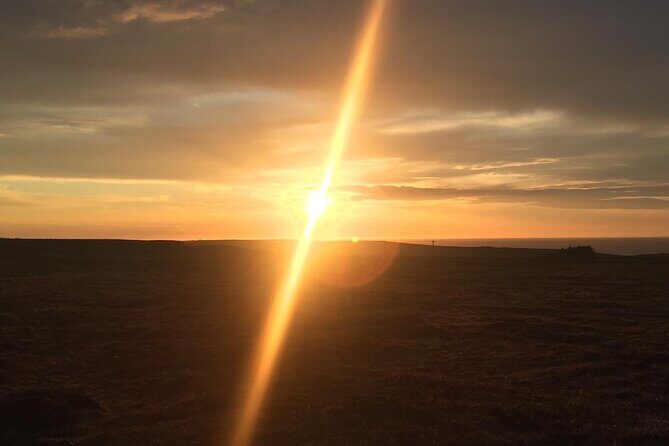
Since you’ll be outside at multiple locations, dress like the weather might change. You’ll be walking on uneven ground in places and standing around stone sites where a windbreaker can be worth it even when you’re warm at the start.
Bring:
- Layers you can add or remove fast
- A small snack plan if you get peckish between short stops
- Water
- A charged phone for quick reminders of names and dates
The tour itself is aimed at people with moderate physical fitness. That usually means you don’t need to train for a marathon, but you should be comfortable moving between viewpoints.
Who should book this tour, and who might not
This is a strong pick if you:
- want a guided route that hits major Lewis history without you planning every drive
- care about Neolithic sites and want context, not just photos
- prefer a format where you see several stops in one day and still get a couple of meaningful breaks
It may feel less ideal if you:
- want long museum time, because several stops are intentionally brief
- dislike moving at a steady pace, since the itinerary is structured around fixed stop windows
Should you book the Lewis Historical Tour?
I’d book it if your goal is a focused half-day that connects Lewis’s Neolithic monuments, everyday 1800s life, and a castle museum under one roof. The value isn’t only in the free admissions. It’s in how the route works: you get the sense of place in the right order, and a good guide helps you make sense of the sites while you’re there.
If you’re the type who likes to linger until the light changes, plan to prioritize your top two stops and let the others be the highlights you absorb in snapshots. With a private vehicle and a guide who can handle questions, it’s the kind of day that leaves you with names you won’t forget.
FAQ
What stops are included on the Lewis Historical Tour?
The tour includes Clach an Trushal, Butt of Lewis Lighthouse, Gearrannan Blackhouse Village, Callanish Standing Stones, and Lews Castle.
How long is the tour?
It runs for about 4 to 6 hours.
What time does the tour start?
The start time is 9:00 am.
Is pickup available, and where do you pick up?
Pickup is available from Stornoway Airport, client accommodation, Stornoway Town Centre, and Stornoway Deep Water Port.
Where does the tour start and end?
It starts at South Beach, Stornoway HS1, UK and ends back at the same meeting point.
Are entrance fees included?
Gearrannan Blackhouse Village admission is included. Clach an Trushal, Butt of Lewis Lighthouse, Callanish Standing Stones, and Lews Castle are listed with free admission tickets. Bosta Iron Age House is listed as £6.50 per person and is not included.
How much does the tour cost?
The price is $493.61 per person.
Is this a private tour?
Yes. It’s a private tour/activity, so only your group participates.
Can I bring a service animal?
Yes, service animals are allowed.
What fitness level do I need?
The tour notes a moderate physical fitness level is recommended.
What is the cancellation policy?
There is free cancellation up to 24 hours in advance of the experience start time for a full refund.