REVIEW · SCOTLAND
Orkney West Mainland Tour
Book on Viator →Operated by Orkney Travel · Bookable on Viator
Neolithic stones and big-sea views, no car required. This Orkney West Mainland Tour links Kirkwall to some of Orkney’s most famous prehistoric sites, with Scapa Flow scenery and plenty of time for photos along the coast. It’s a practical way to see the west side without renting a car or trying to stitch together multiple drives on your own.
What I like most is the chance for a small-group day out (14 people max), where your guide can actually answer questions and keep the pace human. I also love how the day mixes a deeper guided stop at Skara Brae with quick, high-impact photo moments at the other standing-stone sites and cliffs.
One thing to think about: the vehicle seats are narrow—about 48–51 cm wide. You may have generous legroom, but if seat width is a deal-breaker for you, this tour might feel tight.
In This Review
- Key points worth knowing before you go
- Why the West Mainland tour is such a smart choice from Kirkwall
- The 10:00 am Kirkwall start: how the timing shapes your day
- Scapa Flow on the drive: what you’re looking at and why it matters
- Skara Brae: the 5,000-year-old village that actually feels real
- A small practical note
- Ring of Brodgar: a guided henge you’ll understand faster than you expect
- Standing Stones of Stenness and the quick photo-stop strategy
- Yesnaby Cliffs: dramatic coastal views in a tight window
- Earl’s Palace in Birsay: Renaissance-style ambition in sea-salt ruins
- Kirbuster Farm Museum: how people lived between the big monuments
- Price and value: is $165.28 worth it for this 6-hour day?
- Who should book this, and who may want a different plan
- Should you book the Orkney West Mainland Tour?
- FAQ
- How long is the Orkney West Mainland Tour?
- Where does the tour start and end?
- What time does the tour start?
- How many people are on the tour?
- Is the tour offered in English?
- What’s included in the ticket price?
- Is lunch included?
- Do I need to hire a car to do this tour?
- What should I know about the vehicle seats?
- Is the tour canceled for bad weather?
- What is the cancellation deadline for a full refund?
Key points worth knowing before you go
- Small group size (up to 14) keeps the day from feeling rushed or chaotic
- Skara Brae guided visit (admission included) is the main “learn and look” stop
- Scapa Flow drive-by views give you context for Orkney’s 20th-century role
- Photo-stop rhythm at places like Yesnaby and Stenness means you get views fast, not long stays
- No lunch included, but there’s a Skara Brae cafe option on site
- Narrow seat widths (48–51 cm) can matter on a full half-day
Why the West Mainland tour is such a smart choice from Kirkwall
Orkney sounds like it’s made for road trips—but for many people, the reality is simpler: you’re in Kirkwall and you want the west side without spending part of your day figuring out routes, parking, and timing. This tour is built for that. You get a guided loop that covers the highlights on the mainland’s west, and you return back to the start point.
The format also helps your decision-making. You’ll get one longer guided stop where you can slow down and absorb what you’re seeing—Skara Brae—and then you’ll bounce between viewpoints where the scenery does the talking. It’s a good balance for a first-time Orkney day, especially if you’re not staying long.
I also like that the experience is framed by a local guide. Orkney’s story isn’t only “these are old stones.” Your guide connects the sites to each other and to the island’s real life, from farms to sea power.
You can also read our reviews of more tours and experiences in Scotland.

The 10:00 am Kirkwall start: how the timing shapes your day
This tour starts at 10:00 am at the Travel centre, Kirkwall (KW15 1AB) and ends back at the same meeting point. The total time is about 6 hours, so it’s a true half-day—long enough to see several major sites, but short enough that you’ll still have evening time back in Kirkwall.
Here’s the practical thing to plan around: the stops aren’t all equal. Some are quick photo windows, while Skara Brae is a guided visit with real depth. If you’re the type who likes to linger, you’ll want to be mentally ready for the “see it, photograph it, move on” parts.
If weather turns ugly, you should also expect the tour to be weather-dependent. The operator notes that it requires good weather, so plan to keep a little flexibility in your Orkney schedule.
Scapa Flow on the drive: what you’re looking at and why it matters
Right at the start, you’ll enjoy a scenic drive with views of Scapa Flow, which was the main British naval base during both World Wars. Even if you don’t know Orkney’s military role right now, the drive helps you understand why the sea here gets so much attention.
One helpful angle you may hear from the guide is the story involving the German fleet and what happened after the war, since Scapa Flow became part of that dramatic chapter. It adds a layer beyond “island scenery” and helps you see Orkney as a place shaped by both deep time and modern conflict.
This is one of those stretches where you’ll probably want your camera ready. The views are coastal and exposed, and the lighting changes fast as clouds move in.
Skara Brae: the 5,000-year-old village that actually feels real
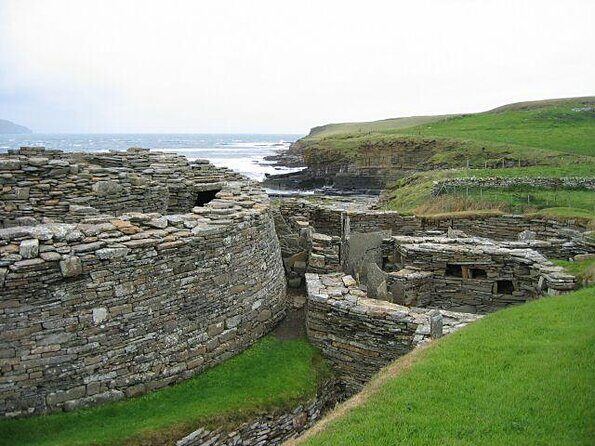
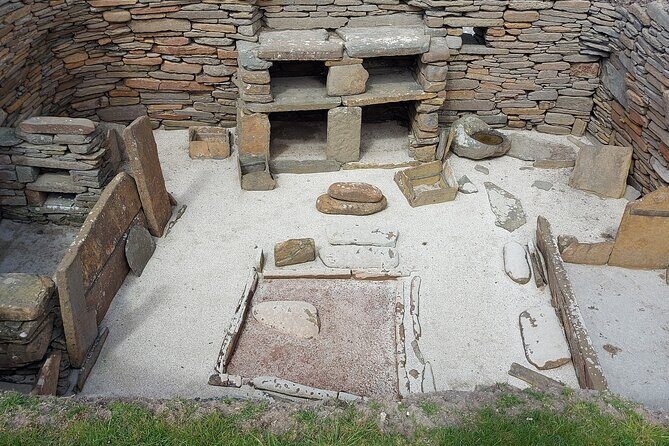
Skara Brae is the anchor of the day, and it earns that role. You’ll get a guided tour of the best-preserved Neolithic village in Northern Europe, dating to around 5,000 years ago. Admission is included, which matters because it keeps you from having to make a separate ticket decision mid-trip.
Why this stop is so valuable: you’re not just looking at ruins from the outside. A guided visit helps you picture daily life—how people lived in stone-built rooms and what the layout suggests. And because it’s well preserved, it’s easier to grasp than sites where you can barely see what remains.
This is also where you’ll get your best “sit with it” time. You’re allotted about 1 hour 20 minutes here, so you’re not trapped in a rush. If you want a snack, there’s a cafe on site and it can be an easy option for lunch-style food before you head back out.
A small practical note
Dress for wind and damp. Even on bright days, Orkney can feel chilly at open-air sites. Layers beat one heavy coat because the temperature can swing.
Ring of Brodgar: a guided henge you’ll understand faster than you expect

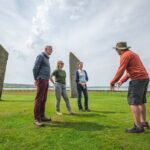
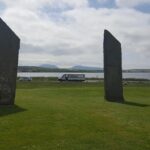
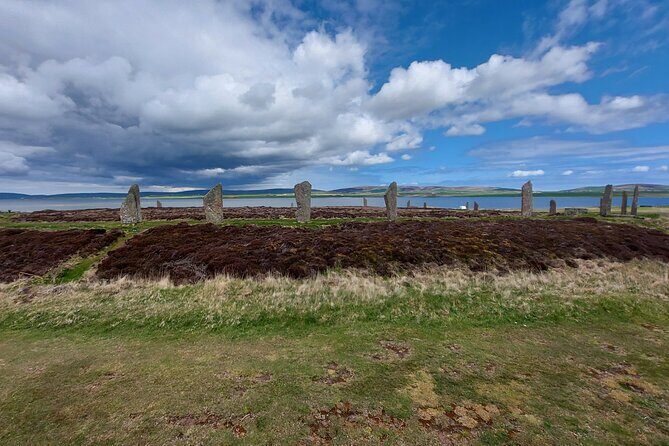
After Skara Brae, you’ll head to the Ring of Brodgar, a major henge monument. This stop includes a guided tour (around 30 minutes), and admission is listed as free.
The big win here is time management. You only get half an hour, but because it’s guided, you’re likely to walk away with a clearer sense of what the ring is, why it’s arranged the way it is, and how it fits into Orkney’s Neolithic world. If you’ve ever felt lost at stone circles—like you’re staring at rocks with no map—this is the version that comes with explanation.
And yes, it’s scenic. The ring sits in an open setting, and you’ll feel how exposed it is to the elements. That matters. These structures weren’t built in sheltered places. They belong to a landscape people could see from.
Standing Stones of Stenness and the quick photo-stop strategy
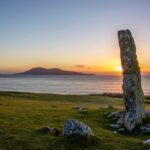
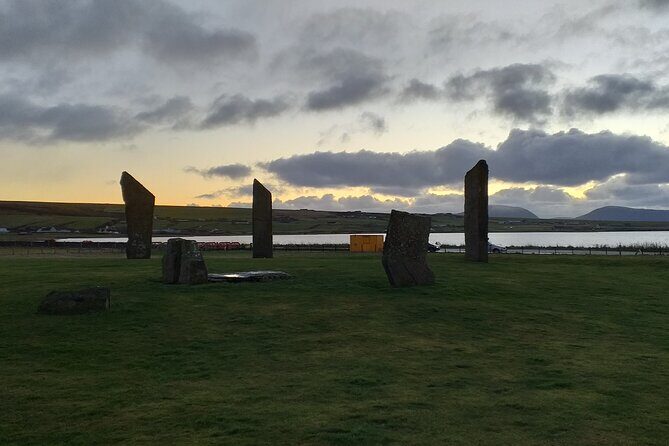
Next up are the Standing Stones of Stenness. Plan for about 15 minutes for a photo stop, with admission listed as free. The sites here are believed to be among the oldest known henge monuments in the UK, and the short stop is the style the tour chooses for them.
Here’s how to make this work for you: treat it like a “set your eyes” moment. Spend the first minute deciding your angles, then pause long enough to see the site in your own way—not just through your phone screen. Even when the time is short, that pause helps you remember the place instead of just collecting images.
If it’s windy, you may want to keep your camera secure and your hands warm. The photos are worth it, but the weather can be unforgiving.
Yesnaby Cliffs: dramatic coastal views in a tight window
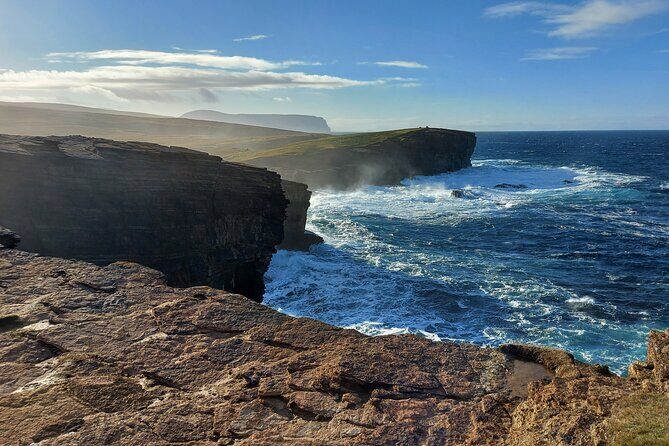
The Yesnaby Cliffs stop is also about 15 minutes, and it’s listed as a photo stop with admission free. This is a high-return moment. You don’t need a long stay to feel the drama—the cliffs are visually loud, and the sea adds motion to your view.
The guide may also point out how the coastline shapes the experience of living on Orkney—wind, exposure, and the way the sea shows up everywhere. You’ll likely notice that the tour keeps giving you these open coastal moments, which help balance the heavy Neolithic stops.
Also, keep an eye out along the way for native wildlife, since the tour notes that you might spot local animals. Don’t count on it, but do stay observant—Orkney’s wildlife is part of the experience when it appears.
Earl’s Palace in Birsay: Renaissance-style ambition in sea-salt ruins
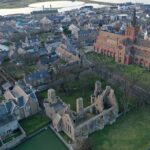
One of the more interesting stops is the Earl’s Palace ruins in Birsay. You’ll spend about 30 minutes here, and admission is listed as free.
This isn’t a “stand and stare at stones” moment. You’ll be looking at a 16th-century residence built by Earl Robert Stewart, once a grand Renaissance-style mansion overlooking the sea. Now it sits in romantic ruin, beside the remains of a medieval Bishop’s Palace—so the layers of time are visible in the same area.
There’s also a bonus to this stop: you’ll have a chance to explore the village of Birsay, with traditional stone cottages and coastal views. For many people, this is where the tour starts to feel more like a lived-in place rather than only a list of famous monuments.
This stop works especially well if you like history that’s tied to real locations. You get architecture, time periods, and a sense of how power and faith shaped the island.
Kirbuster Farm Museum: how people lived between the big monuments
The final stop is Kirbuster Farm Museum, about 30 minutes, with admission listed as free. This is a great choice because it shifts the focus away from Neolithic monuments and toward ordinary daily life—how farms operated on Orkney over the centuries.
Inside, you’ll see a historic farmhouse with a central peat fire, along with farming tools and vintage machinery. There are also beautiful gardens that reflect Orkney’s rural heritage. Even if you don’t normally care about museum interiors, this stop adds context. It helps you understand what “ancient Orkney” wasn’t only about: it was also about work, weather, and using local materials.
It’s also a nice ending tone for the day. After stone circles and sea cliffs, the museum feels grounded. It answers the question, even if no one says it out loud: what did life look like when there weren’t tourists with cameras?
Price and value: is $165.28 worth it for this 6-hour day?
At $165.28 per person, this isn’t a bargain-basement tour, but it also isn’t overpriced for what you get. The value is strongest if you factor in three things:
- You’re not driving. You’re covering multiple sites spread across the west side from Kirkwall, which is harder without a car.
- Skara Brae admission is included, plus the guided time there is the long stop that many independent visits struggle to match.
- Small group size (max 14) can make the day feel smoother than a bigger bus, especially when questions come up.
Where the math can wobble: if you want to fill your day with independent stops after the tour, the 10:00 am start may feel like it dominates your schedule. And since lunch isn’t included, you’ll need a plan—either buy something on the way or at the Skara Brae cafe if you want an easy option.
For the best fit, I’d book this if you want a guided overview of Orkney’s west mainland and you’d rather spend time learning than wrestling with routes.
Who should book this, and who may want a different plan
This tour is a strong match for:
- First-time Orkney visitors staying in Kirkwall
- People who want a guided day focused on Skara Brae, Brodgar, and Stenness
- Travelers who don’t want to rent a car or plan multiple drives
- History lovers who like seeing how different time periods connect (Neolithic stones to later ruins and farm life)
You may want to think twice if:
- You’re sensitive to narrow seat width (48–51 cm)
- You dislike “short photo window” stops and prefer longer wandering
- You’re hoping to control your own timing every hour of the day
Should you book the Orkney West Mainland Tour?
If your goal is a focused, guided introduction to Orkney’s west side, I’d say yes. The mix is smart: a deep Skara Brae guided visit, key Neolithic monuments at Ring of Brodgar and Stenness, dramatic sea views at Yesnaby Cliffs, plus the grounded reality of Kirbuster Farm Museum. You also get Scapa Flow context early, so the sea isn’t just scenery—it’s part of the story.
Book it especially if you’re staying in Kirkwall and you’d rather spend your energy on photos, questions, and the sites themselves than on driving logistics. Just go in knowing the seating can feel tight and that several stops are brief—so wear comfortable clothes and be ready to make quick, satisfying stops count.
FAQ
How long is the Orkney West Mainland Tour?
It runs for about 6 hours (approximately).
Where does the tour start and end?
It starts at the Travel centre in Kirkwall (KW15 1AB, UK) and ends back at the same meeting point.
What time does the tour start?
The start time is 10:00 am.
How many people are on the tour?
The tour has a maximum of 14 travelers.
Is the tour offered in English?
Yes. It is offered in English.
What’s included in the ticket price?
Admission is included for Skara Brae / Skaill House.
Is lunch included?
No, lunch is not included.
Do I need to hire a car to do this tour?
No. The experience is designed to let you explore the west mainland without hiring a car.
What should I know about the vehicle seats?
Seats are about 48cm to 51cm wide. While there is generous legroom, the seat width may feel restrictive for some people.
Is the tour canceled for bad weather?
It requires good weather. If it’s canceled due to poor weather, you’ll be offered a different date or a full refund.
What is the cancellation deadline for a full refund?
You can cancel for a full refund up to 24 hours before the experience start time (local time).