REVIEW · INVERNESS
SEA LIFE Loch Lomond General Admission Ticket
Book on Viator →Operated by Merlin SEA LIFE Centres · Bookable on Viator
Sea life gets way more fun when it has a schedule. This Sea Life Loch Lomond general admission ticket is built for a smooth 1.5–2 hour family visit, with big animal moments like sharks, stingrays, and even a rock pool you can touch.
I especially like the way the experience is paced: you move through themed areas in a logical order, from venomous reef hunters to a shark-focused tank setup. I also like the hands-on touch element, because it turns learning into something kids actually remember.
One drawback to plan for: ticket entry can be fussy. One real-world issue noted that a phone ticket wasn’t accepted and a printed ticket was required, so bring a backup if you’re depending on your phone.
In This Review
- Key points before you go
- General admission at Sea Life Loch Lomond: what 1.5–2 hours really gives you
- Predators of the Reef: venomous fish, a refreshed display, and a built-in story
- Ocean Tank and the shark feeding at 13:30 every second day
- Tropical Ocean Tunnel: bonnethead sharks and the abandoned shipwreck angle
- Rockpools and the Bay of Rays: starfish you can touch
- Price and value: is $19.22 a fair deal for a family aquarium visit?
- Tickets, timing, and the smartest way to avoid entry headaches
- Who Sea Life Loch Lomond general admission is best for
- Final call: should you book this Sea Life Loch Lomond ticket?
- FAQ
- How long does Sea Life Loch Lomond general admission take?
- What’s included with the ticket?
- Can I touch anything during the visit?
- When are the sharks fed in the Ocean Tank?
- Is there a way to see sharks if the Ocean Tank feeding isn’t happening?
- Are souvenir photos included?
- Can I cancel and get a full refund?
Key points before you go
- Venom and food-chain storytelling in the Predators of the Reef area, including lionfish and scorpion fish
- Scotland’s largest shark collection with shark feeding at 13:30 every second day
- Tropical Ocean Tunnel shipwreck views plus hammerhead-family bonnethead sharks
- Interactive rock pools where you can touch starfish
- Cow Nose Rays in Scotland at the Bay of Rays
- Small group cap (max 5 travelers) keeps the visit calmer than big crowds
General admission at Sea Life Loch Lomond: what 1.5–2 hours really gives you
This is a general admission ticket, so think of it as a choose-your-own route through a well-organized aquarium. You’re not signing up for a long, formal tour. Instead, you’ll walk through the main exhibits at your own pace, usually settling into a rhythm that works for adults and kids: see a habitat, read a bit, watch the animals, then move on before attention slips.
The visit time is listed at about 1 hour 30 minutes to 2 hours, which is a sweet spot. If you try to rush, you’ll miss the little details. If you slow down for every sign and every feeding moment, you’ll still fit the whole loop without feeling trapped.
You’ll also see that this site is clearly geared toward family-friendly learning. You’re offered a lot of “why” and “how,” not just “what.” That matters because aquariums can feel like museum homework for kids. Here, the themes are designed to keep kids engaged long enough to make the educational bits land.
You can also read our reviews of more tours and experiences in Inverness.



Predators of the Reef: venomous fish, a refreshed display, and a built-in story
The first area sets the tone with a predator mindset. You’ll meet creatures like lionfish and scorpion fish, and you’ll learn how these animals use venom to defend themselves while still hunting successfully. It’s a simple concept, but it’s a smart way to get visitors thinking about cause and effect in the ocean food chain.
Then the experience shifts from “defense” to “who eats whom.” You’ll face top reef predators in a sequence that helps you connect the dots—moray eels, stingrays, and sharks are part of the same narrative of threat and survival.
A nice detail here is the re-themed reef space. The Predators of the Reef section has a £25,000 refurbishment, and it used to be home to a clownfish setup. You don’t lose the Nemo feeling completely—there’s still a corals display where you can find Nemo.
What this means for you: the first part isn’t just a curtain of tanks. It’s trying to build understanding fast. If you like aquariums that make you look harder at behavior (not just appearances), this is a strong start.
Possible drawback: if you’re traveling with very young kids who just want animals on sight, some of the venom and food-chain explanation may take a little patience. Still, even then, the concept is easy to follow because the animals are so visually striking.
Ocean Tank and the shark feeding at 13:30 every second day
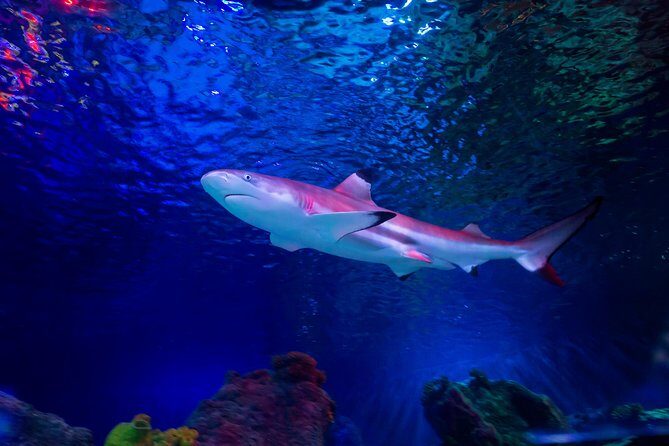
The Ocean Tank is the main headline. This site is proud of Scotland’s largest collection of shark species, and it’s the kind of exhibit that can turn a “quick stop” into a real highlight of your day.
There’s a practical detail you’ll want to keep in mind: sharks are fed in the Ocean Tank every second day at 13:30. That schedule detail changes how the exhibit feels. When it lines up with your visit, the tank becomes more than a display—it becomes a live moment where you can watch how sharks react and how staff manage the feeding process.
If it isn’t feeding time on your day, you’re not stuck. The information provided notes there’s an alternative setup: the Deep Loch Tank features native sharks and rays. So you still get a shark-and-ray focus, even if the Ocean Tank feeding isn’t happening.
Why that matters for value: you’re paying for general admission, and the “best moment” at a lot of aquariums is time-sensitive. Here, the feeding schedule gives you a reason to plan your visit time around 13:30 when possible. Even if you can’t, you’ll still see the shark-focused exhibits, just with a different vibe.
Tip: if you’re traveling with kids, try to time your walk so you’re near the Ocean Tank around the feeding window. It’s the moment that creates the biggest “wow” without adding extra cost.
Tropical Ocean Tunnel: bonnethead sharks and the abandoned shipwreck angle
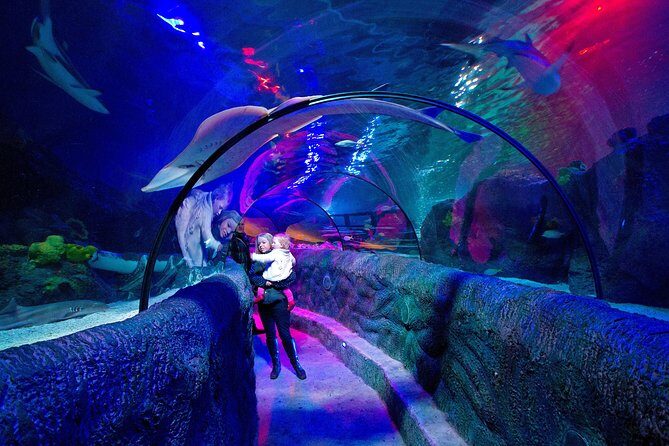
Next up is the Tropical Ocean Tunnel. This is one of those aquarium setups that’s worth slowing down for because it changes your perspective. Instead of looking into tanks from one flat direction, you get that face-to-fin tunnel feeling as fish and sharks swim around you.
You can look for bonnethead sharks, which are members of the hammerhead family. The exhibit messaging also points out that these sharks swim around an abandoned shipwreck feature in the Ocean Tunnel. That shipwreck detail is a clever visual anchor: it gives the animals a context and makes the scene feel like a story rather than a hallway of glass.
For you, here’s the value of that kind of design. Kids don’t just see “a shark.” They see a shark interacting with a place—like it belongs there. Adults get the same benefit: the tunnel perspective encourages you to watch movement patterns, not just spot species names.
Possible drawback: tunnel exhibits can be darker and more visually crowded. If you’re sensitive to low light or have trouble seeing in dim spaces, bring your patience (and maybe plan on stepping back to regroup). The upside is the tunnel tends to produce the most memorable photos, even if they’re a bit of a challenge.
Rockpools and the Bay of Rays: starfish you can touch
The hands-on section is where this ticket becomes more than just viewing. You can visit the rocking Rockpools and touch starfish. This is the type of interaction that turns an educational visit into an experience—kids especially remember the moment their own hands get involved.
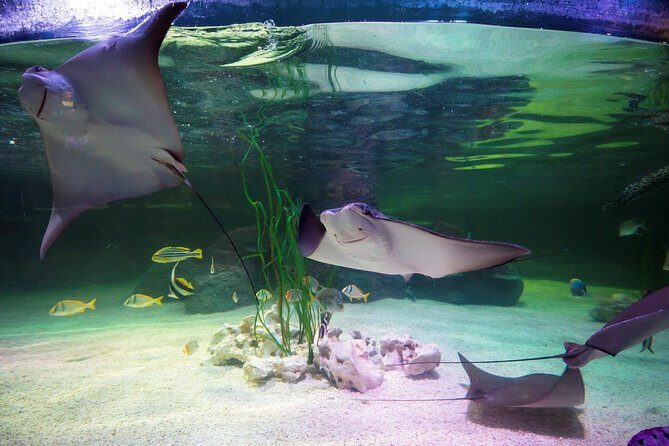
Right near it is the Bay of Rays, and there’s a standout brag: it’s home to the only Cow Nose Rays in Scotland. That’s not just a trivia point. It gives you a reason to prioritize the area even if you’ve seen rays elsewhere.
Here’s how I’d think about it as a practical traveler: touch pools add value, but they also add uncertainty about timing. Some days you may get a queue. Other days you walk straight in. Since the ticket is general admission and the visit is short, build in a little buffer so you don’t feel rushed at the end.
Also, consider this for families: it helps to pair the touch experience with a quick look at surrounding info. You’ll get more out of it if you take 20 seconds to connect what you felt (texture, shape) with what you’re seeing (behavior and habitat).






Price and value: is $19.22 a fair deal for a family aquarium visit?
At $19.22 per person, the real question isn’t just the dollar amount. It’s whether you get enough distinct value from the time you spend there. In this case, you do.
You’re paying once for a route that includes:
- venom and food-chain interpretation in the reef area
- a shark-focused Ocean Tank experience with a documented feeding schedule
- a tunnel perspective with bonnethead sharks and a shipwreck setting
- a hands-on rock pool moment with starfish
- a rays area featuring Cow Nose Rays
That’s a lot of “different types of engagement” for one admission price. Many aquariums charge similar entry prices but skew heavily toward viewing-only tanks. Here, the starfish touch pool gives you something tactile, and the feeding schedule gives you something time-sensitive.
The biggest value lever for you: whether your visit lands near 13:30 on a day when the Ocean Tank sharks are fed. When it does, you get a built-in event. When it doesn’t, you still have the Deep Loch Tank alternative, so you’re not left with only passive viewing.
One more small cost note: souvenir photos are not included. If you’re tempted by photo packages, just plan for it so it doesn’t become an unexpected add-on at checkout.
Tickets, timing, and the smartest way to avoid entry headaches
You’ll use a mobile ticket, and confirmation is received at booking. The language is English, and the experience is offered with a maximum group size of 5 travelers. That small cap can matter in practice, because it tends to keep the flow calmer, especially around popular viewing points.
One caution based on a real-world entry issue: someone reported needing to print tickets when they expected phone entry to work. I’d treat that as a reason to be prepared. If you can, carry a printed backup or make sure your phone display is ready offline with clear booking details.
Timing-wise, the “booked 5 days in advance” figure suggests this place fills up. For you, that simply means don’t leave it to the last minute if you’re traveling in a busier season or have kids with schedules.
If you’re planning for transportation, it’s noted as near public transport. That’s useful if you want flexibility and don’t want to commit to parking.
Accessibility note from the provided details: service animals are allowed, and most travelers can participate. If you have specific needs, it’s still smart to plan your route with the touch pool and tunnel in mind, since those areas can involve standing and watching in more enclosed spaces.
Who Sea Life Loch Lomond general admission is best for
This ticket fits best when you want a family-friendly aquarium that mixes animal variety with simple science storytelling.
You’ll likely enjoy it if:
- you’re traveling with kids who love sharks and rays
- you want hands-on time, not just viewing
- you like exhibits arranged around a narrative (predator to food chain to tunnel to rock pools)
- you appreciate clear “look for this” details, like Cow Nose Rays and shark feeding at 13:30 every second day
You might want to skip or adjust expectations if:
- you’re only interested in one type of animal and hate walking a lot
- you prefer fully guided experiences with a dedicated guide speaking the whole time (this is general admission)
The good news: because it’s general admission with a short overall time target, you can tailor it. Adults can focus on shark and reef sections, while kids can gravitate toward the touch pool and the tunnel.
Final call: should you book this Sea Life Loch Lomond ticket?
If you want a solid aquarium experience that works for families and gives you both show-stopping viewing and a hands-on moment, I’d book it. The combination of Scotland’s largest shark collection, a tunnel with bonnethead sharks, and the chance to touch starfish makes the ticket feel like more than just a walk past tanks.
I’d only hesitate if your schedule makes it hard to reach the Ocean Tank around 13:30 on a feeding day, or if you’re relying on phone-only entry without a backup. Bring a printed fallback if possible, and plan to spend closer to 2 hours if your group needs time to linger.
Go for it when you want an easy win: learning that feels like play, and animals that actually hold attention.
FAQ
How long does Sea Life Loch Lomond general admission take?
The visit is typically about 1 hour 30 minutes to 2 hours.
What’s included with the ticket?
The ticket includes entry to Sea Life Loch Lomond.
Can I touch anything during the visit?
Yes. There is an interactive rock pool section where you can touch starfish.
When are the sharks fed in the Ocean Tank?
Sharks are fed in the Ocean Tank every second day at 13:30.
Is there a way to see sharks if the Ocean Tank feeding isn’t happening?
Yes. If the Tropical Sharks aren’t being fed on your day, the Deep Loch Tank features native sharks and rays.
Are souvenir photos included?
No. Souvenir photos are available to purchase, but they aren’t included.
Can I cancel and get a full refund?
Yes. Free cancellation is available if you cancel at least 24 hours before the experience’s start time for a full refund.