REVIEW · INVERNESS
Inverness and Outlander Private Self-Guided Walking Tour
Book on Viator →Operated by Pandemic Tours · Bookable on Viator
Outlander fans, this walk makes Inverness click. This is a self-guided tour that links everyday city sights to story moments, using an audio guide by Alex instead of a faceless computer voice. You’ll also enjoy the free stop-by-stop approach, so you can linger when something catches your eye.
My favorite part is how the route threads together the center of Inverness in an easy loop—you’re never far from something interesting. I also like that it’s designed for your pace: about two hours on foot, with maps, directions, and GPS-style help in the app. One possible drawback: it’s Outlander-forward, so if you want a full-blown history lecture at every corner, you may wish for a bit more context along the way.
In This Review
- Key highlights to look for
- Market Brae Steps to VisitScotland: your story start in the heart of town
- Town House and Inverness Castle: real buildings with story electricity
- Three Virtues, Eden Court, and the Cathedral: faith and culture you can spot in minutes
- Highland dress in a shop window: a quick cultural stop that works
- St Mary’s Roman Catholic Church and Greig Street Bridge: details you’ll actually notice
- Old High St Stephen’s Church, St Michael’s Mount, and Irish tradition links
- Leakey’s Bookshop: where you might spot an Outlander treasure
- North Church Place and Claire as a healer: the story gets specific
- Abertarff House and the Victorian Market: old merchant life, then a roofed shopping world
- Falcon Square and Eastgate Shopping Centre: finishing with modern Inverness
- Value, pacing, and practical logistics for a self-guided route
- Who should book this Inverness and Outlander walk?
- Should you book it?
- FAQ
- FAQ
- How long is the Inverness and Outlander private self-guided walking tour?
- Is there an in-person guide?
- Who provides the audio guide?
- What language is the tour available in?
- Where do I start the tour?
- Is the tour private?
- How long can I access the tour in the app?
- Are there admission costs at the stops?
- Is it accessible with public transportation?
Key highlights to look for
- Audio guide by Alex (human voice) that keeps the story going without an in-person guide
- Outlander tie-ins scattered across real streets, bridges, churches, and shops
- A walkable city-center loop built around landmarks you can see fast
- Frequent “pause points” where you can take photos or just read the moment
- Old and new Inverness side by side, from 14th-century towers to Victorian market roofs
Market Brae Steps to VisitScotland: your story start in the heart of town
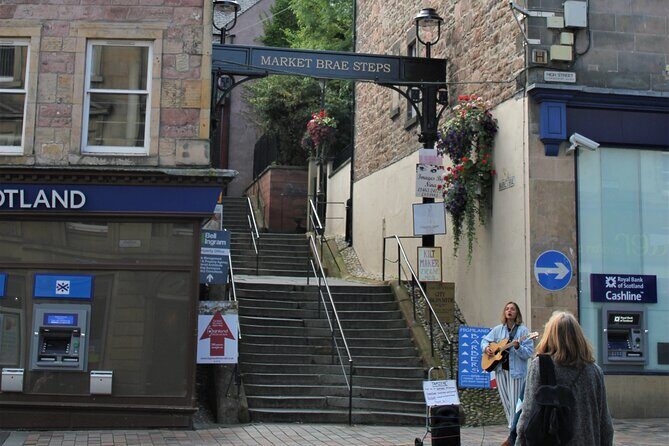
I love starting here because it’s pure Inverness energy right away. You begin at Market Brae Steps, in the city center—Inverness is the Highlands capital, with around 60,000 people, so you’ll feel that mix of local life and tourist foot traffic depending on the season.
Within the first stretch, the audio pivots from geography to story. You’ll be standing near the area of VisitScotland tourist information, and the guide frames it with a specific Outlander-era idea: in the 1940s, Frank and Claire come to Inverness after being apart due to World War II. Even if you don’t know the book scene perfectly, you’ll quickly get the point—this is where the tour helps you read the present through the lens of the series.
You can also read our reviews of more walking tours in Inverness
Town House and Inverness Castle: real buildings with story electricity
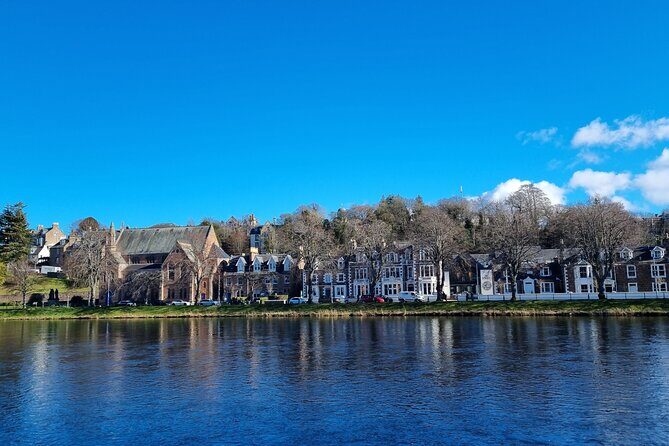
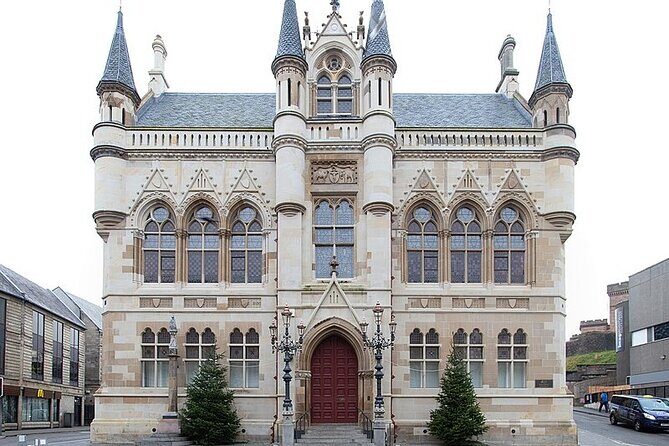
From the tourist-info area, you move toward a key civic landmark: the Inverness Town House. It was built in 1878 on the old marketplace and opened in 1882 by Queen Victoria’s second son, Alfred. That date range matters because Inverness’s Victorian-era growth is exactly what makes the city feel like a real backdrop for modern storytelling.
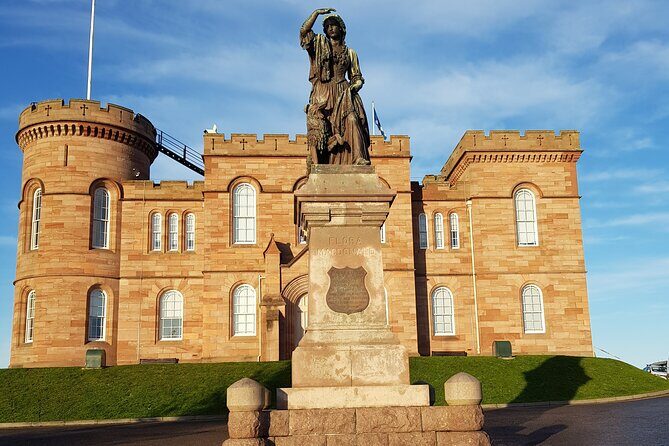
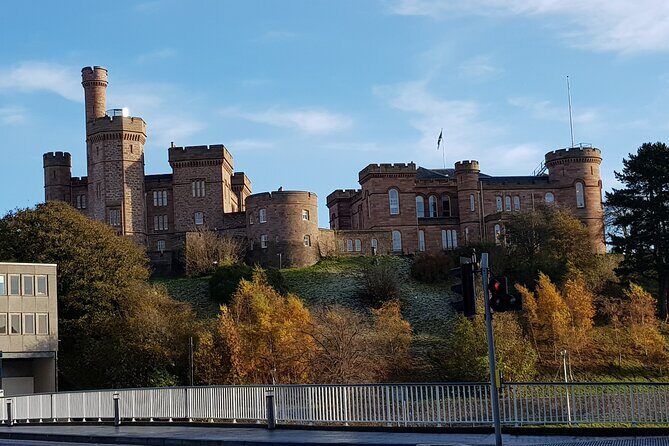
Then Inverness Castle comes into view. The guide connects it to the Malcolm III era, explaining that the castle was likely built after the earlier one was destroyed about a kilometer to the north east. That’s the kind of detail I appreciate on a short walk: you’re not just seeing a wall—you’re learning why the place exists where it does, and why it’s so tied to Inverness identity.
If you’re an Outlander fan, you’ll also get the “why this matters” portion—how Inverness Castle ties into the novels and TV series. This is one of those stops where you’ll probably want an extra minute to look around before moving on, because the surroundings are part of the storytelling.
Three Virtues, Eden Court, and the Cathedral: faith and culture you can spot in minutes
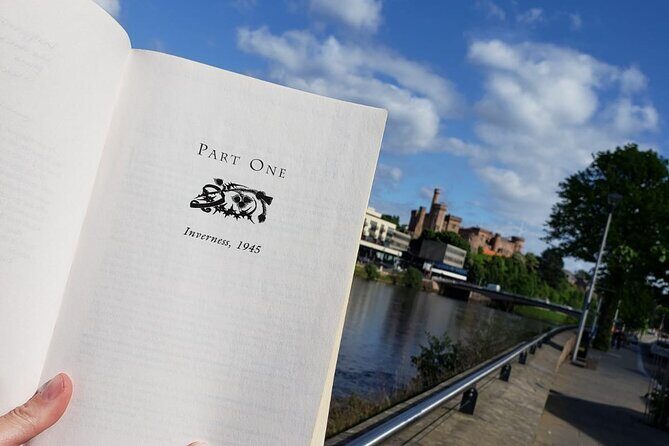
The tour keeps a steady rhythm, so after the castle area you reach a statue of the Three Virtues—Faith, Hope, and Charity. It’s only indirectly linked to Outlander, but the stop is still useful because it reminds you Inverness isn’t built only from TV references. It’s built from real religious and cultural vocabulary that shaped what people valued over centuries.
A few minutes later, Eden Court Theatre enters the picture. This is a modern arts-and-entertainment hub, opened on 15 April 1976. For me, it helps balance the walk: you get a sense of Inverness as a working creative city now, not just a postcard from the past.
Then comes Inverness Cathedral, dedicated to St Andrew. The guide notes the foundation stone was laid on 17 October 1866 by the Archbishop of Canterbury, after a plan was proposed in 1853. It’s described as only the second cathedral built after the Reformation, which gives you an instant sense of weight—this isn’t a small local project; it’s tied to major religious rebuilding in Scotland.
Highland dress in a shop window: a quick cultural stop that works
Next, you’ll pass Highland House of Fraser. From a distance, it may look like a normal storefront, but the audio frames it as a cultural moment: the shop displays traditional Scottish highland dress in the window, especially the kilt.
This stop is short, and that’s the point. It gives you a quick, low-effort moment of “local texture,” without requiring you to enter anywhere or buy anything. It also helps the tour feel grounded in day-to-day Inverness, not just historic monuments.
St Mary’s Roman Catholic Church and Greig Street Bridge: details you’ll actually notice
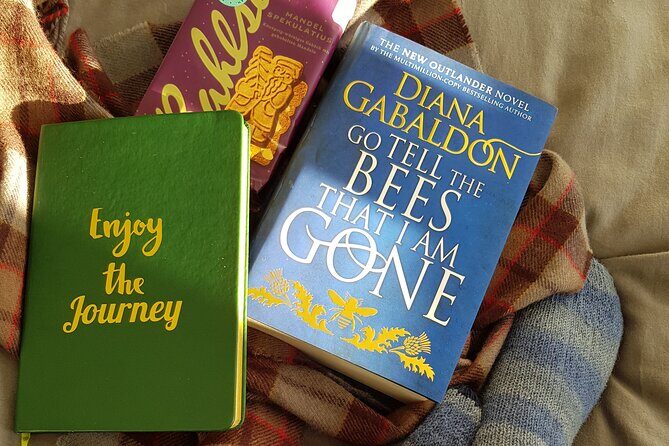
The walk then targets architecture and layout at St Mary’s Roman Catholic Church. The guide says it opened on 2 April 1837, designed by William Robertson, and it’s a strong example of Victorian Gothic Revival. You’ll also notice elements around it: the priest’s residence (the Presbytery) and a convent on the side.
After that, Greig Street Bridge offers a more “city in motion” feel. It’s Inverness’s second pedestrian bridge, and the audio ties it to the River Ness—how spring water levels rise due to rain and melting snow from the glen (Scottish for a valley). Even if you don’t see dramatic water levels on the day you go, the explanation gives you a useful mental model for reading the river’s behavior across the seasons.
One practical note: bridges are great for photos, but the ground can be slick in bad weather. If the forecast looks damp, slow down and plan for cautious walking.
You can also read our reviews of more guided tours in Inverness


Old High St Stephen’s Church, St Michael’s Mount, and Irish tradition links
Old High St Stephen’s Church is next, and it’s one of those places you’ll enjoy even if you only catch it from outside. The guide points out that the tower dates back to the fourteenth century, making it the oldest building in Inverness at least by the tower’s age.
Just as important is the small hill you’ll see nearby: St Michael’s Mount. The audio connects it to Irish tradition, which is a great example of what this tour does well—taking a physical landmark and attaching a cultural story thread.
This is the kind of stop that works best when you’re paying attention rather than rushing. If you’re the type who likes to read plaques and take in proportions, you’ll get more out of this than someone who’s only hunting for the biggest Outlander labels.
Leakey’s Bookshop: where you might spot an Outlander treasure
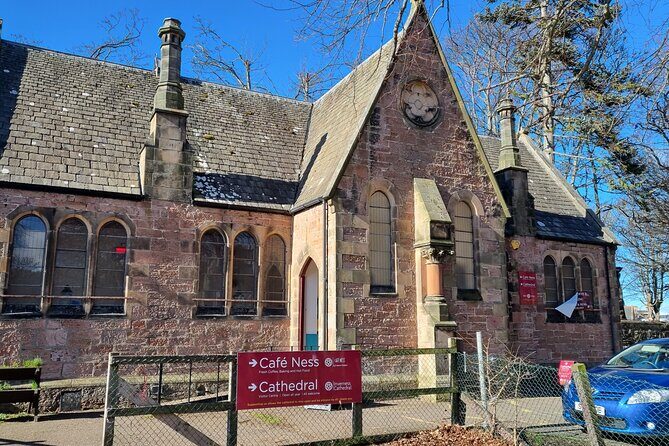
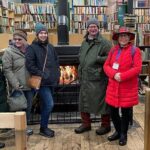
Then you arrive at Leakey’s Bookshop, which the guide describes as an old church converted into a second-hand bookstore. Inside, you might find rare and old prints, classic volumes, and old maps. The idea of signed editions of Outlander novels comes up as a possibility—if you get lucky, this could turn into the best souvenir of the whole trip.
Even if you don’t find a signed copy, the stop is still valuable because bookstores are the easiest way to connect with a place you can’t measure with photos. This is also a nice “breather” in the route—perfect if you want a calm indoor moment before you head back out into the street.
North Church Place and Claire as a healer: the story gets specific
One of the most satisfying Outlander-focused moments comes at North Church Place. The guide explains Claire as a World War II combat nurse, and ties Jamie’s first falling for her to the moment where she sets his shoulder in both the first book and the first episode of the TV show.
Then the tour goes further: it asks what Claire might have done if she lived in Inverness in the eighteenth century. The audio suggests it’s highly likely she would have worked as a healer in the building opposite you. This is a clever way to make Inverness feel like a living map—less like a theme park, more like a plausible place where characters could have stepped into real history.
Abertarff House and the Victorian Market: old merchant life, then a roofed shopping world
Abertarff House is the next big “wow, that’s old” stop. The guide calls it the oldest non-secular building in Inverness: a 2.5-story merchant house built for the Fraser of Lovat family in 1593. It’s also described as having served many different purposes since then, which helps you imagine how the building adapted as Inverness changed.
From there, you reach the Victorian Market. This is one of those places where you may not need an Outlander explanation at all—you’ll enjoy the covered-market feel because Inverness grew as a Royal Burgh in the nineteenth century. The town council created the need for a covered market, and the guide uses that context to show why this particular architecture belongs in central Inverness.
This stop is especially good on a weather day. You’re outdoors, but under a roof, and you can keep moving without getting soaked.
Falcon Square and Eastgate Shopping Centre: finishing with modern Inverness
Finally, the route ends at Falcon Square. The guide notes it’s dedicated to John Falconer, who founded Falcon Foundry in 1858. You’ll also see falcons flying around a unicorn statue—a detail that makes the square feel playful instead of purely monumental.
The last part of the walk also touches Eastgate Shopping Centre, opened in 1983 and extended in 2003, with over 60 stores inside. Even if you’re not shopping, that’s useful context: you’re ending in a place that reflects how Inverness keeps reinventing itself while still keeping its older bones nearby.
The tour finishes back at your start point, Market Brae, so you don’t end the walk stranded in the middle of nowhere.
Value, pacing, and practical logistics for a self-guided route
At $12.22 per person, this is a solid value when you compare what you get: an app-based experience with three weeks unlimited access, plus a map, directions, and GPS-style routing. The audio guide is by Alex, and the guide is explicitly described as not computer-generated—which matters. A human-sounding narration usually keeps the pacing smoother and the tone more natural.
You should expect around 2 hours. That’s a good length for a first day in Inverness because you’ll see a lot without wearing yourself down. It also makes a nice plan if you’re pairing your walk with day trips in the Highlands afterward.
Since it’s private, only your group participates. You won’t be standing in line with strangers, but you also won’t have an in-person guide to answer spontaneous questions. That’s the trade: flexibility and control, but fewer chances for real-time clarifications.
If you’re coming for Outlander specifically, you’ll probably feel most satisfied when you’re curious about connections, not when you’re expecting every stop to be deeply tied to the series. If you want lots of layered, lecture-style history, you might want to spend a little extra time reading at places you find most interesting.
Who should book this Inverness and Outlander walk?
I’d book it if you:
- Love Outlander and want a walkable way to connect the show to real streets
- Prefer self-guided travel where you can slow down for photos or just soak in the setting
- Want a short first-day plan that helps you get oriented in central Inverness
- Like architecture, churches, and city-center history more than long bus tours
You might skip it if you:
- Want an in-person guide or lots of extra background at every stop
- Prefer purely historical walking tours with minimal story framing
Should you book it?
Yes—if your goal is a fun, story-linked introduction to Inverness with a human audio guide and an easy pace, this is a smart buy. The self-guided format is ideal for people who hate rushing and like doing things on their own timeline.
Just go in knowing the focus is Outlander connections wrapped around real city landmarks, not a full substitute for a detailed guided lecture. If that sounds like your style, you’ll probably enjoy spending your two hours in Inverness “reading” the city like it’s part of the series.
FAQ
FAQ
How long is the Inverness and Outlander private self-guided walking tour?
It runs for about 2 hours (approx.).
Is there an in-person guide?
No. It’s self-guided, with an audio guide in the app.
Who provides the audio guide?
Alex guides you through the audio guide.
What language is the tour available in?
The tour is offered in English.
Where do I start the tour?
You start at Market Brae, Inverness IV2 3AB, UK.
Is the tour private?
Yes. Only your group participates.
How long can I access the tour in the app?
You get 3 weeks of unlimited access to the self-guided tour on the app.
Are there admission costs at the stops?
The stops listed are marked as admission ticket free.
Is it accessible with public transportation?
It’s near public transportation.