REVIEW · INVERNESS
3-Day Lewis, Harris and the Outer Hebrides Small-Group Tour from Inverness
Book on Viator →Operated by Rabbies Trail Burners · Bookable on Viator
Ferry waves and wild beaches, all in three days. This Inverness-based tour works hard to fit in real island time, from the ferry ride to crofting life and big-sky shoreline views.
What I like most is that the day starts efficiently: you head straight from Inverness to Ullapool and get onto the ferry with minimal fuss. I also love the mix of stops, especially the Arnol Blackhouse and the way the route keeps turning into fresh scenery instead of repeating the same kind of drive. For me, the small-group size is a big part of why it feels personal.
One thing to plan around: it’s an outdoors-heavy route with variable weather, plus a few walking stops. Bring solid rain protection and shoes, because the Hebrides don’t do predictable.
In This Review
- Key highlights to know before you go
- Lewis and Harris in 3 days: why this route works
- Getting to the islands: Ullapool ferry to Stornoway
- Arnol Blackhouse: real crofting life in one focused hour
- Butt of Lewis and the northern coastline: lighthouse energy
- Day 2 on Harris: mountains first, then beach time
- Luskentyre beach: the Scottish Maldives moment (when weather cooperates)
- Day 3 on Lewis: Carloway Broch and far-west pacing
- Stornoway to the mainland: the Minch ride and end-of-trip flow
- The small-group Mercedes mini-coach: comfort and limits
- Where you stay in Stornoway: en-suite rooms and breakfast
- Price and value: what you’re really paying for at $761.80
- The guides make it: narration, stories, and safe driving
- Who should book this tour—and who should choose differently
- Should you book 3-Day Lewis, Harris and the Outer Hebrides from Inverness?
- FAQ
- Where does the tour depart from in Inverness?
- What time does the 3-day tour start?
- Is Arnol Blackhouse admission included?
- How long is the ferry trip to the Outer Hebrides?
- Where do you stay during the tour?
- Are meals included?
- What vehicle do you travel in?
- Is there a restroom on the bus?
- What’s the minimum age for the tour?
- Is the coach wheelchair accessible?
Key highlights to know before you go
- Early Inverness-to-Ullapool setup helps you spend more time on the islands and less time in transit
- Arnol Blackhouse entrance included gives you a hands-on look at how crofting families lived
- Luskentyre beach timing is built for the good-weather version of the Scottish Maldives
- Butt of Lewis lighthouse views are the kind that make you slow down and just watch waves
- Max 16 passengers means you’re more likely to hear the guide clearly and get time for photos
- Stornoway overnight base keeps the schedule practical for ferry connections
Lewis and Harris in 3 days: why this route works
There are tours that cover a lot of Scotland by piling on stops. This one works differently: it focuses on the Outer Hebrides with a route that feels efficient rather than rushed. You’re not just riding to scenery—you’re also getting context for what you’re seeing, from crofting communities to Iron Age remnants.
The early start matters. Leaving Inverness with enough momentum to reach Ullapool and catch the ferry means you arrive on Lewis with momentum, not exhaustion. And the small-group format (up to 16) helps the day feel smoother—fewer people to manage at photo stops, and more chance to hear stories from the driver-guide.
You also get the practical advantage of a guided route. The islands are beautiful, but they’re not laid out like a theme park. A driver who’s comfortable navigating weather and road conditions is part of what makes the trip feel doable.
A few more Inverness tours and experiences worth a look

Getting to the islands: Ullapool ferry to Stornoway
Day 1 begins at 1 Ardross St in Inverness, near the bus stop by Inverness Cathedral, with a start time of 8:15am. The tour departs on time, and check-in closes 15 minutes before departure, so I’d plan to arrive early and avoid the last-minute scramble.
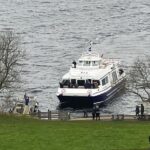
Then comes the ferry ride—2 hours 30 minutes from Ullapool to Stornoway. You’ll travel along Loch Broom, past the Summer Isles, and out to the Outer Hebrides capital. This is more than transport. On days with decent visibility, it’s a moving viewpoint: you get a sense of the sea scale and the island horizon before you ever step on land.
Once in Stornoway, you’re set up for the next phase of the trip: a historic stop on Lewis followed by the northern coastline. If you’re the type who likes to understand a place as you arrive, this sequence is a smart one.
Arnol Blackhouse: real crofting life in one focused hour
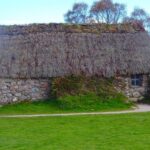
On Lewis, your first big land stop is the Arnol Blackhouse. You get about an hour here, and the entrance fee is included. This is the kind of place that helps you see the islands differently, because it shifts the story from scenery to people and routine.
A blackhouse is a traditional abode tied to the crofting way of life. What makes this stop valuable is that it gives you something concrete to picture while you drive through later communities. Later on, when you pass small settlements and farmland rhythms, you’re not just seeing dots on a map—you’re connecting them to how people lived.
Practical note: blackhouses are working-history sites, so you’ll want comfortable shoes and a basic willingness to walk a bit and look closely. If you’re sensitive to cramped indoor spaces, consider pacing yourself.
Butt of Lewis and the northern coastline: lighthouse energy
After Arnol, the route continues through crofting communities and up toward the Butt of Lewis, the northernmost tip. The lighthouse area is built for your camera and your patience: you’re going for wave drama and cliff views.
This is one of those stops where the best souvenir is time spent staring. On a clear day, you get the full sense of how the sea hits the shoreline—spray, shadow lines on rock, and waves that look closer than they should. Even if the weather turns, you still get the point: the Outer Hebrides are defined by weather and water.
The only downside is that northern weather can change fast. Wind can make you underestimate how cold you’ll feel. Pack a windproof layer, even if it starts mild in Stornoway.
Day 2 on Harris: mountains first, then beach time
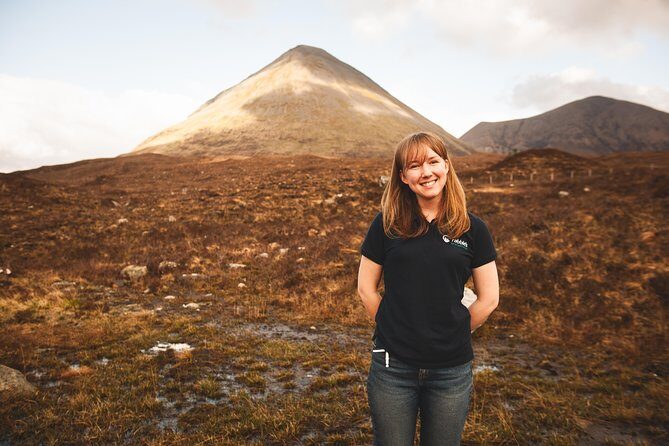
Day 2 shifts you over to Harris, and the first thing you notice is the mountains. This isn’t a stop-and-stare-only day. You’ll weave through the scenery while your guide shares traditions and stories tied to this part of Scotland.
Harris doesn’t have a ton of towns, so the experience leans toward open space and fewer commercial distractions. That’s a plus if you’re after a quieter feel. It also means you’ll likely be looking at the terrain more than at shop windows.
Lunch is built into the plan with a stop in a small town (about 45 minutes). Food and drinks aren’t included on the tour, so budget for lunch on your own. This is also a good time to ask your guide where to go next—often the best local answers come from someone steering you around road/weather logic all day.
Luskentyre beach: the Scottish Maldives moment (when weather cooperates)
Next comes Luskentyre—one of the Hebrides’ well-known beach areas. You’ll have around 45 minutes here for walking and photos.
On a good day, the sea turns turquoise and the sand can look brilliantly pale. Is it always like that? No. But even on a gray day, the beach stop is worth it because it’s one of the most dramatic contrast points in the itinerary: long sand lines, sea texture, and wide horizons.
If you want the best photos, dress for wind and plan for short bursts of walking rather than long treks. Sand can be softer than you expect, and strong wind can make it hard to enjoy the view unless you’re dressed properly.
Day 3 on Lewis: Carloway Broch and far-west pacing
The final day starts with Carloway Broch, an Iron Age structure perched on a hillside overlooking Lewis. You’ll have about an hour here. Brochs are stone reminders that people once built defensive and communal spaces on these islands for reasons that make sense when you consider weather, isolation, and survival.
This stop works well after seeing Arnol. Arnol puts you in the day-to-day world of later crofting families. Carloway gives you a longer timescale—nearly 2,000 years—so your mental picture expands.
From there, you head into the far west of Lewis. The route is designed to match weather and the group’s interests, which matters because visibility and conditions can change how good certain spots are. Your driver-guide also helps keep the timing realistic so you’re not sprinting from place to place.
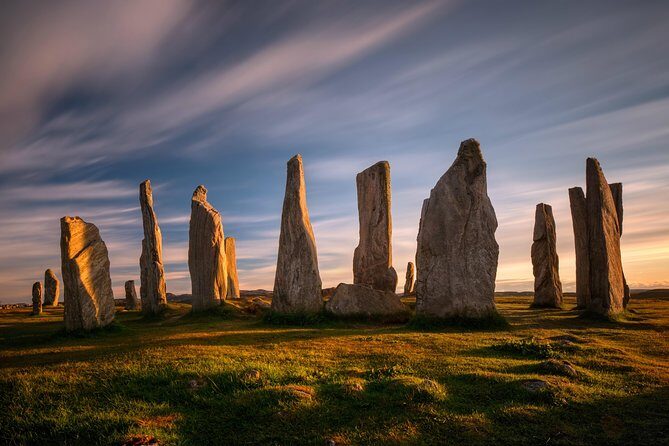
One important scheduling note: Calanais Standing Stones are currently off the menu due to redevelopment for preservation, with the site unavailable until 8 June 2026. In its place, the tour spends extra time exploring beaches on the west of the island. If standing stones are your main goal, double-check that your travel dates fall after reopening; otherwise, plan to treat the beach time as the trade.
Stornoway to the mainland: the Minch ride and end-of-trip flow
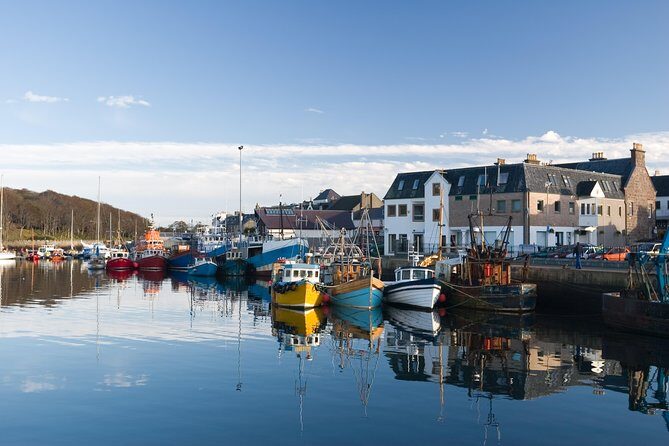
After your morning on Lewis, you return to Stornoway, then take the ferry to the mainland. The ferry portion is about an hour, and then you continue on to Inverness, arriving in the evening.
That evening arrival is part of the tour’s value. You’re not dealing with complicated multi-night ferry planning or trying to drive the route yourself after a long day. You get closure: island-to-mainland without the stress.
The last stretch also matters emotionally. This is a trip where you’ll likely spend a lot of time looking out at water, so the crossing gives you one last chance to process what you saw earlier.
The small-group Mercedes mini-coach: comfort and limits
You travel in a top-of-the-range 16-seat Mercedes mini-coach. That means you’re not crammed into a large bus, but it’s still a coach with real steps. There are three steps up into the vehicle, each about 150mm high, with non-slip treads and grab handles.
Two practical impacts:
- You’ll want steady footing and a quick way to get in and out for photo breaks.
- If mobility is an issue, plan ahead because the bus itself isn’t wheelchair accessible and guides can’t physically assist.
Restrooms: there are none on board. The group makes regular breaks for restroom stops during the tour. That keeps the schedule workable, but it also means you shouldn’t rely on the coach ride being restroom-free for long without breaks.
Why I think the coach choice matters: for a three-day tour, you want transportation that supports the stops. A tighter group size often means fewer delays when you pull over, and it helps keep the day’s pace consistent.
Where you stay in Stornoway: en-suite rooms and breakfast
You spend two nights en-suite in Stornoway, with breakfast included each morning. Accommodation is either B&B or a 3-star hotel, depending on what you choose at booking.
From real-world experience with this kind of setup, breakfast is one of the sneakiest value wins. You’re not hunting for something quick before heading out. You start fed, and you can focus on packing layers and sorting your day.
Some departures use places like Dunroamin B&B, and hosts can be a highlight. In one example, Donnie was described as an excellent breakfast chef. Even if your specific property differs, the consistent idea is the same: a base in Stornoway that’s practical for ferry timing.
Price and value: what you’re really paying for at $761.80
At $761.80 per person for about three days, this price can look steep until you break down what’s included. You’re paying for:
- Round-trip ferry travel to and from the Outer Hebrides
- Two nights in Stornoway with en-suite rooms and breakfast
- Guided small-group touring (max 16)
- Transportation in a premium 16-seat Mercedes mini-coach
- Admission to the Arnol Blackhouse
- A professional driver-guide
If you tried to assemble this on your own—ferries plus accommodation plus a guided day of island navigation—you’d likely spend plenty of time coordinating pieces and still risk mismatched timing.
The other side of the budget is simple: food isn’t included, and you’ll need spending money for lunch. Admission fees are only included where specified (Arnol Blackhouse is the one called out), and optional stops may cost extra depending on what you choose.
To me, the best value angle is the ferry plus lodging handled for you. That’s the hard part of Outer Hebrides travel, and it’s where independent planning often eats time.
The guides make it: narration, stories, and safe driving
A tour like this lives or dies on the guide voice and the driving confidence. The driver-guide style on past trips has been praised for relaxed storytelling—people named Liam and Kev, plus a guide named Helen. The narration includes local history and Gaelic touches, not just place names.
I’d also pay attention to safety and responsibility. One example described Kevin as professional and responsible with safe driving, and that kind of calm matters on routes where weather can shift road conditions.
You might also get small cultural extras during the days on Lewis, like a weaver visit on Lewis in at least one itinerary. That sort of thing isn’t guaranteed in the written overview, but it’s exactly the kind of human connection that turns scenic driving into a memory.
Who should book this tour—and who should choose differently
This tour fits best if you want:
- A structured Lewis and Harris trip without car rental stress
- Small-group touring (16 max) so you can actually hear the guide
- A balance of scenery and specific stops, like Arnol Blackhouse and Carloway Broch
- A practical base in Stornoway for two nights
It might be less ideal if:
- You dislike long stretches in cool, windy weather
- You need frequent restroom access with no gaps (there are breaks, but no onboard restroom)
- Your mobility limits you on coach steps, since the bus isn’t wheelchair accessible
- You’re traveling with children under 5 (this tour can’t accommodate under-5s)
If you’re traveling solo or as a couple, this is also a strong fit because the group size keeps the feel friendly without turning it into a party bus.
Should you book 3-Day Lewis, Harris and the Outer Hebrides from Inverness?
I’d book it if your goal is a clean, guided Outer Hebrides experience that doesn’t require you to think about ferries and lodging logistics. The inclusion of ferry travel, two Stornoway nights with breakfast, and Arnol Blackhouse admission makes it feel like a well-built package rather than a pile of optional add-ons.
Before you decide, line up two things:
1) Are you okay with weather and outdoors time? Bring windproof layers and shoes you trust.
2) Are standing stones a must? If you’re traveling before 8 June 2026, expect Calanais Standing Stones to be unavailable and plan on extra west-beach time instead.
If those boxes check out, this is a high-value way to see Lewis and Harris in a short window—especially if you care about the stories behind the places, not just the photos.
FAQ
Where does the tour depart from in Inverness?
The tour departs from the bus stop next to Inverness Cathedral on Ardross Street (1 Ardross St, Inverness IV3, UK).
What time does the 3-day tour start?
The start time is 8:15am, and check-in closes 15 minutes before departure.
Is Arnol Blackhouse admission included?
Yes. Entrance to Arnol Blackhouse is included in the tour price.
How long is the ferry trip to the Outer Hebrides?
The ferry trip from Ullapool to Stornoway is listed as 2 hours 30 minutes.
Where do you stay during the tour?
You stay for two nights in Stornoway. The rooms are en-suite, and breakfast is included.
Are meals included?
Food and drinks are not included. You’ll pay for lunch and any other meals yourself.
What vehicle do you travel in?
You travel in a 16-seat Mercedes mini-coach.
Is there a restroom on the bus?
No. There are no restrooms on board, but the group makes regular breaks.
What’s the minimum age for the tour?
Children under 5 can’t be accommodated. If a child is under 18, they need to be accompanied by an adult.
Is the coach wheelchair accessible?
The bus is not wheelchair accessible. There is storage for a folding wheelchair or walking frame, but guests must be able to get on and off the bus on their own (guides cannot provide physical assistance).