REVIEW · SCOTLAND
Fun and Educational Alpaca Experience in the Scottish Borders
Book on Viator →Operated by Beirhope Alpacas · Bookable on Viator
Alpacas in the Scottish Borders sound unreal, until you’re there. This Meet-A-Paca session at Beirhope Alpacas gets you up close with friendly alpacas, plus an expert-led talk that makes the whole hour feel both fun and actually useful.
I love the hands-on time: you can hand-feed alpacas using treats they provide. I also like the small-group setup, capped at 14 people, so it doesn’t feel rushed or crowded.
If you’re looking for a long walk day, this is not that kind of outing. It’s built around easy, close encounters—ideal for families—so if you need lots of walking to stay entertained, plan something else after the session.
In This Review
- Key Highlights at Beirhope Alpacas
- Cheviot Hills Calm: Where You Meet the Alpacas
- What Happens in Your 1-Hour Meet-A-Paca Session
- Hand-Feeding Tips That Make It Easier (and Cleaner)
- The Alpaca Expert Talk: Facts You’ll Actually Use
- Views, Photos, and the Farm Vibe Beyond the Animals
- Price and Value: Is $41 Good for What You Get?
- Who This Is Best For (and Who Might Want Something Else)
- Practical Notes: Making Your Visit Go Smoothly
- Should You Book Meet-A-Paca at Beirhope Alpacas?
- FAQ
- FAQ
- Where does the Meet-A-Paca experience start?
- How long is the Meet-A-Paca experience?
- What is included during the session?
- Can I hand-feed the alpacas, and are treats provided?
- How big is the group?
- What if the weather is bad?
Key Highlights at Beirhope Alpacas
- Hand-feed treats provided so you’re not guessing what to do with your hands
- Expert talk during the session to make alpaca facts stick fast
- Small groups (max 14) for a calmer, more personal feel
- Selfie-ready moments with these photogenic woolly friends
- Spring farm bonus: if you visit around April, you might spot lambs on site
Cheviot Hills Calm: Where You Meet the Alpacas
This experience happens right in the heart of the Cheviot Hills, in the Scottish Borders—specifically at Beirhope Alpacas, Beirhope Farm, Hownam, Kelso TD5 8AP, UK. The setting matters because it keeps things grounded: you’re not in a city attraction. You’re at an actual farm where the animals live, and you can feel that difference the moment you arrive.
You’ll meet the group and start from the farm base, then return there at the end. The session is about 1 hour (approx.), which is a great length for families and for anyone who gets restless after too much standing around.
Also, you’ll have a mobile ticket. That’s one less paper thing to manage—just make sure your phone battery is happy, because this is the kind of day where you’ll want photos.
You can also read our reviews of more tours and experiences in Scotland.


What Happens in Your 1-Hour Meet-A-Paca Session
The flow is simple and friendly, and that’s a good thing. The whole point is to get you comfortable with alpacas fast and let you learn while you’re doing, not after you’ve already lost interest.
Here’s what to expect during the hour:
You’ll meet the alpacas and get time to feed them using treats supplied by Beirhope Alpacas. Then you’ll hear an educational talk led by the farm’s resident alpaca expert, designed to explain how these animals live and why they’re so different from what most people imagine.
There are also photo opportunities built in. This isn’t just grab-a-pic-and-go; it’s more like a planned moment when the alpacas are close enough for good shots. If you like getting a selfie without awkward scrambling, this style helps.
One extra detail I appreciated is that the experience is designed for people who may not be able to walk far. It specifically calls out that it can work well for very young children and for anyone unable to walk long distances. In practice, that means you don’t have to treat this like a hike to get value from it.
Hand-Feeding Tips That Make It Easier (and Cleaner)
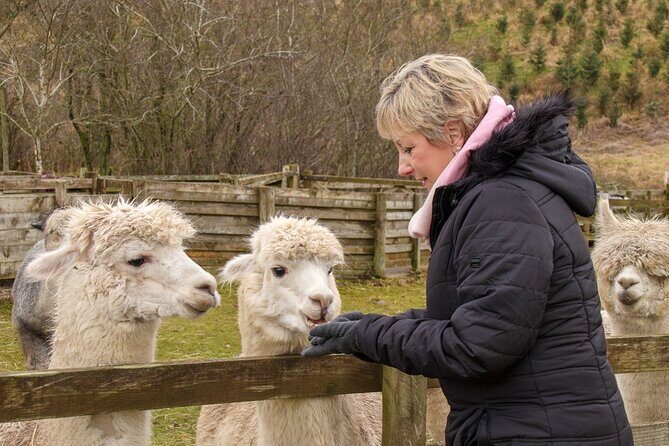
Hand-feeding sounds straightforward, but a few small habits make the whole thing nicer for you and for the animals.
First, go slow. Alpacas are calm, but sudden movements are still a surprise for any animal. Keep your body relaxed, hold steady, and let the alpaca approach at its own pace.
Second, follow the lead of the staff. You’ll get treats, and you’ll be guided by the alpaca expert and the team on-site. If someone like Lynne is helping your group (her name comes up often), you can listen for cues on how the alpacas like to take treats and what not to do.
Third, think about your hands and clothes. Even with provided treats, expect a little farm mess risk—especially if you’re there with kids. It’s worth wearing something you don’t mind getting a tiny bit lived-in.
And yes: the selfies. The trick is to be present rather than constantly filming. When you’re calm and patient, you usually get better close-up photos because the alpacas don’t feel rushed.
The Alpaca Expert Talk: Facts You’ll Actually Use
A lot of animal talks fall into two categories: either too basic or too lecture-y. This one is positioned as educational, with a resident expert explaining the animals in a way that keeps the attention of families.
What makes it valuable is the timing. You’re not learning in isolation. You learn while you’re watching how alpacas behave up close—so things click faster. You’ll also get that sense that the expert knows individual alpaca personalities, not just general alpaca theory.
One farm detail that adds charm: the alpacas have their own quirks and personalities, and you may hear stories about them by name. Names like Brian the Aloaca show up in conversation, which makes the whole thing feel personal rather than scripted.
If you’ve ever left a zoo talk thinking you forgot everything ten minutes later, this format is a better bet because it’s tied to real animal moments in front of you.
Views, Photos, and the Farm Vibe Beyond the Animals
Even though the animals are the headline, the farm experience adds comfort. Several visits include time for hot drinks and cake afterward in a small bothy area, which gives you a chance to warm up and decompress. If the weather is cool or showery, having that small pause can make the day feel complete instead of just “one hour of feeding.”
There’s also a gift shop on-site. If you like taking home something small that doesn’t turn into clutter, the shop is worth a look. I’d plan a minute to browse after you’ve done the main session, not before—so you’re not distracted while the alpacas are closest.
One more seasonal note: if you visit around spring—April is specifically mentioned—you might get the bonus sight of lambs in the area. That can be a sweet add-on for families, and it makes the farm feel extra alive.




Price and Value: Is $41 Good for What You Get?
At $41 for about 1 hour, this isn’t the cheapest activity in Scotland—but it’s also not pretending to be a bargain attraction. The value comes from what’s included in that price.
You get:
- Alpaca time up close, not just viewing from a distance
- Hand-feeding using treats supplied by the hosts
- An expert-led educational talk
- Photo opportunities built into the experience
- A session capped at 14 travelers, which helps keep the experience calm
When you compare that to typical animal experiences that charge for basic entry only, the biggest value driver here is the hands-on component. You’re paying for interaction, not just a ticket to stand and look.
Also, the time length helps. One hour means you can fit it into a day trip without building your whole itinerary around it. That matters when you’re traveling with kids or when the Scottish Borders day includes other stops.
Who This Is Best For (and Who Might Want Something Else)
This is a strong fit for families. The experience is marketed as suitable for all the family, and it’s specifically designed to work for children who may be too young to walk the alpacas or for anyone who can’t manage long distances on foot.
It’s also a great option if you want a low-stress Scotland experience with genuine farm atmosphere. You’re not committing to hours of transport or a heavy outdoor plan. It’s a simple, friendly hour built around the animals.
If you’re an alpaca super-fan looking for advanced training, breeding details, or long-format walking, this may feel more beginner-friendly than hardcore. It’s meant to be accessible and fun, not a full-day deep specialist course.
Practical Notes: Making Your Visit Go Smoothly
Plan to arrive a bit early so you can settle in. The meeting and end point is the same location, so once you’re there, you can stay focused on the session rather than figuring out transit details.
The experience requires good weather. That matters because it’s clearly an outdoor farm encounter. If the forecast looks poor, keep an eye on updates close to your time slot.
Group size is kept small (maximum 14). That’s good for comfort and for personal attention. It’s also why you should come prepared to follow staff cues quickly—small groups mean everyone benefits when you’re ready.
Finally, bring patience for animals. Alpacas are not circus performers. If they want to come close, great. If they take their time approaching, that’s normal. The calm pace is part of the charm.
Should You Book Meet-A-Paca at Beirhope Alpacas?
Yes, I’d book it if you want a short, friendly farm experience with hands-on feeding and an expert-led explanation that suits families. For the price, the best bargain here is interaction: you’re not just watching alpacas, you’re learning while you’re close to them.
Skip it (or pair it with something more active) if you’re craving a long hike-style outing or a big, multi-hour adventure. This is an hour, built for easy enjoyment, not an all-day outdoors challenge.
FAQ
FAQ
Where does the Meet-A-Paca experience start?
It starts at Beirhope Alpacas, Beirhope, Farm, Hownam, Kelso TD5 8AP, UK, and the activity ends back at the same meeting point.
How long is the Meet-A-Paca experience?
The duration is about 1 hour.
What is included during the session?
You’ll meet and feed the alpacas, enjoy an educational talk from the resident alpaca expert, and have great photo opportunities.
Can I hand-feed the alpacas, and are treats provided?
Yes. Alpaca treats are supplied by the hosts, and the experience includes opportunities to hand-feed.
How big is the group?
The maximum group size is 14 travelers.
What if the weather is bad?
This experience requires good weather. If it’s canceled due to poor weather, you’ll be offered a different date or a full refund. If you cancel for any reason, it’s non-refundable and can’t be changed.