REVIEW · INVERNESS
3-Day Orkney Islands Tour from Inverness
Book on Viator →Operated by Highland Experience Tours · Bookable on Viator
Orkney in three days sounds wild, but it works. This small-group tour saves you from figuring out ferries, connections, and logistics by stitching it all together from Inverness—plus it includes 2 nights of accommodation in Kirkwall. I like that the day plan focuses on big Orkney hits—Maeshowe, Skara Brae, and the WWII-era Italian Chapel—without demanding you build a route of your own. One thing to consider: it’s an action-packed schedule, so you’ll want to be comfortable with lots of time on the minibus and some walking at ancient sites.
The best part for me is the way a local driver-guide turns roadside stops into context you’d otherwise miss. You get storytelling for places like the Churchill Barriers drive-by, and you’re not left asking follow-up questions while others wander. Another plus: the group stays small (up to 16 people), which usually means easier pacing and smoother logistics. A drawback to flag up front is that accommodation details can vary—some stays are in the right area, others may feel spread out—so if location is a big deal for you, it’s worth checking what you’re assigned.
In This Review
- Key highlights at a glance
- Price and overall value from Inverness
- Getting there: the 8:00 am Inverness start and the logistics you avoid
- Day 1 in Orkney: Italian Chapel, Churchill Barriers, and settling into Kirkwall
- The Italian Chapel: WWII history you’ll actually remember
- Churchill Barriers: a roadside reminder of modern conflict
- Your evening: Kirkwall downtime
- Day 2: Maeshowe, Skara Brae, Stenness, and the Ring of Brodgar
- Maeshowe Chambered Cairn: 5,000-year-old architecture
- Skara Brae: a Neolithic village revealed by weather
- Stenness: some of the oldest stones in the British Isles
- Ring of Brodgar: big circle, fewer stones than you expect
- Evening returns: the “you can still enjoy dinner” factor
- Day 3: Ferry back to mainland Scotland and Dunrobin Castle
- Dunrobin Castle and gardens: a strong finish
- Accommodation in Kirkwall: what’s included, and what you should care about
- What to expect from breakfasts
- Who this tour is best for (and who should choose something else)
- Tickets, food, and budgeting like a pro
- A note on comfort: van time and stop pacing
- The guide effect: why local context matters on Orkney
- Should you book the 3-Day Orkney Islands Tour from Inverness?
- FAQ
- What time does the tour start in Inverness?
- Where do I meet the tour in Inverness?
- How many nights of accommodation are included?
- Which attractions are included with entrance fees?
- What luggage can I bring?
- How many people are in the group?
- What is the cancellation refund timeline?
Key highlights at a glance
- Ferry and round-trip transfers from Inverness, so you’re not playing transport chess
- 2 nights accommodation in Kirkwall for real downtime in the evenings
- Neolithic heavy hitters: Maeshowe and Skara Brae, plus classic stone sites like Stenness and the Ring of Brodgar
- WWII history stop at the Italian Chapel, built by Italian prisoners of war
- Small group size (max 16) for a more manageable, day-long touring pace
- Mainland finale with Dunrobin Castle and gardens after your return ferry
Price and overall value from Inverness
At $726.77 per person for roughly 3 days, this isn’t a bargain-basement tour. But when you price it like a do-it-yourself trip, the math starts to make sense. You’re paying for round-trip coordination from Inverness, ferry crossings, a dedicated local driver-guide, and two nights of lodging—and those pieces are exactly what usually eat up time and energy when you’re planning on your own.
What makes it feel more like value is the mix of inclusions. Breakfast is included for 2 mornings, and entrance fees are listed as included for Maeshowe, Skara Brae, and the Italian Chapel. That means you’re not budgeting a pile of separate tickets just to see the core sites that Orkney is famous for.
The other value angle is focus. This tour is designed to hit multiple top Orkney landmarks in a tight loop without you managing the route. If you want to see a lot, this is built for you. If you’d rather linger for hours in one place, you’ll want to mentally accept that the schedule is structured and timed.
A few more Inverness tours and experiences worth a look
Getting there: the 8:00 am Inverness start and the logistics you avoid
The tour meets at 25 Union St, Inverness (IV1 1QA) with a start time of 8:00 am. You also end back at the same meeting point. That matters more than it sounds. A day like this runs on fixed departure times, and starting and ending in one place reduces stress when you’re on a tight travel window.
You also get the big practical win: round-trip transfers handle the movement between Inverness and your onward travel. Instead of juggling public transport (or searching for the right connection while it’s windy and wet), you get a minibus setup that keeps you with the group.
One more practical note: group size is capped at 16 travelers. That typically translates to less crowding and more flexibility for stop timing—especially at restroom breaks, which can be essential on a long day of ferry + minibus + walking between sites.
Day 1 in Orkney: Italian Chapel, Churchill Barriers, and settling into Kirkwall
Your first morning begins in Inverness, then the plan jumps you into the Orkney rhythm fast: a ferry crossing across the blustery North Sea to St. Margaret’s Hope. From there, it’s minibus travel through Orkney’s sparsely inhabited islands—an archipelago of around 70 islands—so you’ll feel like you’re moving through wide-open space, not a packed tourist circuit.
The Italian Chapel: WWII history you’ll actually remember
The first named stop is the Italian Chapel. It’s a small stop time-wise (around 30 minutes), but it’s the kind of place that sticks because of its origin story: it was built by Italian prisoners of war during WWII. Even if you don’t consider yourself a history traveler, it’s the kind of site that gives Orkney a human layer—showing how global events touched this far-north corner of Scotland.
Churchill Barriers: a roadside reminder of modern conflict
You’ll also pass the Churchill Barriers (built to protect the British fleet from submarines). This is one of those “from the road” moments. You’re not going to get a museum lecture, but it gives you a quick visual anchor for the North Sea’s strategic importance.
Your evening: Kirkwall downtime
By evening, you’re based in Kirkwall, where you can relax or explore on your own. That matters because it breaks up the day’s intensity. Orkney is made for slow walks after big sites, and Kirkwall is the natural hub for that.
Day 2: Maeshowe, Skara Brae, Stenness, and the Ring of Brodgar
Day 2 is the heavy-hitter day. It’s built around Orkney’s Neolithic story, then it broadens out to classic stone sites. The benefit for you is simple: you don’t need to decide what’s most important—you get a curated route that hits several categories of ancient Orkney in one day.
Also, this is the day where footwear and stamina help. Some sites involve uneven ground and short walks. The tour lists a moderate physical fitness level, which is a polite way of saying: you can do it, but don’t show up expecting it to feel like a flat city stroll.
Maeshowe Chambered Cairn: 5,000-year-old architecture
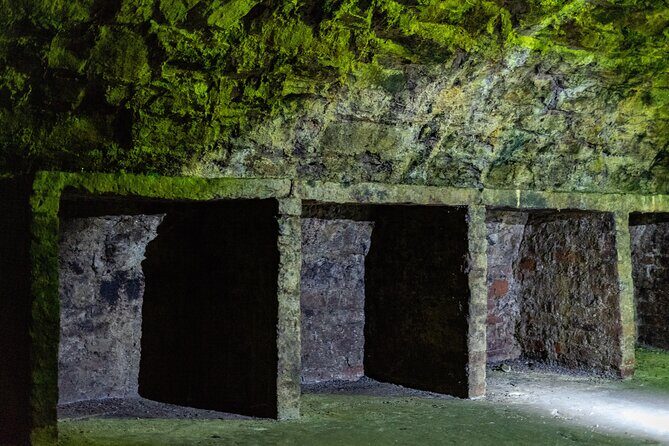
Maeshowe is a chambered cairn dating back around 5,000 years. You’ll spend about an hour here. This isn’t just “see stones.” It’s about experiencing how the site was constructed and what a sealed, interior space means in terms of ancient belief systems.
One smart way to enjoy Maeshowe is to take your time letting the guide’s explanations land before you focus on photos. The site becomes more interesting when you understand what you’re looking at: a Neolithic monument that has survived long enough to still feel intentional.
Skara Brae: a Neolithic village revealed by weather
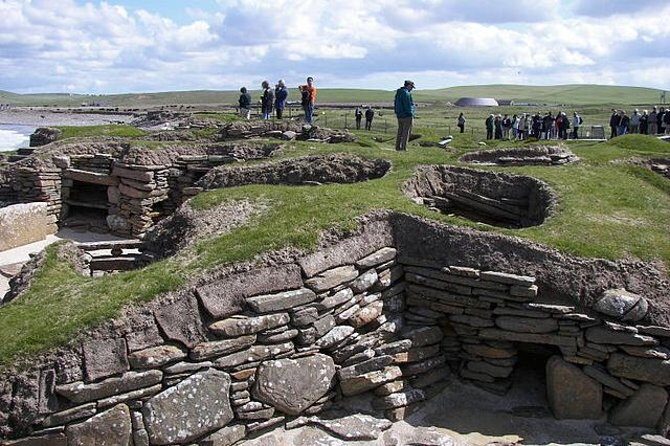
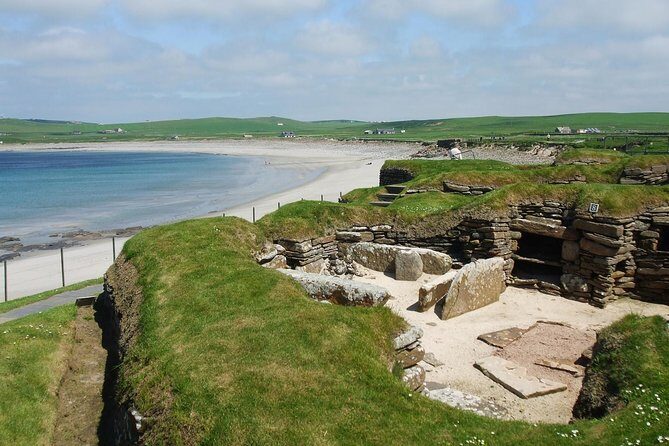
Next up is Skara Brae, the famous Neolithic village exposed after a storm in 1850. Before that, it was lost to the nation—so when you’re standing there, you’re looking at something that only became “visible” because the elements did what they do.
You get about one hour. That’s enough time to understand the layout and imagine daily life, but not enough time to treat it like a full museum experience. If you’re the type who likes to read every interpretive sign, pace yourself. Prioritize the structures that feel most meaningful to you: doorways, room layout, and how the settlement functioned.
Stenness: some of the oldest stones in the British Isles
Then comes Stenness—enormous stones left from an ancient ceremonial site. The tour notes these are thought to be among the oldest in the British Isles and gives it a shorter visit (about 30 minutes). This stop works as a breather between longer sites.
It’s also a great moment to step back and get your eye calibrated. After Skara Brae, Stenness shifts you from “village time” to “ritual stone time.”
Ring of Brodgar: big circle, fewer stones than you expect
The day ends with the Ring of Brodgar, a massive stone circle originally with 60 stones, with 36 surviving today. You’ll also see burial mounds and the rock-cut ditch that surrounds the circle. Your scheduled time is about 30 minutes.
Here’s a practical tip: don’t rush this one for photos. The Ring of Brodgar is a view-and-feel site. If the weather’s cooperating, pause longer than the schedule and let it register. If the wind is sharp (Orkney loves that trick), stick to the essentials and enjoy the sweep of the area safely.
Evening returns: the “you can still enjoy dinner” factor
A big advantage of this style of touring is that it’s structured enough to finish by evening, leaving time to eat well and walk around Kirkwall. The tour is known for building in regular breaks, which helps on a day like this where you’re going site-to-site and still want to feel human afterward.
Day 3: Ferry back to mainland Scotland and Dunrobin Castle
Day 3 starts with the return ferry crossing to the mainland. After two days of island time, this feels like a reset: same route rhythm, different scenery, and a final mainland highlight to close the loop.
Dunrobin Castle and gardens: a strong finish
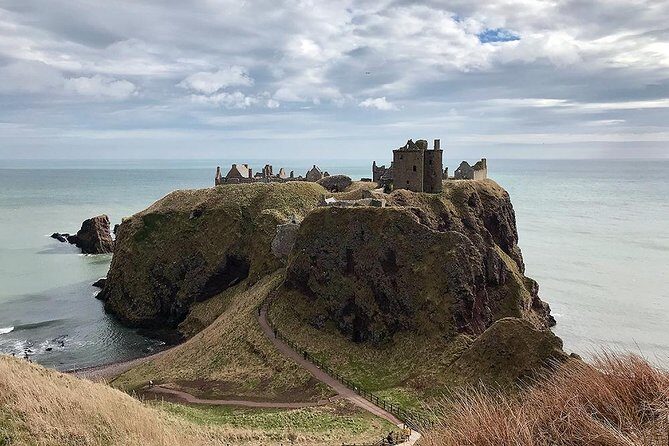
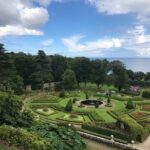
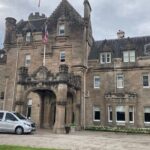
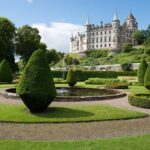
On the mainland, you visit Dunrobin Castle and Gardens, home of the Dukes of Sutherland. You’ll have about 1 hour 30 minutes, plus the possibility of a falconry display if you’re lucky.
This isn’t just a “pretty stop.” It gives you a change of pace after Neolithic monuments. If you’re into architecture and landscaped gardens, it’s a satisfying contrast. If you’re more stone-and-history focused, treat it as a palate cleanser—then you’ll appreciate the variety more.
Accommodation in Kirkwall: what’s included, and what you should care about
The tour includes 2 nights accommodation, and your base is Kirkwall. That’s a smart choice because it lets you sleep somewhere connected to shops, meals, and the general flow of Orkney activities rather than being stuck in the outer edges of the island.
That said, one practical consideration: accommodation can feel hit and miss depending on exactly where you end up. Some guests have found lodging very good, while others have mentioned being placed farther from the town center than they expected. If you care about stepping out in the evening without a long slog, ask (or confirm) where your room will be.
If you’re traveling solo, the tour notes a single room option is available. That matters for comfort and privacy, but location still matters—because being spread out can feel isolating, especially at the end of a long day.
What to expect from breakfasts
Breakfast is included for 2 mornings. That’s useful because it saves money and keeps you on a predictable schedule. You’ll be relying on breakfast energy on the two more active days, so don’t skip it or treat it like a quick formality.
Who this tour is best for (and who should choose something else)
This tour is a good fit if you:
- Want to see the major Orkney sites without building a route or timing ferries yourself
- Prefer small-group touring (up to 16 people) with a driver-guide in charge
- Like history that ranges from Neolithic monuments to WWII-era human stories
- Appreciate having evenings free to decompress in Kirkwall
It may not be the best fit if you:
- Want a slow travel pace with lots of unstructured time at fewer sites
- Are very sensitive to short visit windows, since sites like Stenness and Ring of Brodgar are brief
- Need very specific lodging locations in-town, because accommodation placement can vary
Solo travelers can work well here, especially with the single room option, but it’s worth thinking about the tradeoff between privacy and where your room is relative to Kirkwall.
Tickets, food, and budgeting like a pro
Food and drinks are not included unless specified. That means you’ll want to plan for meals on your own, especially on the day that moves quickly between sites.
On the ticket side, the package lists entrance fees as included for:
- Maeshowe
- Skara Brae
- Italian Chapel
Stenness is listed with free admission in the schedule. Other stops (and any extra entries you decide to add in Kirkwall) may require separate payment, so I recommend building a small buffer into your budget for optional entries, snacks, and drinks.
A note on comfort: van time and stop pacing
This type of Orkney day involves a lot of sitting and getting on and off the minibus. The tour is designed to keep moving efficiently, and it’s known for comfortable van transport and regular restroom/refreshment breaks. Still, if you’re prone to feeling stiff after long drives, bring a layer you can adjust quickly—Orkney weather changes fast.
The guide effect: why local context matters on Orkney
Orkney can feel remote and quiet, but the sites are full of meaning. The difference here is that you’re not just viewing landmarks—you’re getting interpretation through a local driver-guide.
I’ve found that Orkney’s “stone sites” make more sense when someone explains what the monuments were for and how people used them. That’s especially true when your day includes everything from standing stones to chambered cairns to a WWII chapel created in captivity.
Also, this tour is run by a local guide/driver team, so you’re not dealing with multiple handoffs. That reduces confusion and keeps the day moving. On top of that, the guiding style is often described as friendly and humorous, which helps when you’re spending hours together.
Should you book the 3-Day Orkney Islands Tour from Inverness?
If your goal is classic Orkney—Maeshowe, Skara Brae, the Ring of Brodgar, Kirkwall, and a Dunrobin finish—this tour is built for you. The big selling point is practical: it handles the ferry and transfers and wraps it around 2 nights of lodging so you can focus on the sites instead of planning.
I’d book it if you’re okay with a structured schedule and short-to-medium stop times. I’d be cautious if you want long, slow wandering or if you’re very picky about where you sleep within Kirkwall, since accommodation placement can vary.
If you’re the type who likes to return from a trip saying you actually covered the essentials, this one makes a lot of sense.
FAQ
What time does the tour start in Inverness?
The tour starts at 8:00 am.
Where do I meet the tour in Inverness?
You meet at 25 Union St, Inverness IV1 1QA, UK.
How many nights of accommodation are included?
The tour includes 2 nights of accommodation.
Which attractions are included with entrance fees?
Entrance fees are listed as included for Maeshowe, Skara Brae, and the Italian Chapel.
What luggage can I bring?
Luggage is restricted to a maximum of 15 kg per person, and a size limit of 55cm x 40cm x 20cm plus a small carry on.
How many people are in the group?
The tour has a maximum of 16 travelers.
What is the cancellation refund timeline?
You can cancel up to 6 days in advance for a full refund. Cancel 2–6 days before for a 50% refund. If you cancel less than 2 days before, your payment isn’t refunded.