REVIEW · GLASGOW
The Magnificent and Mysterious History of Glasgow
Book on Viator →Bookable on Viator
Glasgow tells stories at every corner. This walking tour strings together civic buildings, famous Scots, merchant power, and religious landmarks so you can get your bearings fast and spot what you want to see again. It also leans into the city’s more scandalous and quirky side, from music halls to unexpected details on well-known monuments.
I especially love how efficiently it packs the city center into one route, from Glasgow City Chambers to Glasgow Cathedral. I also like the mix of famous names and local textures, like Robert Burns and street murals that help the walk feel lived-in, not museum-staged.
One thing to consider: it’s a lot of ground in about 2 to 2.5 hours, and you’ll want to hear your guide over street noise and crowds, especially on busier stretches.
In This Review
- Key highlights at a glance
- George Square to City Chambers: the civic Glasgow kickoff
- Writers in stone: Scott and Burns in the public square
- Merchants, money, and modern art: the Merchant City vibe
- A pizza stop and a Georgian townhouse: why the route feels human
- Trades Hall and the medieval-craft streets behind the scenes
- Corinthian Club and Saints of Ingram: institutions that changed clothes
- City Halls and the Old Fruitmarket: imagine the traffic of the past
- Trongate 103 and the Sharmanka Kinetic Gallery: art with a sense of play
- Britannia Panopticon Music Hall: show-business history you can actually see
- Mercat Cross, High Street, and St Mungo: the medieval spine of the city
- David Livingstone, Ramshorn Theatre, and the shift toward institutions
- Friends of Glasgow Royal Infirmary Museum: science and care
- Glasgow Cathedral, Provand’s Lordship, and St Mungo Museum: the ending you’ll remember
- Price and value: why $17.91 can make sense here
- Timing, pace, and walking logistics you should plan for
- Weather and flexibility: what to do when plans shift
- Who should book this Glasgow history walk
- Should you book? My practical take
- FAQ
- FAQ
- How long is the walking tour?
- Where does the tour start and where does it end?
- Is the tour in English?
- Is there an admission fee for the stops?
- What’s the group size?
- How much walking is involved?
- Does the tour require good weather?
- Are service animals allowed?
- Can I get a refund if I cancel?
- Is it near public transportation?
Key highlights at a glance
- A city-center route that links eras from medieval Glasgow to the 13th-century cathedral finish
- Free entry listed for every stop, so you’re not stuck paying repeatedly mid-walk
- Strong storytelling pace with enough time at each landmark (and a couple of longer looks)
- Quirky Glasgow details like the famous traffic cone on the Duke of Wellington statue
- Music hall history + modern art side by side, without feeling like whiplash
- Small group size (max 15) for easier hearing and questions
George Square to City Chambers: the civic Glasgow kickoff
Your tour starts in George Square, right by 50 George Square (George House), which is a smart place to meet. You’ll be among the city’s biggest names right away, with statues and big-city geometry that make it easy to orient yourself before you walk into the older lanes.
The first major stop is Glasgow City Chambers, the headquarters of Glasgow City Council. If you only know Glasgow for grit and industry, this building is a quick reality check: the stonework and 19th-century sculpture communicate how Glaswegians wanted to see themselves—proud, confident, and seriously invested in public identity.
You then move to the Glasgow War Memorial, a turn-of-the-century marker that’s heavy with symbolism. Even if you’re not a history deep-dive person, this is where the tone shifts from civic pride to the human cost that shaped the city’s direction after the First World War.
You can also read our reviews of more historical tours in Glasgow

Writers in stone: Scott and Burns in the public square
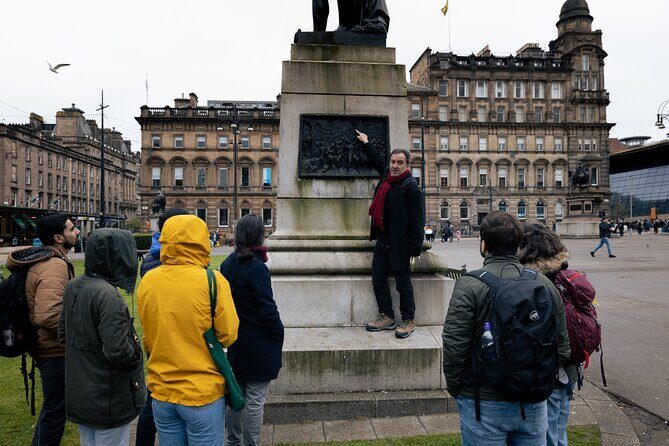
George Square keeps delivering. You’ll pause at the Sir Walter Scott statue, a reminder of how Scotland’s “modern idea” was shaped through writers and the public imagination. Scott often gets reduced to a name on a map, but here he’s treated like part of Glasgow’s own story of identity.
Then comes Robert Burns, the first monument to Scotland’s national poet. This stop is especially fun because it’s explained as an early crowdfunding effort: thousands of people reportedly contributed as little as 5 pence, and a huge crowd turned out for the unveiling. That detail matters because it shows how public culture wasn’t only driven by elites—it was also powered by everyday people with small amounts of money and big enthusiasm.
A practical tip: if you’re taking photos, this is where you can get clean angles. The square gives you breathing room compared with the narrower streets that come next.
Merchants, money, and modern art: the Merchant City vibe
Next you shift from statues to power. The tour stops at Merchant’s House, where you get a sense of how the merchants of Glasgow helped build the city’s prosperity. The point isn’t just who they were—it’s how they wanted their importance to be seen, in the middle of the city.
Right after that, you reach the Gallery of Modern Art. You’ll learn that the building wasn’t always a gallery—it began as a private mansion house and had other uses along the way. That’s one of the tour’s biggest strengths: it keeps showing you how Glasgow reuse-built itself, long before the city became a modern creative hub.
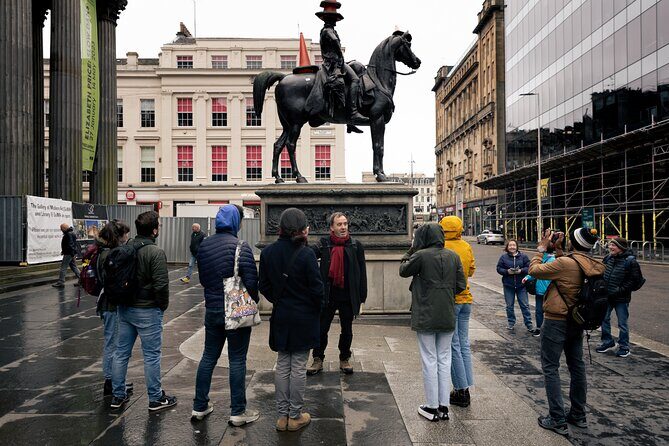
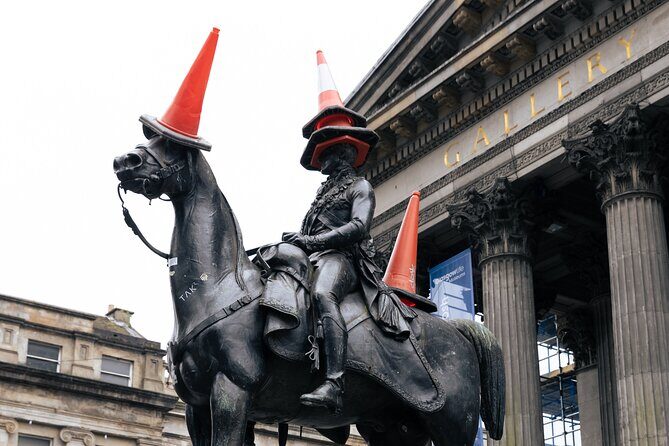
A short hop later, you’ll see the Duke of Wellington statue, famous partly for the traffic cone placed on his head. It sounds like a throwaway joke, but it’s a good reminder that public monuments don’t always stay solemn. Glasgow has a tradition of cheeky attitude toward authority, and this moment lands it in a way that’s easy to remember.
A pizza stop and a Georgian townhouse: why the route feels human
Then you hit Paesano Pizza, one of Glasgow’s well-known pizza places. It’s brief, but it’s also a smart inclusion because it forces a reality check: your history walk is still happening in a living city with living habits.
The tour also includes an 18th-century Georgian townhouse in central Glasgow. The guide frames it as a place where the original family had an interesting story. This is the kind of stop that makes the city feel like more than a photo backdrop—you start seeing everyday streets as stages for ordinary lives, not just famous dates.
If you’re the type who likes architecture details, you’ll enjoy the “in-between” moments here. If you’re purely focused on big ticket sights, you might wish there were a little more time at a couple of the buildings. But the tradeoff is that you get more variety across the walk.
Trades Hall and the medieval-craft streets behind the scenes
One of the most useful stops for understanding Glasgow is Trades Hall of Glasgow. Here the tour connects the city’s success to the people doing skilled work—carpenters, tanners, dyers, and other trades—and explains how these institutions looked after members when work ended due to age.
This is also where Glasgow stops feeling like an abstract industrial tale and starts feeling like a network of professions. That matters because you’ll recognize the city’s layout later—markets, warehouses, and community institutions shaped where people built and lived.
The next section highlights an important medieval street where candle makers lived and worked, separated from the old town to reduce fire risk. Later, it served markets and warehouses. Today, it’s connected to Glasgow’s cultural district. If you’ve ever wondered why old cities “make sense” even when they look random, this is the kind of explanation that clicks: the geography grew out of practical needs, then later got repurposed.




Corinthian Club and Saints of Ingram: institutions that changed clothes
At the Corinthian Club, you learn that the building has worn different roles over time—bank, courthouse, county building—before becoming a high-profile club and wedding venue. It’s a good reminder that the same walls can hold very different power structures, depending on the era.
Then you’ll stop at Saints of Ingram, which ties together multiple local philanthropic and civic institutions, including the Merchants House and the Trades House, and the Hutchensons Hospital. The big idea is that Glasgow had systems meant to care for citizens over long stretches of time, not only a one-off charitable moment.
If you want to understand Glasgow as a city of community support as well as industry, these stops are where you’ll feel it.
City Halls and the Old Fruitmarket: imagine the traffic of the past
You move into the City Halls area and the Old Fruitmarket. The building still stands, but retail now replaced the older commercial role. You’re encouraged to walk through it and mentally rebuild the bustle that once filled the space.
This is one of those “small time, big payoff” moments. Even a quick look can help you picture where commerce happened and why certain streets became important.
It also explains why Glasgow can feel layered: you’ll see modern use in the shell of older function. That makes the rest of the walk easier to interpret.
Trongate 103 and the Sharmanka Kinetic Gallery: art with a sense of play
In the Trongate area, the tour includes Trongate 103, an arts centre. A highlighted feature is the Sharmanka Kinetic Gallery, which points you toward a style of creativity that’s visual and slightly whimsical.
Even if kinetic art isn’t your main thing, this stop helps connect the dots between Glasgow’s industrial identity and its later creative identity. It’s not a separate topic—it’s the same city shifting what it values and how it spends its energy.
Britannia Panopticon Music Hall: show-business history you can actually see
Next is Britannia Panopticon Music Hall, described as the world’s oldest surviving music hall. You’ll learn that a young Stan Laurel—one half of the comedy double act—performed there early in his career.
That’s a standout because it links Glasgow to entertainment history without feeling like a tourist checklist. It also gives you a reason to pay attention to the building style and audience culture, since music halls are all about the relationship between performers and people in the room.
Mercat Cross, High Street, and St Mungo: the medieval spine of the city
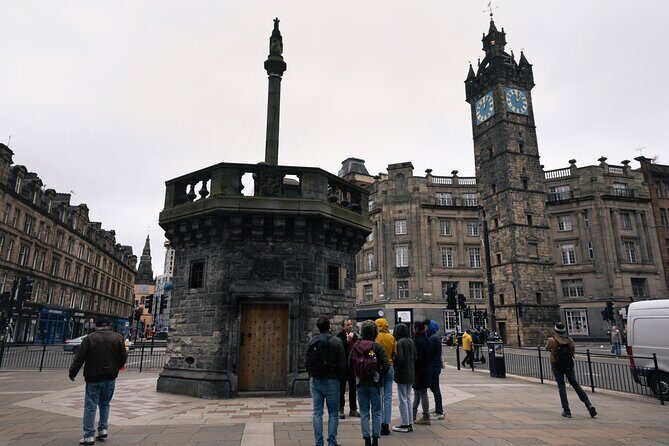
You’ll stop at Mercat Cross, where proclamations were made. It’s essentially a medieval public notice point, and that makes it feel more real than a random monument.
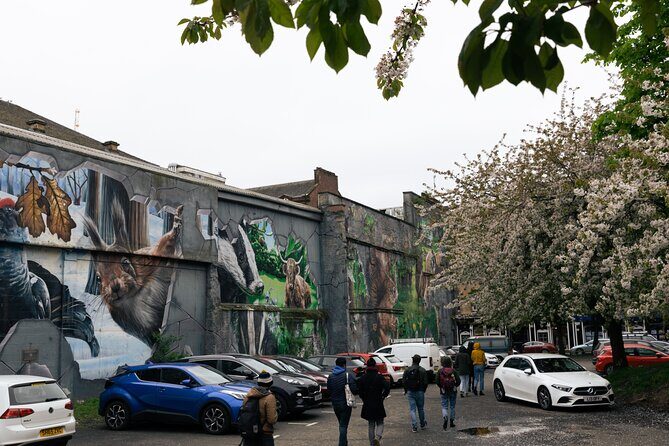
Then you reach High Street, described as the heart of medieval Glasgow. Along the road you’ll see references to the old university site—said to be the fourth oldest in Britain—plus murals tied to St Mungo, Glasgow’s patron saint, and other notable buildings.
If street art is your thing, this is where you’ll likely slow down. Murals are a fast way to understand what a city chooses to remember. In a place like Glasgow, where identity has been shaped by religion, politics, labor, and migration, murals can be a whole chapter in under five minutes.
David Livingstone, Ramshorn Theatre, and the shift toward institutions
A quick stop at the David Livingstone statue follows, originally standing in George Square. It’s another identity cue: Glasgow wasn’t only about local life; it also sent explorers and thinkers outward.
Then you reach Ramshorn Theatre, opened in 1824, replacing an earlier church. The tour also notes that many notable people were buried there, and that more recently it’s served as a theatre and now links to language studies connected to the University of Strathclyde.
This part of the walk can feel like the city’s “how we use big buildings” story. Religious architecture, civic architecture, and educational uses overlap, and the guide uses that overlap to keep you from treating each stop as unrelated trivia.
Friends of Glasgow Royal Infirmary Museum: science and care
At Friends Of Glasgow Royal Infirmary Museum, you learn it’s the oldest hospital in Glasgow and that medical innovations were pioneered there. Even if you’re not a medical history fan, it’s a helpful contrast to the city’s conflict and industry themes.
It also gives the walk a human angle beyond monuments. A hospital is a place where the story is measured in care, not only ambition. If you’re doing this early in your trip, it can make the rest of Glasgow feel more grounded.
Glasgow Cathedral, Provand’s Lordship, and St Mungo Museum: the ending you’ll remember
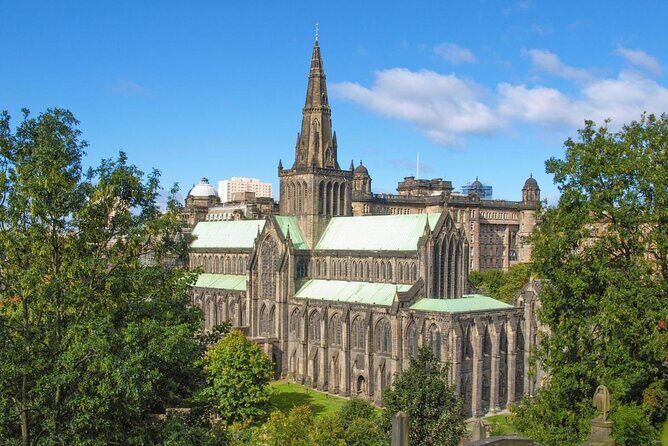
The tour finishes with Glasgow Cathedral, described as the oldest building in Glasgow and dating back to the 13th century, with churches on the site since the 6th century. This isn’t just a photo moment. It’s a structural way to understand Glasgow’s deep time—how a place keeps returning to the same sacred footprint.
After that, you’ll see Provand’s Lordship, dating back to the 14th century. This is the kind of stop that makes you picture the medieval street life around it, especially after seeing the medieval markers earlier.
Finally, you reach the St Mungo Museum of Religious Life and Art. The key idea is religion in the context of different faiths followed around the world today, even though the building is designed to look much older. It’s a clever way to bridge historical roots with modern pluralism.
Price and value: why $17.91 can make sense here
At $17.91 per person, this walk feels like a strong value if you’re trying to cover major sights without paying entry fees one by one. The tour’s structure—many stops with free admission tickets listed—helps you see a lot while keeping your day budget under control.
It’s also good value because it’s not only “look at the building” sightseeing. The narration ties each landmark to how Glasgow developed: civic pride, wartime change, merchant power, trade life, religious institutions, and even the city’s humor.
If you’re on a tight schedule, you’ll appreciate that it stays compact enough for a half-day mindset. If you’re planning a bigger museum-heavy day afterward, you’ll need to plan for the walking and listening time before you decide what to do next.
Timing, pace, and walking logistics you should plan for
The tour runs about 2 hours 4 minutes to 2 hours 14 minutes in one estimate, but other timing information puts it closer to about 2.5 hours. Either way, it’s best treated as a committed walk.
You’ll get around 40 to 45 minutes of walking time between attractions, plus short pauses at each stop. That pacing works well if you like moving step by step and hearing the story at the exact place it matters.
Group size is capped at 15, which helps with hearing and makes it easier to ask questions. If you tend to lose audio in crowds, bring a bit of patience for street noise.
The tour ends outside Ramshorn Church on Ingram Street, not back where you started. So I’d plan your next stop nearby or give yourself time to reorient. It’s a nice excuse to keep exploring, but you do need to account for it.
Weather and flexibility: what to do when plans shift
This experience requires good weather. Glasgow can change fast, so bring layers and a rain layer you’ll actually use. If weather is poor, you should expect the tour to be offered on a different date or you’ll get a full refund.
Also, one practical reality: sometimes a specific indoor stop may be unavailable because of construction or a private event. When that happens, your guide may adjust on the fly. The best move is to keep your expectations flexible, especially around the longer stops involving older buildings.
Who should book this Glasgow history walk
I think this tour fits best if you want:
- A first-day orientation to Glasgow’s city center, especially Merchant City and Old Town
- A guide who tells stories with personality, not a strict recitation
- A mix of architecture, statues, religious sites, and local culture in a single route
- A small group format where you can actually hear the guide
It might be less ideal if you hate walking on cobbles or you need long quiet breaks every few stops. It’s also not built for people who want one single theme—this one is deliberately broad.
Should you book? My practical take
Book it if you want a fast, friendly way to understand Glasgow’s shape and what to explore later. At the price point and with a small group size, you’re paying for direction: where the city’s priorities show up in buildings, street corners, and public art.
Skip it only if you strongly prefer deep, slow museum time over a structured walk with many quick stops. Otherwise, this is the kind of tour that leaves you with a mental map and a list of places worth revisiting.
FAQ
FAQ
How long is the walking tour?
It’s approximately 2 hours and 4 minutes to 2 hours and 14 minutes, with overall timing also noted as around 2.5 hours.
Where does the tour start and where does it end?
It starts at George House, 50 George Square, Glasgow G2 1EH. It ends outside the Ramshorn Church on Ingram Street (at 98 Ingram St, Glasgow G1 1EX).
Is the tour in English?
Yes. It’s offered in English.
Is there an admission fee for the stops?
The stops are listed with admission ticket free, meaning you’re not usually paying entry fees at each landmark.
What’s the group size?
The tour has a maximum of 15 travelers.
How much walking is involved?
There is walking time between attractions, around 40 to 45 minutes.
Does the tour require good weather?
Yes, it requires good weather. If it’s canceled due to poor weather, you’ll be offered a different date or a full refund.
Are service animals allowed?
Yes, service animals are allowed.
Can I get a refund if I cancel?
Free cancellation is available up to 24 hours in advance for a full refund.
Is it near public transportation?
Yes, it’s near public transportation, and most travelers can participate.