REVIEW · GLASGOW
Glasgow Gin Tea Experience
Book on Viator →Operated by Red Bus Bistro Company Limited · Bookable on Viator
Tea, gin, and big Glasgow views. This 1.5-hour vintage bus experience blends snack-time comfort with fast looks at major landmarks, while you sip unlimited tea and coffee. You’ll also get a plate of baked treats and sweet bites like petit fours, which makes the whole ride feel more like a Glasgow afternoon than a rushed sightseeing sprint.
Two things I genuinely like: the friendly hosts who share tips as you go, and the mix of major civic and city-shape sights that give you great angles for photos. There’s also a social vibe on the bus—small groups mean you’re more likely to chat with your table neighbors than just stare out the window.
One consideration: even though it’s called a Gin Tea experience, alcohol availability can be restricted, and this is not a full guided commentary tour. Think dining plus landmark glimpses, not an all-day lecture.
In This Review
- Key highlights to know before you go
- What the Glasgow Gin Tea Experience Really Feels Like
- Price and value: why $69.31 may feel fair
- From modern art to civic power: the early stops near George Square
- Glasgow Cathedral and the Necropolis: medieval survival plus Victorian drama
- Brewery roots, the Tolbooth Steeple, and Glasgow Cross views
- Kelvingrove Park to Glasgow Green: ceramics, palaces, and museum life
- Across the Clyde: bridges, cranes, and the engineering side of Glasgow
- The SEC Armadillo, OVO Hydro, and why the waterfront matters
- Whisky, transport, and science: Clydeside Distillery to Riverside Museum
- Local classics at Tennent’s Bar, plus art at Hunterian and Kelvingrove
- Gin tea reality check: what you should expect on the drinks side
- Who should book this tour, and who should skip it
- FAQ
- How long is the Glasgow Gin Tea Experience?
- What’s included in the tea experience?
- Is gin included with the tour?
- Can I buy alcoholic drinks during the experience?
- Is there a guided commentary on the bus?
- Are the stops free to enter?
- Is there a toilet on the bus?
- How many people are on the bus, and do I share a table?
- Can I cancel for a full refund?
Key highlights to know before you go
- Warm scone setup: cream, jam, and strawberry garnish paired with tea and coffee.
- Sweet-and-savory spread: petit fours plus mini quiche and sandwich selections.
- Small-group feel: up to 15 travelers, with table-sharing on busier days.
- Photo-friendly landmark stops: civic buildings, cathedral views, and River Clyde angles.
- Lots of famous Glasgow names, fast: museums, bridges, cranes, and venues in about 90 minutes.
- Gin expectations may vary: alcohol service can depend on restrictions, while drinks may be purchasable.
What the Glasgow Gin Tea Experience Really Feels Like
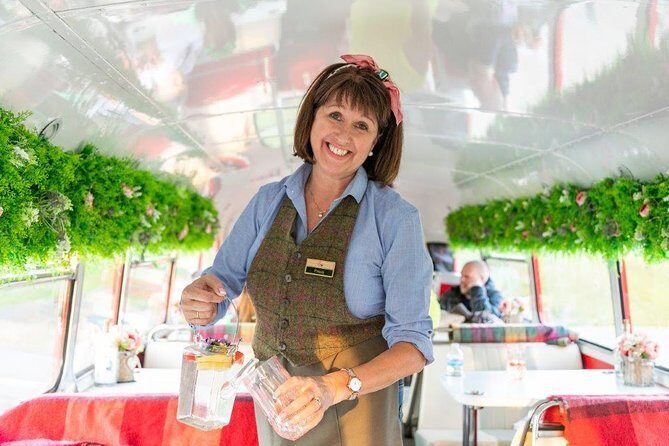
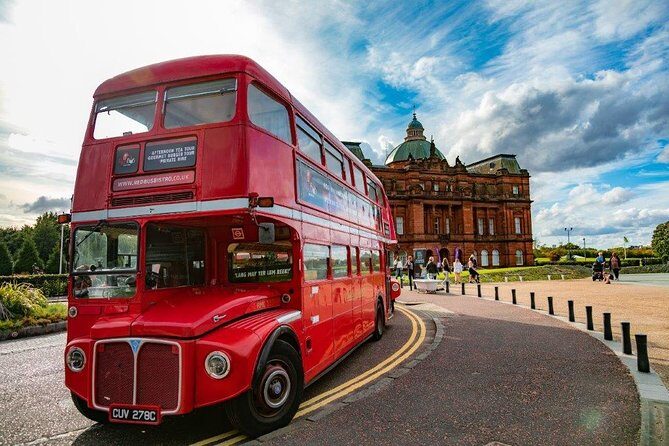
This is a tour designed around tea service, not around big, structured walking. You climb aboard a vintage Routemaster-style bus, settle in, and start eating right away. That matters in Glasgow, where weather can change fast. Eating first keeps your energy up, and the city looks better when you’re warm.
The vibe is also social. Small groups of 15 or fewer means you’re more likely to mix with the people next to you. On busy weekends, you may share a table, so if you’re traveling solo or you like quiet, pick a calmer travel day if you can.
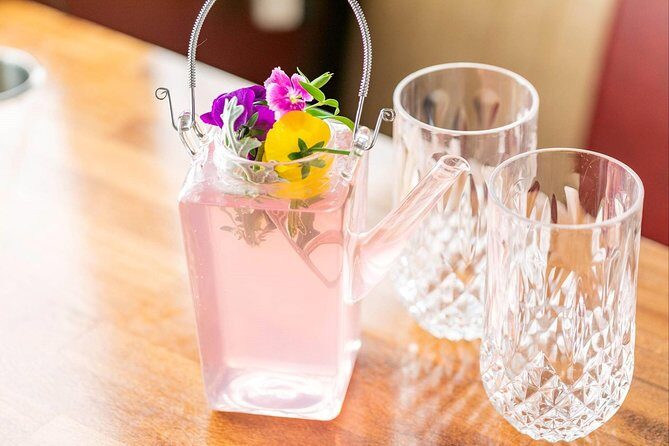
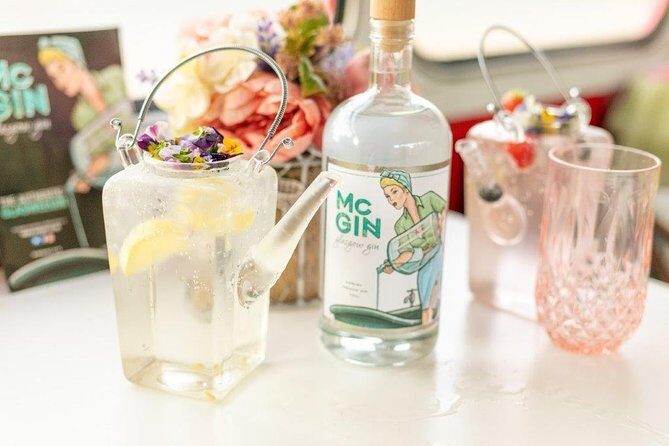
Finally, the experience is playful with its name. The big idea is afternoon tea with a Glasgow twist. But based on how the operator runs the alcohol side, you should treat the gin part as a concept, not a guaranteed pour.
You can also read our reviews of more tours and experiences in Glasgow.


Price and value: why $69.31 may feel fair
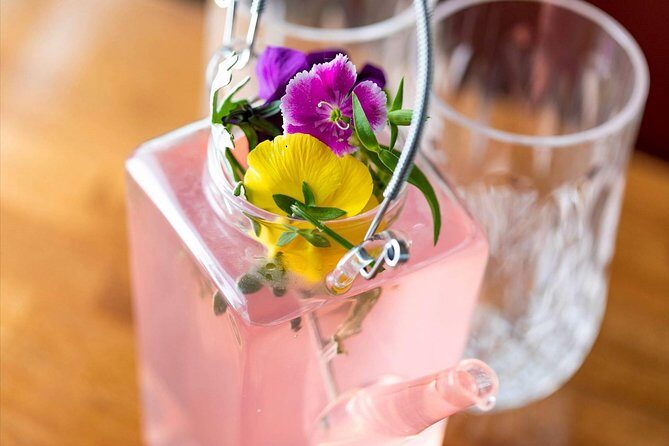
At $69.31 per person for about 1 hour 30 minutes, you’re paying for three things at once: transport through central sights, a proper snack spread, and multiple stops that are free to enter on the list.
Let’s translate that into real value for you. Standard afternoon tea can get pricey fast, especially when you want extras like quiche and petite sweets. Here, the included food is specific: home baked warm scone with cream and jam, plus handmade sandwich selections, warm mini quiche, and a selection of petit fours. You also get unlimited tea & coffee.
Then there’s the sightseeing angle. You’re shown major Glasgow anchors—cathedral, civic buildings, museum districts, and the River Clyde engineering corridor—without needing to navigate traffic or crowds on foot. You still do some stepping out and snapping photos, but you’re not stuck doing long museum hours.
So the value is strongest if you want an efficient “see the city while you eat” outing. If you mainly want deep museum time or a guided narration at every stop, you may feel under-satisfied for the money.
From modern art to civic power: the early stops near George Square
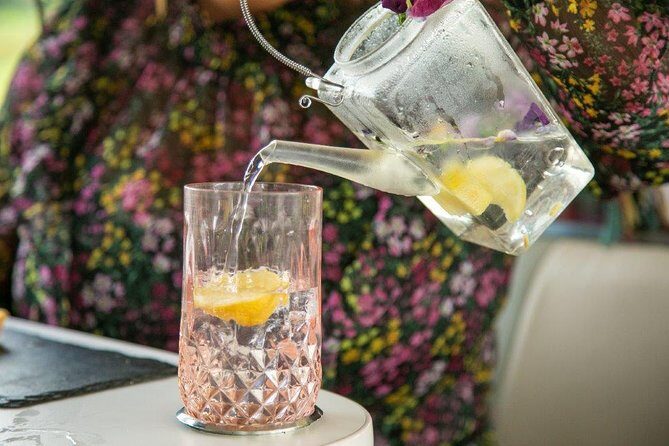
Your day begins near central Glasgow, starting at 36 Shuttle St (Glasgow G1 1QA) and returning there at the end. From there, you’re guided through a route that quickly introduces two sides of the city: modern culture and big civic identity.
The Gallery of Modern Art is a smart first stop if you’re trying to understand Glasgow’s present mood. It’s a world-class art museum and a meeting place—exactly the kind of setting where you can get your bearings fast. If you like modern pieces but hate getting overwhelmed, this stop works well because it’s compact and easy to approach in short time windows.
Then you swing toward Glasgow City Chambers in George Square. This is the “industrial prosperity meets civic pride” part of the story. The building’s imposing presence is hard to miss, and it’s one of those landmarks that makes you understand why locals point at it like it’s a personality trait. Even if you only get a brief look, you’ll appreciate the architecture more than you expect—especially from angles that show how the building dominates the square.
Practical tip: bring your phone camera for these early shots. Civic buildings look best when you can hold the framing steady at street level, and the stops here are set up for quick photos rather than long walks.
Glasgow Cathedral and the Necropolis: medieval survival plus Victorian drama
Next comes one of the most striking contrasts in Glasgow: Glasgow Cathedral and the Necropolis right beside it. This pairing works because one place feels ancient and surviving, while the other feels Victorian and theatrical.
The cathedral is a major medieval landmark and has a specific claim to fame: it’s the only one on Scotland’s mainland to survive the Reformation of 1560 intact. That detail gives the building extra weight. You’re not just looking at old stone; you’re looking at a site that avoided a lot of what changed elsewhere.
Then the Necropolis takes your attention upward. It’s a Victorian garden cemetery with sculpture and stories that feel bigger than you’d expect for a cemetery. It was modeled on Père-Lachaise in Paris, and the scale is wild in a factual way: it’s estimated there were about 50,000 burials, with around 3,500 tombs.
If you’re the type who likes architecture and symbolism, this is a stop that can slow you down a bit—even if the overall tour moves quickly. And if you’re not into cemetery visits, treat it as an open-air monument with views and stonework you can photograph without needing long explanations.
A consideration: the Necropolis is outdoors, so wear layers and shoes you’re comfortable walking in, even if the time on-site is short.
Brewery roots, the Tolbooth Steeple, and Glasgow Cross views
Glasgow isn’t only about art galleries and stone churches. It’s also a brewing city, and this route makes sure you see that side too.
At Tennent’s Wellpark Brewery, you get a taste of Scottish beer culture through one of the long-running institutions. The brewery has been producing award-winning brews since 1885, and that timeline matters. It’s one of those facts that instantly makes the city feel older than you thought—like you’re visiting a place that has been part of everyday life for generations.
Then you head toward Glasgow Tower, also known as the Tolbooth Steeple. It sits over Glasgow Cross, topped by a clock and a stone crown. The clue here is in what used to be there: it once formed part of the Tolbooth, a building that combined town clerk offices, council hall functions, and even the city prison. So when you look at the tower, you’re seeing a marker that once had administrative and legal power baked into the same structure.
This is one of the spots where you’ll appreciate fast stops. You’re getting the big shapes of Glasgow: towers, squares, and the kind of landmarks that help you map the city visually for later independent exploring.
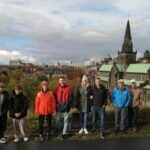





Kelvingrove Park to Glasgow Green: ceramics, palaces, and museum life
A big chunk of the tour pivots toward some of Glasgow’s most famous cultural districts. This is where the route becomes a photo scavenger hunt—without making you lug a heavy daypack.
One standout is the Doulton Fountain in Kelvingrove Park. It was part of the 1888 International Exhibition and became a landmark because it’s the largest ceramic fountain ever constructed. It’s the kind of fact that gives you a reason to keep looking at the details. Even from a quick stop, you can usually spot why it became popular—its scale and the material make it look different from the usual stone-and-metal street fountains.
Next is People’s Palace and Winter Gardens on Glasgow Green. This stop feels different from the cathedral-and-necropolis mood. People’s Palace uses objects, photographs, prints, and film to show how Glaswegians lived, worked, and played, from earlier years up to today. If you like understanding a city through everyday life, not just through monuments, this is one of the most meaningful stops on the route.
Timing note: museums can eat time. But because your overall ride is about 90 minutes, expect “see and orient” energy rather than a full deep museum session.
Across the Clyde: bridges, cranes, and the engineering side of Glasgow
If you’ve ever wondered how Glasgow got its reputation as a serious industrial player, the River Clyde stops do a good job of answering that in plain sight.
You pass Kingston Bridge, a balanced cantilever dual-span road bridge carrying the M8 motorway. It’s built with triple-cell segmented prestressed concrete box girders, and the scale is enormous: around 150,000 vehicles per day. You don’t need the engineering lesson to appreciate it—you just need to look at how massive it is in the city’s daily life.
Then you move to the Clyde Arc, a road bridge with a curved design that crosses at an angle, connecting areas near the Clyde Auditorium and SEC with Pacific Quay and the Science Centre area. This bridge is the kind of structure that looks better when you can see its whole curve in one frame.
A special stop here is the Finnieston Crane (also known as Stobcross Crane). It’s a disused giant cantilever crane that’s still retained as a symbol of Glasgow’s engineering heritage. It was used for loading cargo, including steam locomotives, onto ships headed around the world.
These are the moments when your camera roll starts to fill with “wait, Glasgow is doing THIS?” images. It’s the engineering and maritime story that sits beside the art and architecture.
The SEC Armadillo, OVO Hydro, and why the waterfront matters
Glasgow’s waterfront has modern venues that feel like they belong to a different city. The tour leans into that contrast with a couple of big landmarks.
The SEC Armadillo is a purpose-built venue and a Glasgow landmark designed by Foster + Partners. When it opened in 1997, it marked a new era for the SEC area and the waterfront. Next is the OVO Hydro (SSE Hydro), a multi-purpose indoor arena on the Scottish Event Campus.
Even if you don’t plan to attend an event, seeing these buildings helps you understand why Glasgow has attracted major concerts and big gatherings. They signal that the city didn’t only preserve industry—it repurposed waterfront energy.
If you’re traveling with kids or teens, this is a good segment. Big modern buildings, strong shapes, and lots of open views tend to keep attention longer than small museum rooms.
Whisky, transport, and science: Clydeside Distillery to Riverside Museum
Later in the route, you get a shift from big architecture to everyday curiosity. This is where Glasgow can surprise you if you only think of pubs and football.
Clydeside Distillery is Glasgow’s first dedicated single malt Scotch whisky distillery in over 100 years. You’ll also find a visitor experience, a café, and a specialist whisky shop. Even if you don’t sample anything, it helps you see that Glasgow is still building new traditions, not just polishing old ones.
Then comes the Riverside Museum of Transport and Travel, an award-winning museum with over 3,000 objects. That number is huge in a fun way: skateboards, locomotives, paintings, prams, cars, and even a Stormtrooper. If your group ranges from train nerds to art lovers, this kind of collection tends to keep everyone interested.
You’ll also see the Glasgow Tower, part of the Glasgow Science Centre complex on the south bank. The tour won’t turn this into a long science session, but it gives you a strong sense of where Glasgow’s “learn while having fun” energy is aimed.
Local classics at Tennent’s Bar, plus art at Hunterian and Kelvingrove
No Glasgow day feels complete without a proper sense of local social life. The tour includes a stop at Tennent’s Bar Glasgow, known as a much-loved city-centre pub with great beers and tasty food. It’s also described as one of the last traditional pubs in Glasgow’s West End, which makes it a useful counterpoint to the museums and grand buildings.
From there, the route leans back into art and learning with a couple of heavyweight stops.
The Hunterian Art Gallery has one of Scotland’s most distinguished public art collections, with works ranging from Rubens and Rembrandt to the Scottish Colourists and Glasgow Boys. This is the kind of museum where you can pop in for one or two key works and still feel like you caught something important.
Next, Kelvingrove Art Gallery and Museum opened in 1901 and remains a firm favourite. It’s family friendly, which tells you it’s designed for real visits, not only for serious browsing.
If you’re book-smart and curious, you’ll like the Mitchell Library too. It’s an iconic Glasgow landmark at Charing Cross, part of the city’s library network. The library holds fine Scottish and international collections and is described as accessible for research, inspiration, and enjoyment—so it’s not only for academic homework.
Gin tea reality check: what you should expect on the drinks side
Because the experience is branded Glasgow Gin Tea, it’s fair to wonder about the gin. Here’s the honest approach based on how the experience is described and run.
You can get alcoholic beverages available to purchase, but alcohol service can be affected by restrictions. Some guests have noted that gin or alcohol wasn’t served during their visit, and the operator indicates customers are made aware if they can’t serve alcohol at that time.
So if you’re hoping for a specific gin infusion or a guaranteed gin serving, don’t assume it’s automatic. Plan the outing as a tea and snack experience first. You’ll still get a lot out of it, because the food spread and the city stops are the real backbone.
Who should book this tour, and who should skip it
Book this if you want:
- A short, efficient Glasgow overview with lots of famous sights in about 90 minutes
- A laid-back plan where you eat scone, sandwiches, mini quiche, and petit fours while moving around
- A photo-friendly route that includes civic buildings, cathedral-and-necropolis contrasts, and Clyde bridges and cranes
- A social bus atmosphere in a small group where hosts share tips
Skip this (or adjust expectations) if you want:
- A fully guided, stop-by-stop narration with deep explanations at every landmark
- A guaranteed alcohol-focused gin service
This is best for visitors who like to keep a day light and fun—eat well, see a lot, then go back later on your own time for the spots that really pull you in.
FAQ
How long is the Glasgow Gin Tea Experience?
It runs for about 1 hour 30 minutes.
What’s included in the tea experience?
You get a warm home-baked scone with cream and jam (with strawberry garnish), handmade sandwich selections, warm mini quiche, petit fours, and unlimited tea & coffee. Alcoholic beverages are available to purchase.
Is gin included with the tour?
The name suggests gin, but alcohol service can be restricted. The data says alcoholic beverages may be available to purchase, and it also indicates alcohol may not be served at times due to restrictions, so don’t treat gin as guaranteed.
Can I buy alcoholic drinks during the experience?
Yes, alcoholic beverages are available to purchase, though alcohol service can depend on restrictions.
Is there a guided commentary on the bus?
The operator describes it as a dining experience while touring, and it does not offer live or recorded guide commentary on the buses. You may still receive interaction and tips from the hosts.
Are the stops free to enter?
The listed admissions for the major stops are marked as free (where applicable), but keep in mind the overall tour time is short.
Is there a toilet on the bus?
No. There is no toilet on board.
How many people are on the bus, and do I share a table?
There is a maximum of 15 travelers. On busier weekend tours, you should expect to share a table, and the operator can try to accommodate preferences on quieter tours.
Can I cancel for a full refund?
Yes. You can cancel up to 24 hours in advance for a full refund.
If you want, tell me your travel dates and whether you care most about the food, the photos, or the history—and I’ll help you decide if this is the right fit for your day in Glasgow.