REVIEW · GLASGOW
Charles Rennie Mackintosh Walking Tour: Saturdays 10am
Book on Viator →Operated by Walking Tours in Glasgow · Bookable on Viator
Glasgow changes when Mackintosh steps in. I love the small-group pace and how the guide turns Mackintosh design into street-level stories you can picture right away. I also like that your walk ends with the included Mackintosh at the Willow exhibition instead of leaving you to guess what you just saw.
Guides matter on this one. Names like Tommy, Louise, and Vas come up again and again for being quick with answers, funny without getting in the way, and clear about how Mackintosh connected art, design, and everyday city life.
One caution: most stops are exterior views only, so you’ll be listening more than entering buildings. Also, it’s a walking tour that depends on good weather, and a stop like The Lighthouse can be affected if it’s not open.
In This Review
- Key highlights from the Charles Rennie Mackintosh walking tour
- Why this Mackintosh walk beats a museum-only day
- Clutha Bar start: putting Mackintosh’s story in context
- St Enoch Square to Sloans: Mackintosh in the middle of real Glasgow
- Buchanan Street and the Willow Tearooms reproduction: what’s original, what’s not
- The Lighthouse stop: early work, exhibition time, and serious views
- Daily Record, Glasgow Savings Bank, and the surprise power of color
- Bath Street Palomino: Mackintosh’s married life in the window
- Glasgow Art Club: women, art culture, and why it matters
- Finishing at Mackintosh at the Willow: the included exhibition ticket
- Price and practical tips for a 2-hour Saturday walk
- Should you book this Charles Rennie Mackintosh walking tour?
- FAQ
- What day and time does the Charles Rennie Mackintosh walking tour run?
- How long is the tour?
- Where is the meeting point?
- Where does the tour finish?
- How much does the tour cost?
- Is the tour offered in English?
- How big are the groups?
- Is the ticket for the final stop included?
- Are all stop admissions included?
- Do I need good weather, and can I cancel if plans change?
Key highlights from the Charles Rennie Mackintosh walking tour
- Saturday 10am schedule with an easy, 2-hour time commitment
- Small group cap (15 people) for a laid-back, question-friendly walk
- A site-by-site story that links Glasgow streets to Mackintosh’s working life
- Mrs Cranston connections explained through places tied to the teamroom world
- The tour includes the Mackintosh at the Willow exhibition ticket at the end
- The guide performance tends to be a big part of why people rate this so highly
Why this Mackintosh walk beats a museum-only day
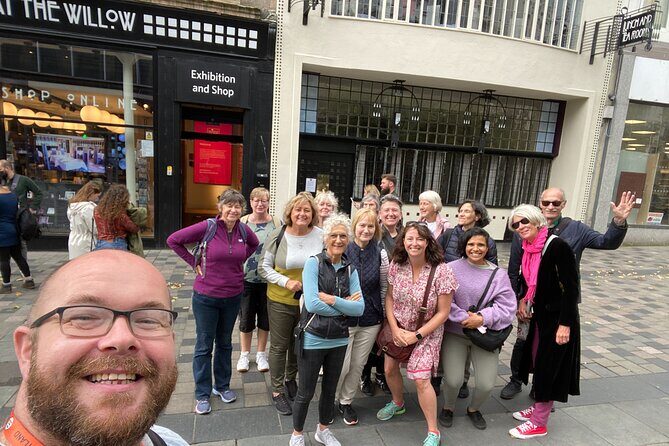
A museum day shows you the objects. This tour shows you the city that shaped the objects. I like that you’re not just looking at famous designs on a wall—you’re learning how Glasgow’s streets, commissions, and neighborhoods helped build Mackintosh’s public image.
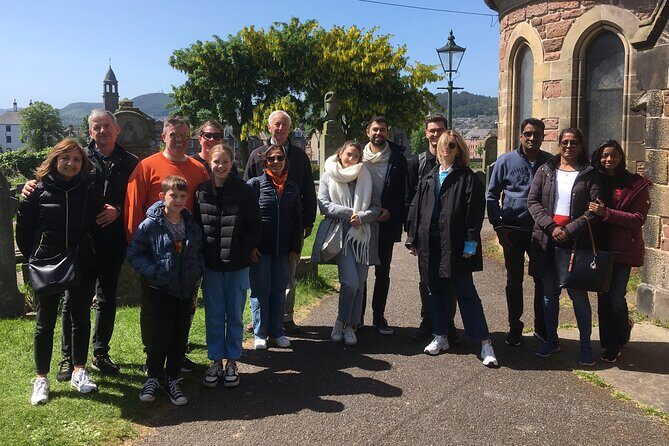
You also get time to ask questions without a crowd crush. With a maximum of 15 people, the tone stays relaxed. That matters because Mackintosh design can feel abstract until someone connects the dots: the relationships, the commissions, and the practical reality of making a living in a working city.
And yes, it’s a real walking tour. You’ll move between central spots, mostly in short bursts, so plan for wet sidewalks and wind on the ground that always seems to get the weather first.
You can also read our reviews of more walking tours in Glasgow



Clutha Bar start: putting Mackintosh’s story in context
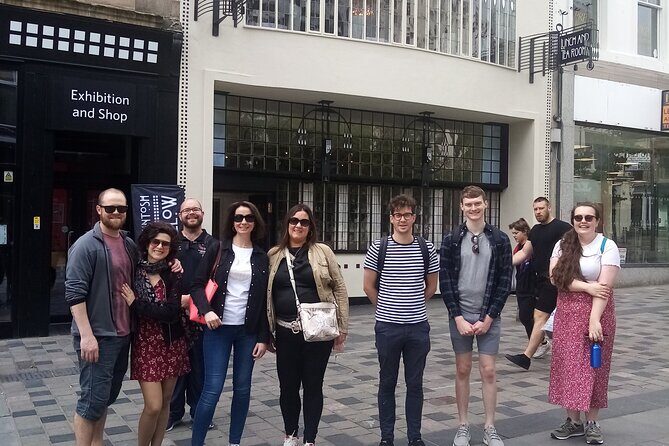
You’ll start at the Clutha & Victoria Bar on Bridgegate, right where the tour can set the mood fast. Expect an opening chat about Charles Rennie Mackintosh’s background with an emphasis on where his interests came from and how Glasgow’s identity fed his ideas.
This stop is exterior only, so you’re not paying for entry here. The value is in the framing. A good guide uses this first moment to give you a mental map: what you’re about to see, what to pay attention to, and how each location fits into the bigger narrative.
Tip for your comfort: arrive a few minutes early, even if you think you know the area. Bridgegate can be busy, and getting started smoothly helps the whole 2 hours feel easy.
St Enoch Square to Sloans: Mackintosh in the middle of real Glasgow
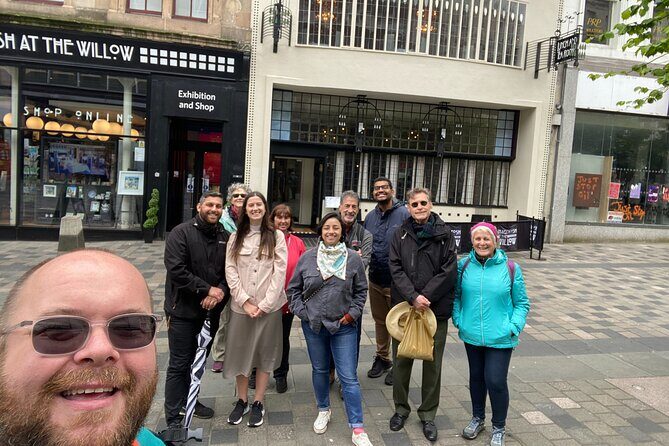
From the Clutha Bar, the tour pushes into the center with quick stops that act like checkpoints. At Saint Enoch Square, you’ll hear the foundations of Mackintosh’s life and work—right in a lively public square where the city keeps moving around you.
Then comes Sloans, where the emphasis shifts toward Mackintosh’s partnership with Mrs Cranston and the teamroom world. This is one of those “small stop, big meaning” parts of the walk. Even without going inside, you’ll get the story behind why that collaboration mattered and how it connected design to hospitality and daily culture.
What makes these quick stops work is pacing. Each one is short enough that you’re not trudging through the same block again and again. At the same time, the guide’s explanations give those corners a purpose, so you’re not just collecting addresses—you’re building a timeline.
Buchanan Street and the Willow Tearooms reproduction: what’s original, what’s not
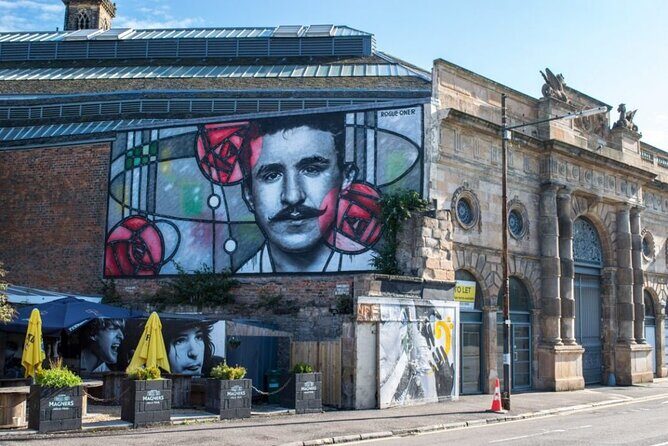
One of the trickiest parts of Mackintosh touring is separating true originals from later reproductions. At Buchanan Street you’ll see the Willow Tearooms, but it’s specifically described as a reproduction rather than an original Mackintosh building.
That’s actually a helpful lesson. You’ll learn to look at how the design language got carried forward, and you’ll understand why the story of the Willow matters even when a specific facade isn’t the original one tied to Mackintosh’s first phase of the teamroom era.
You may spot details that look very Mackintosh. The guide helps you treat those details with the right questions: Who designed what? Which phase is it from? What’s the point of “accurate enough” reproduction? It turns a sightseeing mistake into real understanding.
If you’re a design fan, this is the kind of stop that keeps you from doing the common thing—falling in love with a view and missing the nuance.
The Lighthouse stop: early work, exhibition time, and serious views
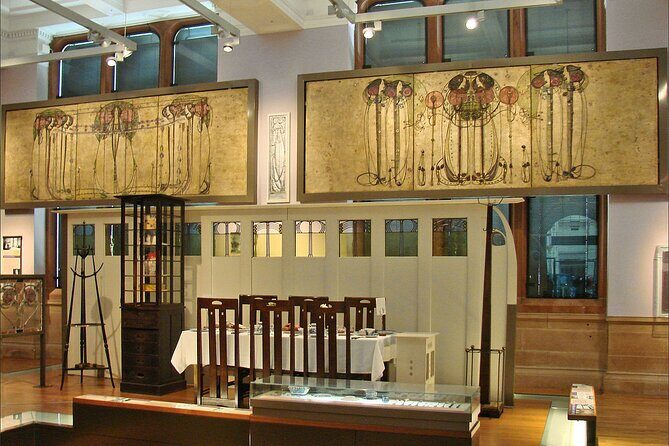
At The Lighthouse, you get one of Mackintosh’s first designed buildings into the conversation. This stop is your “slow down” moment compared with the earlier ones, with time set aside to view the exhibition and take in the views.
Admission isn’t included here, so if you want to fully use every minute indoors, you may need to pay separately depending on what’s available that day. It’s still worthwhile because the Lighthouse connection gives you a bridge between personal story and public design.
One more practical thing: the Lighthouse can be closed at times. If that happens, don’t panic—your guide can still point out what you can see from the exterior and how to read the building from the outside. But if you’re paying extra for indoor time, you’ll be happier if you accept that an occasional closure is part of real-world touring.





Daily Record, Glasgow Savings Bank, and the surprise power of color
After The Lighthouse, the walk keeps moving through design that shows up in the city’s everyday architecture. You’ll see the Daily Record Building for its color and design impact—another exterior-only stop where the guide helps you understand why Mackintosh’s approach feels modern even when the details are old-school.
Then there’s a quick look at the Glasgow Savings Bank building. Here the story ties to a key design influence: Alexander ‘Greek’ Thomson. Even in a brief stop, you’ll get the idea that Glasgow design didn’t happen in a vacuum. Styles, mentors, and local tastes all pushed and pulled on each other.
These short segments work best if you give your eyes a job. Don’t just glance. Look at:
- repeating shapes
- the way windows and lines guide your attention
- how a building’s purpose shows up in its visual language
By the end, the city feels less random. You start to see Glasgow as a system of design decisions.
Bath Street Palomino: Mackintosh’s married life in the window
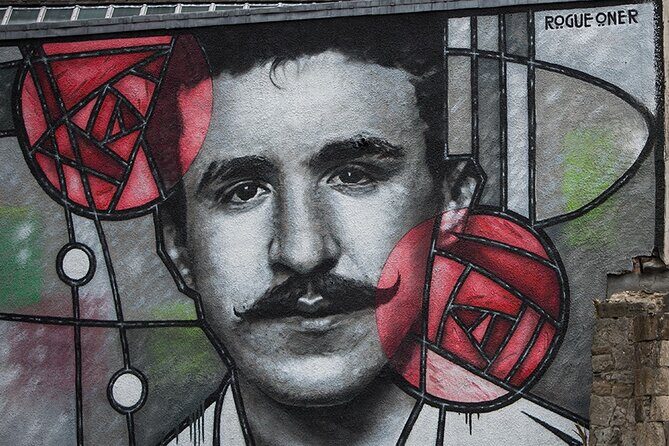
Bath Street Palomino is the stop that brings you closest to the personal side of Mackintosh’s life. You’ll learn that it’s his first married flat—where he lived with Margaret before moving again in the West End.
This one is exterior only, but the window detail is the hook. You can even see some of his design through the window. That’s the kind of moment that makes the tour click because it’s not a grand monument. It’s a real place connected to a real relationship.
If you like design history but get tired of names and dates, this is where the story stays human. You’re watching architecture become evidence of life—who he was, what he valued, and how his ideas carried into the rooms he lived in.
Glasgow Art Club: women, art culture, and why it matters
The tour continues with a stop at the Glasgow Art Club, where you’ll learn about Mackintosh’s work and the ladies art movement of the time. This is one of the most important “context” stops on the route because it expands Mackintosh beyond one man and one style.
The guide’s goal here is practical. You’ll connect what you’re seeing to who had access to art, who was building art culture, and how the art world in Glasgow worked at the social level—not just the formal level.
It’s easy for design tours to become a checklist of buildings. This part helps you add a second layer: the community of artists and supporters around the work. When that clicks, you’ll remember the tour longer than a map of stops.
Finishing at Mackintosh at the Willow: the included exhibition ticket
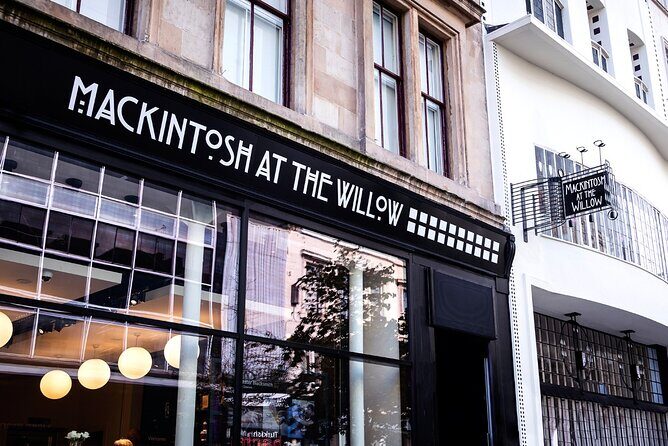
The walk ends at Mackintosh at the Willow on Sauchiehall Street, right by the place you’ll want to explore more slowly. The key advantage: your walking tour includes the exhibition ticket here, so you’re not trying to guess which entry to buy after you’re already tired.
Plan on spending about an hour in the exhibition. This is where the tour’s storytelling pays off. You’ll see the Mackintosh tearoom world explained as more than decoration—how design choices created an experience, how the teamroom idea shaped public taste, and how the Willow story became a signature of Glasgow’s creative identity.
This is also the part where your earlier exterior stops become clearer. When you’ve spent the morning seeing related buildings and hearing how Mrs Cranston fits into the picture, the Willow exhibition stops being random and starts feeling like the final chapter.
If you only have time for one Mackintosh moment, this ending point is a smart use of it.
Price and practical tips for a 2-hour Saturday walk
At about $27.62 per person for roughly two hours, the value comes from two things: the guide time and the included exhibition ticket at the end. Most other stops are exterior only, and admission isn’t included at those points, so the tour is mainly built around interpretation rather than a stack of entry fees.
That can be a win if you like guided explanation. It can feel less ideal if you came hoping for fully ticketed building access at every stop. Your best strategy is to treat this as an “architecture with commentary” morning, then let the included Willow exhibition be your main indoor spend.
A few practical pointers:
- Wear shoes you trust. It’s a walking route with short stops, but you’re on sidewalks for the full 2 hours.
- Dress for weather. It’s explicitly a good-weather activity, and Glasgow can change its mind fast.
- Come ready to look. A lot of the magic is in small details the guide points out from the street.
- If you plan to use The Lighthouse exhibition, remember the tour itself doesn’t include that admission.
And because the group is capped at 15, you’ll usually get a more personal tone than on big bus-style tours.
Should you book this Charles Rennie Mackintosh walking tour?
I’d book it if you’re going to spend time in central Glasgow anyway and you want a guided way to understand Mackintosh beyond the textbook version. It’s especially good for art and design fans who like their history with personality—guides with a knack for clear explanations and jokes included.
Skip it or adjust your expectations if you want lots of indoor time at multiple stops. This route leans heavily on exterior viewing, and only the final Mackintosh at the Willow exhibition ticket is included. Also, if you’re not comfortable walking in wind and rain, plan for a weather backup mindset.
If you love architecture, you’ll get a lot from the way the tour links Mackintosh’s life, collaborations, and commissions into a walk you can actually replay later—like a story you walked through.
FAQ
What day and time does the Charles Rennie Mackintosh walking tour run?
The tour runs on Saturdays at 10:00am.
How long is the tour?
It lasts about 2 hours.
Where is the meeting point?
The meeting point is Clutha & Victoria Bar, 159 Bridgegate, Glasgow G1 5HZ.
Where does the tour finish?
The tour finishes at Mackintosh at the Willow, 215-217 Sauchiehall St, Glasgow G2 3EX.
How much does the tour cost?
The price is $27.62 per person.
Is the tour offered in English?
Yes, it is offered in English.
How big are the groups?
The tour has a maximum of 15 travelers.
Is the ticket for the final stop included?
Yes. The tour includes the exhibition ticket with the final stop at Mackintosh at the Willow.
Are all stop admissions included?
No. Most stops are exterior visits only, and admission tickets are not included except for the Mackintosh at the Willow stop.
Do I need good weather, and can I cancel if plans change?
Yes, the tour requires good weather. If it’s canceled due to poor weather, you’ll be offered a different date or a full refund. You can cancel up to 24 hours in advance for a full refund.