REVIEW · GLASGOW
Fun and Flexible Treasure Hunt Around Glasgow with Cryptic Clues
Book on Viator →Operated by Treasure Hunt Glasgow · Bookable on Viator
Glasgow gets playful with a phone hunt. Treasure Hunt Glasgow turns a walk through landmarks into a self-led puzzle with no-print, on-your-phone maps and Captain Bess hints when you’re stuck. Just note: the game needs a smartphone with mobile data, which is not included.
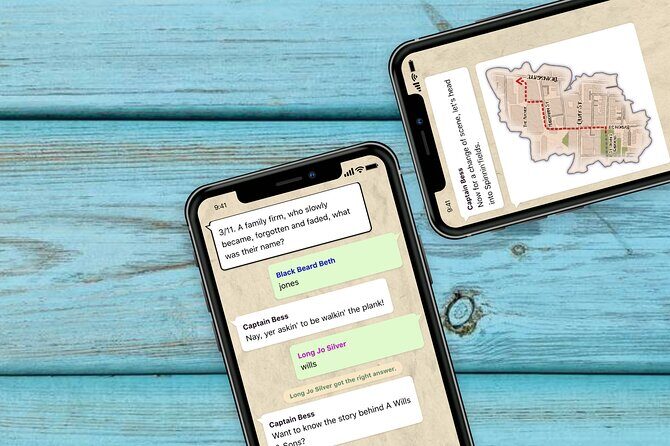
Once you’re set up, it runs like WhatsApp, so you can join together and start when you want during the day. You’ll go at your own pace, solving clues and picking up short stories that help you notice Glasgow beyond the obvious sights.
In This Review
- Key Things I’d Actually Make Time For
- Phone-First Treasure Hunt With Captain Bess
- Price and Value for a 3-Hour Glasgow Walk
- Meeting at Accounts29, Then Heading Back (Central and Easy)
- The Route: 11 Stops That Create a Strong City Overview
- George Square to Duke of Wellington Statue: Start With Big Landmarks
- River Clyde and Buchanan Street: City Energy and Window-Spotting
- Glasgow Green and City Chambers: Park Moves and Civic Details
- The Clutha Bar, Merchant Square, and Argyll Arcade: Breaks, Cover, and Architecture
- Tolbooth Steeple and Mercat Cross: The Finish Line Brain-Teaser
- How Cryptic Are the Clues, and What If Your Group Gets Stuck
- Pacing, Weather, and Shoes: Small Things That Matter
- Group Size and Team Building: Private, But Not Always One Team
- Who This Suits Best (And Who Might Prefer Something Else)
- Should You Book Treasure Hunt Glasgow?
- FAQ
- How much does the Glasgow treasure hunt cost?
- How long is the Treasure Hunt Glasgow experience?
- Where does the treasure hunt start and end?
- Do I need to download an app?
- Does the activity require mobile data?
- Is this private for my group?
- Can I cancel and get a refund?
Key Things I’d Actually Make Time For

- Self-led flexibility: start anytime within the opening window and walk at your pace
- Captain Bess runs the hunt: maps, clues, and helpful nudges on your phone
- A tight central route: 11 stops that give you a strong first look at the city
- Cryptic clues with built-in hints: great when you want a challenge but not a meltdown
- Works well for groups and team building: from friends to large teams split into groups
- A mix of streets, parks, and arcade/indoor-feeling spots: handy if weather turns
Phone-First Treasure Hunt With Captain Bess
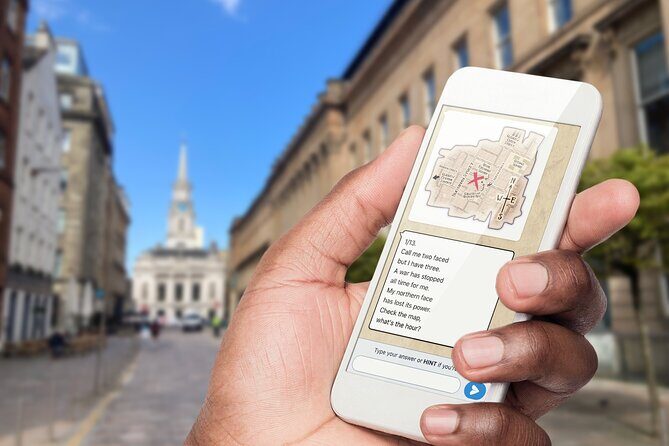
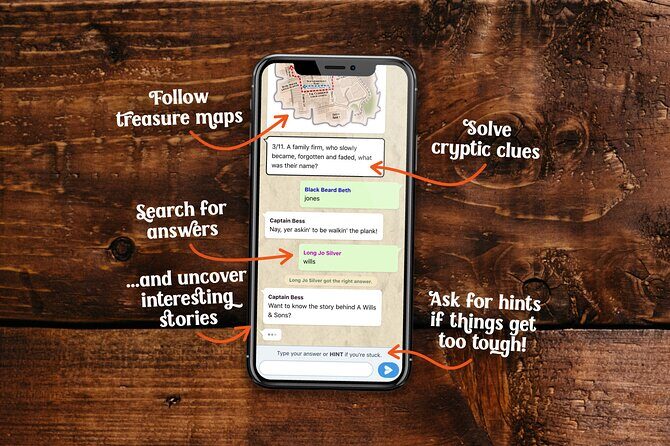
This is the kind of activity that fits modern travel life. You don’t pick up papers or download anything heavy. Instead, you follow a link to a game that behaves like a chat app, and Captain Bess guides you from stop to stop with maps on your phone and clue prompts.
What I like most is that it stays playful without feeling random. The game structure matters: Bess sends the next map, you search for the clue answer around the area, and you keep moving only when your group is ready. If you’re stuck, you can request hints rather than grinding to a halt.
Also, the “start whenever” idea is a real quality-of-life upgrade in a city day. You’re not forced into a strict tour departure time. You can time it around lunch, shopping, or whatever else you have planned.
You can also read our reviews of more tours and experiences in Glasgow.



Price and Value for a 3-Hour Glasgow Walk
At $20.58 per person, you’re paying for a very specific kind of value: direction plus entertainment plus a built-in city “story layer.” You get a route that nudges you into well-known places like George Square and Buchanan Street, but also into spots that work better when you’re wandering with purpose.
It’s about 3 hours, so you’re not committing to a whole day. That matters if you’re trying to balance paid activities with free exploring. And because it’s private for your group, you’re not dealing with the pacing chaos of a mixed crowd.
The one trade-off to understand up front is that you’re the navigator. A normal guided tour covers ground for you. Here, you’re walking it, reading clues, and using hints when needed. That’s not bad. It just means you’ll enjoy it most if you like a bit of problem-solving.
Meeting at Accounts29, Then Heading Back (Central and Easy)
The hunt starts and ends at the same place: Accounts29, Royal Exchange Square, Glasgow G1 3AJ. That’s a big plus if you’re meeting friends in town, since you don’t need to plan a complicated endpoint.
It also helps that the meeting point is near public transport. Glasgow is made for hopping on and off buses or trains, and you won’t feel stranded if your timing is off.
One practical thing to plan for: the game requires a smartphone with mobile data. The activity doesn’t include the phone or the connection. If your roaming is expensive or unreliable, consider sorting out data before you leave your hotel. Even a short trip can get annoying if you have to hunt for Wi‑Fi.
The Route: 11 Stops That Create a Strong City Overview
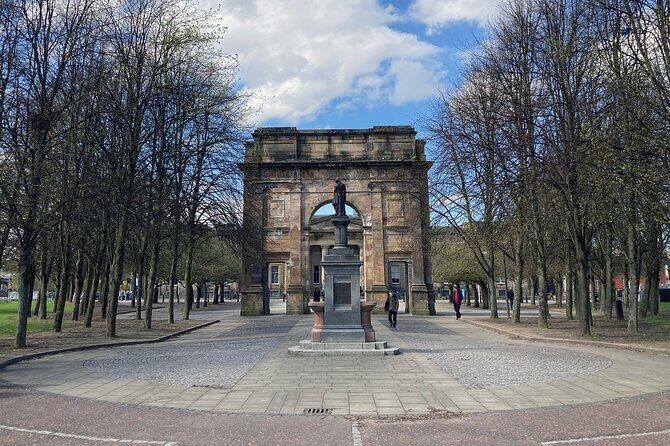
This isn’t a random scavenger hunt. It’s built like a “walk the city, then decide what to do next” loop. You’ll hit a mix of civic squares, shopping streets, a riverside area, a park, major landmarks, and a couple of areas where architecture and signage tend to show up in the clue logic.
Here’s the stop-by-stop vibe, and what to watch for.
George Square to Duke of Wellington Statue: Start With Big Landmarks
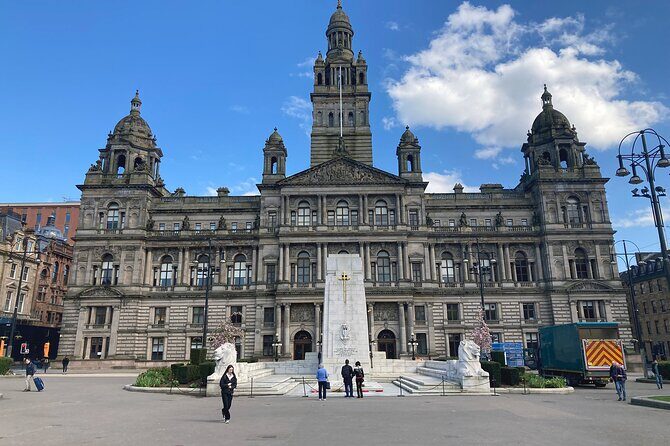
You begin at George Square, the kind of place that immediately anchors you in central Glasgow. It’s open enough that you can get your bearings quickly, and that matters because the game starts with the first map and clue flow.
Next is the Duke of Wellington Statue. The clue here tends to push you from just seeing something to actively scanning and comparing details. In a puzzle hunt like this, early wins help everyone get confident. If your group is new to cryptic clues, this first stretch is a good place to build momentum.
A useful consideration: George Square has had improvement works and access changes in the past, which can make some clue sightlines harder. If you hit barriers, keep calm, ask for hints if needed, and focus on what the map is pointing toward.






River Clyde and Buchanan Street: City Energy and Window-Spotting
The River Clyde stop gives you a change of pace. Even if the clue is short, this is the part where the route feels more like a real walk through Glasgow rather than a checklist. The river area also tends to work well for group discussions, since you can regroup without feeling like you’re holding up a guided group.
Then you move to Buchanan Street, one of the city’s best-known shopping corridors. This is where the game’s “look closely” style shines. The hunt can take advantage of storefront details, signage, and the general rhythm of a busy street.
Practical tip: if you want to keep the hunt fun for everyone, assign roles. One person reads the clue prompts, another checks the map, and a third scans for visual matches. It’s an easy way to stop one person from becoming the human spell-checker.
Glasgow Green and City Chambers: Park Moves and Civic Details

Glasgow Green is where the route gains breathing room. It’s a good stop to slow down, refocus, and let your group actually enjoy the setting instead of power-walking between clues.
Then you head to City Chambers, which shifts the mood toward civic-scale architecture. In a hunt like this, that change matters. The game uses the city’s visual variety to keep you from getting numb to the same kind of landmark.
If your group is a mix of ages or clue skill levels, this segment often works well. Park and civic buildings give you multiple “angles” for solving, from larger views to smaller clue-related details. Even when the clue feels cryptic, hints help you move forward without turning it into a stress test.
The Clutha Bar, Merchant Square, and Argyll Arcade: Breaks, Cover, and Architecture

Now you reach a cluster of stops that feel practical and fun. The Clutha Bar brings in a natural option for a pause. Even if you don’t plan a full break, it’s a good landmark for regrouping, checking messages, and making sure everyone is still in the game.
Next is Merchant Square, then Argyll Arcade. The arcade stop is the kind of location that can feel more comfortable if the weather turns. It’s also the sort of place where the “spot the clue” approach can feel more rewarding because there are lots of features for your eyes to rest on.
One extra tip from real play: if you’re the type who likes an actual treat halfway through a walk, a player mentioned a doughnut stop at Trantrum Doughnuts around the middle of the route. It’s the kind of small decision that turns a puzzle hunt into a full afternoon.
Tolbooth Steeple and Mercat Cross: The Finish Line Brain-Teaser
The final stretch includes Tolbooth Steeple and Mercat Cross. These are strong ending points because they’re the kind of landmarks where the puzzle feel clicks: you’ve seen enough of the city to compare details, but you’re still not exhausted.
Expect the last clue steps to feel like a wrap-up. Your group is likely more synchronized by now, so solving can become a bit of a victory lap.
Then you head back to the start point. Knowing you’ll end near where you started is a real convenience, especially if you’re planning dinner soon after.
How Cryptic Are the Clues, and What If Your Group Gets Stuck
This hunt lives in the sweet spot between puzzle and sightseeing, but clue difficulty can vary depending on the people in your group. In past play, some groups found the clues perfectly manageable. Others called them cryptic enough that they needed more hints to stay moving.
That’s why the hint feature matters. You’re not stuck doing detective work for hours. You can ask for hints when you’re not finding the answer right away, and you keep the momentum.
Also, real-world signage can be messy. One team reported that a clue-related sign had been vandalised, and the game still worked around it. So if you can’t find something that seems obvious, don’t assume it’s your fault. Slow down, use the hint, and follow what the map is directing.
Pacing, Weather, and Shoes: Small Things That Matter
At about 3 hours, you’re not doing an all-day trek. Still, it’s walking in central Glasgow. Wear comfortable shoes, and plan on taking short breaks when your group naturally needs them.
Weather is part of the bargain with any outdoor city game. One player even said it worked in the rain. That doesn’t mean you’ll love wet pavement, but it does suggest the structure is flexible enough to handle a typical drizzle.
If your group includes teens or mixed experience levels, the self-led format helps. Everyone can catch up without feeling embarrassed, and it’s easier for them to stay engaged because they’re solving something in the real world, not staring at a screen the whole time.
Group Size and Team Building: Private, But Not Always One Team
This is a private activity, so it’s just your group. That keeps things simple. No strangers. No forced pace.
For larger groups, the game setup can create multiple teams. One large group of 27 was split into teams, with a captain scanning a QR code to get started. The effect is practical: you keep the excitement high, while still letting people solve at the same time without the hunt turning into one big traffic jam.
For a group of friends, the best use is to treat it like a shared challenge. Assign roles, keep your phones charged, and aim for teamwork over speed.
Who This Suits Best (And Who Might Prefer Something Else)
I think this is ideal if you want two things at once: a fun way to walk around Glasgow and an easy path to figuring out what to explore next. By the end, you’ll have a clear sense of which neighborhoods and types of places you enjoyed most.
It’s also a strong match for team building. The puzzle format encourages communication, and the flexible start means it’s easier to wrangle schedules.
But it may not be your best choice if:
- You hate cryptic puzzles and prefer straightforward sightseeing.
- Your phone situation is shaky (no reliable mobile data).
- Your group needs a totally seated, minimal-walking activity.
Also remember there’s a moderate physical fitness expectation. If someone in your group has mobility limits, you’ll want to consider how much walking the route will require.
Should You Book Treasure Hunt Glasgow?
Book it if you like your travel days with a little structure and a little mystery. For about $20.58 per person and around 3 hours, you get a guided-feeling experience without the rigidity of a traditional tour, plus Captain Bess keeps things moving with hints when you need them.
Skip it if you want a fully guided history lecture, or if your group can’t rely on a phone with mobile data. The hunt depends on phones and active participation, even though it’s self-led.
If you’re in central Glasgow and you want a fun way to get your bearings, this is a smart pick.
FAQ
How much does the Glasgow treasure hunt cost?
It costs $20.58 per person.
How long is the Treasure Hunt Glasgow experience?
It takes about 3 hours.
Where does the treasure hunt start and end?
It starts at Accounts29, Royal Exchange Square, Glasgow G1 3AJ, UK, and it ends back at the same meeting point.
Do I need to download an app?
No download is needed, and there’s no need to print anything. It works like WhatsApp on your phone.
Does the activity require mobile data?
Yes. A smartphone with mobile data connection is not included.
Is this private for my group?
Yes. It’s a private tour or activity, so only your group participates.
Can I cancel and get a refund?
Yes. You can cancel for a full refund up to 24 hours in advance. If you cancel less than 24 hours before the start time, the amount paid is not refunded.