REVIEW · GLASGOW
2.5 Hour Football Walking Tour in Glasgow
Book on Viator →Operated by Glasgow Football Tour · Bookable on Viator
Glasgow’s football story is told on foot. This 2.5-hour walk through the Hampden Park legacy connects the early grounds where Scotland’s passing and running style took shape, and it ties those ideas to the modern game reaching billions. I love how the route is built around real places you can see, and I like that the guide turns big football themes into clear, human stories. A key thing to consider: it runs on good weather, so plan for rain or wind with sensible layers and shoes.
You’ll move through Queens Park Recreation Ground and the sites of the first, second, and third Hampden Parks, with stops that include murals and the feel of an old stand at Cathkin. I also like the tight group setup (up to 20), because it makes questions easier and the pace feel manageable. One possible drawback is simply walking time—this isn’t a sit-down museum tour—so bring comfortable footwear and be ready for uneven ground around the older stadium sites.
In This Review
- Key Things You’ll Notice on This Glasgow Football Walk
- Why This Hampden Parks Tour Feels Different Than a Typical Matchday Story
- Start at 16 Queen’s Dr (G42 8BS): Getting Oriented in Glasgow
- Stop 1: Queens Park Recreation Ground and the Roots of the Passing Game
- Hampden Bowling Club and the First Hampden Mural (Scotland 5-1 England, 11 March 1882)
- Stop 2: Cathkin Park, the Second Hampden Park With Original Terracing
- Stop 3: Hampden Park (Third Hampden) and the Rose Reilly Mural
- Price and Value: Is $33.94 Worth It for a 2.5-Hour Walk?
- Group Size and Pace: Why Up to 20 People Works for This Tour
- What You’ll Learn: Football’s Successes, Failures, and the Scots Connection
- Weather, Walking Shoes, and Real-Life Comfort Tips
- Who Should Book This Hampden Parks Football Walking Tour
- Should You Book It? My Take
- FAQ
- How long is the 2.5 Hour Football Walking Tour in Glasgow?
- What is the price per person?
- Is the tour offered in English?
- Where is the meeting point?
- Where does the tour end?
- What time does the tour start?
- What stops are included on the route?
- What’s included in the tour price?
- What is not included?
- Does the tour depend on weather?
Key Things You’ll Notice on This Glasgow Football Walk
- Queens Park Recreation Ground as a starting point for the modern passing and running game
- The Hampden Bowling Club area, linked to the first Hampden mural and Scotland 5-1 England (11 March 1882)
- Cathkin Park terraces at the second Hampden site, including the feel of an abandoned stadium
- Hampden Park (third site) with the Rose Reilly mural as a visual anchor for the story
- A local guide who mixes entertaining storytelling with football’s successes and failures
Why This Hampden Parks Tour Feels Different Than a Typical Matchday Story
Some football tours feel like you’re just collecting facts about famous teams. This one is more about how the game itself was shaped—especially by Scottish ideas and the grounds that helped make the modern sport.
What I find compelling is that the walk is organized around the physical “template” of football grounds, not just big names. You start with the Queens Park Recreation Ground and then follow the trail through the first, second, and third Hampden Parks. That matters because it turns the abstract into something you can point at: terraces, angles, where spectators would have stood, and how the atmosphere would have worked.
Another strength is the way the guide frames football’s evolution: the “birth” of the beautiful game, how it was modernized, and where it didn’t go as expected. Even if you’re not a football historian, that bigger storyline helps the smaller details land harder. In the end, you get a clearer sense of why Glasgow’s influence didn’t just happen in one match—it grew across decades and across locations.
At about 2 to 2.5 hours, the tour is long enough to feel like a real outing but not so long that you’re slogging. And because it’s capped at a maximum of 20 people, it tends to feel more like a focused neighborhood walk than a mass activity.
You can also read our reviews of more walking tours in Glasgow



Start at 16 Queen’s Dr (G42 8BS): Getting Oriented in Glasgow
The meeting point is 16 Queen’s Dr, Glasgow G42 8BS. The start time is 10:30 am, and the tour ends at Hampden Park on Letherby Dr, Glasgow G42 9BA.
That “start one place, finish at Hampden Park” format is practical. It also helps the story flow, because you’re not doubling back to cover the same ground. If you’re using public transport, the tour is described as being near public transportation, which is exactly what you want for a walking tour in a city.
One planning note: because this is time-based and starts at 10:30 am, show up a little early. Small delays add up quickly when you’re walking between multiple historic sites.
Stop 1: Queens Park Recreation Ground and the Roots of the Passing Game
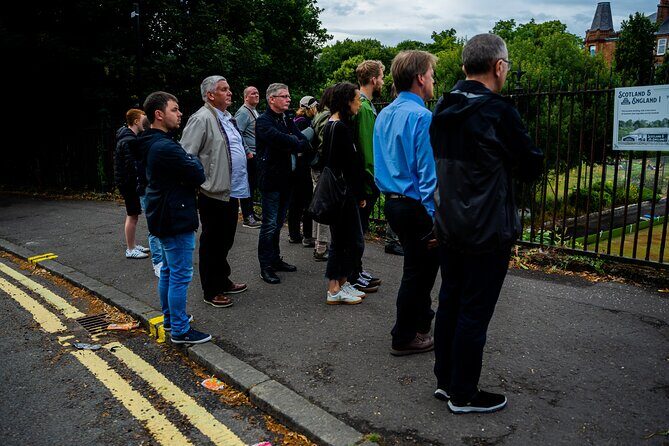
Your first stop sets the tone: Queens Park Recreation Ground, described as part of the cradle of the modern passing and running game.
This isn’t a random opener. The tour frames the Scottish development of football’s passing-and-running style as something that evolved over centuries and now gets enjoyed globally—by more than 3.5 billion people worldwide. That big number can sound like marketing, but on a walking route like this it actually becomes a useful reminder: the modern game has local DNA.
What you’ll likely appreciate here is the way the guide connects technique to place. When you’re standing at the “cradle” site, the story feels grounded instead of floating. You’re not just hearing that Scottish football influenced the world—you’re seeing the kind of ground that helped the style take hold.
Possible drawback at this stage: if the weather is poor, outdoor orientation and early storytelling can feel colder and slower. If rain is in the forecast, bring a hooded jacket and a small umbrella or rain cover.
Hampden Bowling Club and the First Hampden Mural (Scotland 5-1 England, 11 March 1882)
Next, you’ll visit the Hampden Bowling Club area, marked as the First Hampden Park, and see the 1st Hampden Mural tied to Scotland 5-1 England on 11 March 1882.
This is the kind of stop that works well on two levels:
- It gives you a specific moment in time.
- It gives the story a visual anchor.
Dates and scores can be dry in a classroom. On a mural stop, they become part of the walking scenery, so the meaning sticks. The win against England—Scotland 5-1—becomes more than a result. It turns into a clue about how football culture was already building momentum in the late 1800s.
Even if your football knowledge is casual, this stop is easy to follow because the story has a clear landmark: the mural, the match, and the role of the First Hampden site.
Stop 2: Cathkin Park, the Second Hampden Park With Original Terracing
Cathkin Park is your next major stop, identified as the Second Hampden Park and described as an abandoned stadium with original terracing.
This is where the tour leans into atmosphere. A fully operating stadium is one thing, but an abandoned one gives you something else: a sense of scale and a feeling for what crowds experienced without modern distractions.
Terracing matters because it’s about how spectators used space—how close people were, how movement and noise would have carried, and how the ground design shaped the matchday rhythm. The guide’s job here is to translate “old stands and empty space” into what it meant when it was alive.
If you like architecture-as-sport, this stop is likely to be a favorite. It’s also a good contrast after the mural moment: instead of a crisp, colorful reference, you get a more textured, weathered reminder of how stadiums age.
Consideration: because the site is described as abandoned, the ground may be uneven. Wear shoes with grip, especially if it has rained.





Stop 3: Hampden Park (Third Hampden) and the Rose Reilly Mural
The tour finishes at Hampden Park (the Third Hampden Park) and includes the Rose Reilly mural.
Finishing at the present-day Hampden Park is a smart storytelling choice. It lets you connect the “prototype” idea—how these grounds helped shape the game—to the bigger stage of what Hampden became. In other words, you’re closing the loop: early foundations, then the middle chapter, then the landmark that audiences associate with the sport.
The Rose Reilly mural gives the ending a human touch. It’s not only about steel and dates; it’s about the people and moments that football remembers. Even if you don’t know who Rose Reilly is ahead of time, the guide’s narrative helps you understand why the mural belongs in the story.
If the weather is good, this is also the most satisfying moment to end on, because you’re in a proper stadium setting with less “what am I looking at?” confusion.
Price and Value: Is $33.94 Worth It for a 2.5-Hour Walk?
At $33.94 per person, this tour sits in a mid-range zone for a guided walking experience. What makes it feel like good value is the combination of:
- Multiple historic stops tied to the evolution of football grounds
- A local guide focused on entertaining storytelling (not just names and dates)
- A short group size (max 20), which typically means more interaction and less rushing
Also, the tour includes admission ticket not included—so you’re not paying extra for something you might not need. You’re essentially paying for expert context while you walk between meaningful locations.
The big trade-off is that private transportation isn’t included. That’s normal for walking tours, but it does mean you should plan your own route to the start point at 16 Queen’s Dr and to the finish at Hampden Park.
If you’re the kind of person who likes football as culture—how the sport developed, not only who won matches—then $33.94 is the kind of cost that buys you more than a “quick look.” It buys a way to see the city’s football DNA in a concentrated chunk of time.
Group Size and Pace: Why Up to 20 People Works for This Tour
With a maximum of 20 travelers, you’re not swallowed by a huge crowd. That matters on a walking route with several stops. It’s easier for the guide to keep the group together, and it’s easier for you to ask follow-up questions when something clicks—like why certain ideas about passing and running took hold, or what stadium design changes mean for the game.
The “most travelers can participate” note also suggests this is built for a broad audience. You still should bring realistic expectations: you’ll be on your feet for the tour duration, and you’ll be outdoors.
What You’ll Learn: Football’s Successes, Failures, and the Scots Connection
The tour description frames football’s story as a mix of success and failure—modernisation and setbacks. That balanced framing is a big part of why people enjoy it.
In practical terms, it means you’re not only hearing about famous moments like the Scotland 5-1 England match connected to the 1882 mural. You’re also hearing how the game changed, what ideas worked, and what didn’t. When you learn that way, football history stops being a list and starts becoming a map: events lead to design changes, design changes shape play, and play reshapes the sport around the world.
That’s also why Scotland’s link matters in this tour. Scotland didn’t just win games; the country helped develop a style of play that spread and evolved. Connecting that to specific places—Queens Park Recreation Ground, Cathkin Park, and the Hampden Parks—makes the story easier to remember when you’re back home.
Weather, Walking Shoes, and Real-Life Comfort Tips
This experience requires good weather. That’s a clear heads-up, and it’s exactly the kind of thing that affects your enjoyment because most of your time is outside.
Bring:
- A waterproof layer or umbrella if forecasts look questionable
- Comfortable, grippy shoes (especially with Cathkin Park’s abandoned-terrace setting)
- A light layer you can adjust as you walk between sites
If poor weather cancels the tour, you’ll be offered a different date or a full refund. So you’re not stuck gambling with your plans; the operator plans for weather risk.
Who Should Book This Hampden Parks Football Walking Tour
This tour is a great fit if:
- You like football as more than match results
- You enjoy walking stories tied to real places
- You want Scotland’s contribution explained in a way that’s easy to follow
- You like small-group tours where you can keep up
It’s also a good choice if you’re visiting Glasgow and want a focused experience near major football landmarks. You’ll spend the time on meaningful stops rather than bouncing around the city for unrelated sights.
Should You Book It? My Take
If you’re a football fan who enjoys how the sport evolved—style of play, stadium development, and the people behind the game—this is a strong booking. The route is built around clear landmarks (Queens Park, First/Second Hampden sites, then Hampden Park) and the story is designed to be both entertaining and informative.
I’d skip it only if:
- You hate walking tours or have trouble with uneven outdoor ground
- You’re visiting only when the weather looks reliably awful
- You’re mainly after modern football stadium amenities rather than historic, place-based storytelling
If those aren’t your constraints, book it. It’s a smart way to see Glasgow’s football heritage in a couple of hours without turning it into a history lecture.
FAQ
How long is the 2.5 Hour Football Walking Tour in Glasgow?
The tour duration is approximately 2 hours 30 minutes.
What is the price per person?
The price is $33.94 per person.
Is the tour offered in English?
Yes, the tour is offered in English.
Where is the meeting point?
The meeting point is 16 Queen’s Dr, Glasgow G42 8BS, UK.
Where does the tour end?
The tour ends at Hampden Park, Letherby Dr, Glasgow G42 9BA, UK.
What time does the tour start?
The start time is 10:30 am.
What stops are included on the route?
You’ll visit Queens Park Recreation Ground, the Hampden Bowling Club area (First Hampden Park), Cathkin Park (Second Hampden Park), and Hampden Park (the Third), including mural stops like the 1st Hampden Mural and the Rose Reilly mural.
What’s included in the tour price?
A passionate, knowledgeable local guide is included.
What is not included?
Private transportation is not included.
Does the tour depend on weather?
Yes. This experience requires good weather. If it’s canceled due to poor weather, you’ll be offered a different date or a full refund.